 Important Notice— Our url is




New York is one of the largest technology hiring markets in the United States. Between Wall Street's financial platforms, media giants, e-commerce headquarters, healthcare networks, and a fast-expanding startup ecosystem, the city and its surrounding metro generate thousands of full stack developer openings every single year. For jobseekers who want a piece of that market, an Online Full Stack Training Bootcamp in New York is the fastest structured route from beginner or stalled candidate to hire-ready engineer. SynergisticIT's Java DevOps Job Placement Program is built specifically for this outcome, and jobseekers can also explore SynergisticIT's Job Placement Program, the broader placement umbrella that gets candidates hired rather than merely trained. This guide breaks down how an Online Full Stack Bootcamp in New York with job placement actually works, who is hiring, what you should learn, and why the program you choose matters more than the city you live in.
New York's full-stack developer hiring market remains one of the deepest in the world, with demand anchored by finance, big tech, media, and startups. Twenty-five notable companies actively hiring full-stack developers in New York include JPMorganChase, Goldman Sachs, Morgan Stanley, Bloomberg, Capital One, Google, Amazon, Meta, Microsoft, IBM, Datadog, MongoDB, Etsy, Squarespace, Peloton, Oscar Health, Compass, Take-Two Interactive, Zocdoc, Grubhub, Betterment, Block, Coinbase, Spotify, and Adobe. These employers span fintech, e-commerce, gaming, healthtech, and enterprise software, and postings frequently call for Java, React, Spring Boot, TypeScript, and AWS skills.
Salary ranges vary sharply by seniority and employer type. Junior full-stack developers in New York typically earn between $110,000 and $150,000, mid-level developers command $150,000 to $220,000, and senior developers with six or more years of experience bring home $210,000 to $360,000 in total compensation. Built In places the average full-stack salary in New York City at $184,419, with average additional cash compensation of $36,167 and average total compensation of $220,586; the most common salary band sits between $200,000 and $210,000, and developers with seven or more years of experience average around $193,567. Startup offers cluster lower, averaging roughly $153,000, with equity making up the difference in upside.
New York's tech scene has produced several famous figures, including venture capitalist Fred Wilson of Union Square Ventures, Kevin Ryan, co-founder of MongoDB and a serial entrepreneur behind Gilt and Business Insider, Dev Ittycheria, MongoDB's CEO, Reshma Saujani, founder of Girls Who Code, and Arianna Huffington, whose Thrive Global is headquartered in the city. The employment situation is recovering strongly: New York is consistently ranked the world's second-largest tech hub by job volume despite hosting no major tech headquarters legacy, and Dice's latest report shows New York among the states leading year-over-year tech job posting growth, with postings up 17% nationally from a year earlier.
Compared with nearby metros competing for the same talent, New York total compensation packages are generally richer. Median software engineer total compensation in the New York area is about $195,000, versus a Boston median salary of roughly $166,000 that excludes equity and bonuses. New York's finance sector — banks, hedge funds, and fintech — pays 20% to 40% more than equivalent product engineering roles, and investment firms can reach $250,000 to $400,000 in total compensation for experienced engineers. Boston trails New York at every level, offering $100,000–$135,000 junior, $130,000–$195,000 mid, and $190,000–$310,000 senior, while Philadelphia and New Jersey employers pay 5% to 13% less, which pushes commuters toward Manhattan for its richer equity grants, structured bonuses of up to 20% to 30%, and superior benefits packages
Why New York Full Stack Demand Keeps Growing
Full stack developers remain one of the most consistently advertised roles in the New York metro because New York companies build revenue-critical software in-house. Banks need customer-facing portals backed by hardened services, retailers need scalable storefronts, insurers need claims platforms, and media companies need content pipelines. A single full stack developer who can move between frontend, backend, databases, and deployment is simply more economical than hiring three specialists, which is why employers keep prioritizing full stack profiles over narrow ones.
That economics explains a hiring reality most bootcamps never mention: New York employers are not looking for someone who knows React alone. They want Java, Spring Boot, SQL, microservices, cloud, and DevOps alongside JavaScript stack skills, because modern systems span all of it. Programs designed around real employer demand, like SynergisticIT's Java DevOps Full Stack Job Placement Program, teach exactly that combined stack rather than a fashionable subset.
How SynergisticIT's Job Placement Program Helps Jobseekers With a Career Gap
Career gaps terrify candidates more than any other resume issue, but a gap is a positioning problem, not a disqualification. SynergisticIT's Job Placement Program closes the gap with current, verifiable, employer-recognized proof of skill. Six specific ways it helps:
- Refreshed, market-current technical skills: Returners retrain on today's stack — Java, Spring Boot, SQL, cloud, and DevOps — so their most recent resume entry is current project work, not a stale job from years ago.
- Project-based resume proof: Candidates finish with real, project-based resumes built on work aligned to live job requirements, which reframes the conversation from "why the gap?" to "what did you build?"
- Certifications that validate the gap: Included Oracle, AWS, Azure, Microsoft, Snowflake, and Databricks certifications give recruiters objective, third-party evidence that skills were rebuilt during the break.
- Interview preparation and mock interviews: Structured prep rebuilds the confidence and communication sharpness that naturally fade during time away from the workforce.
- Direct employer marketing: SynergisticIT markets candidates to its network of 24,000+ tech client contacts, so a career-gap candidate is not left applying cold into job boards where filters reject them before a human ever reads the resume.
- Interview scheduling and hand-holding until placement: The program connects, schedules, and supports candidates through every interview round until the offer is signed, which matters enormously for returners who need momentum.
How SynergisticIT's Job Placement Program Helps Recent Graduates With No Experience
Recent graduates face the paradox every entry-level market creates: every "entry-level" posting asks for experience. SynergisticIT's Job Placement Program exists to solve precisely that loop:
- Job-ready technical skills, not just coursework: Graduates move beyond academic programming into production-grade Java, Spring Boot, microservices, SQL, DSA, and full stack development the way employers actually use them.
- Real project work that substitutes for experience: Candidates complete projects tailored to company requirements and live tech stacks, giving interviewers hands-on evidence instead of classroom theory.
- Multiple certifications at no extra cost: Oracle Java, AWS DevOps, Azure, Microsoft, Snowflake, and Databricks credentials differentiate a no-experience resume from thousands of identical CS degrees.
- Pre-screening before entering the market: Candidates pass rigorous technical screening before being presented to employers, so companies receive them already verified for technical and role fit.
- Placement infrastructure graduates can't build alone: Resume building, interview preparation, scheduled interviews, and employer outreach are all handled by the program through to the job offer.
- Access to employers that pay real salaries: JOPP graduates land offers in the $95k to $155k range at Fortune 500 companies — outcomes a recent grad applying to job boards alone almost never achieves.
Startups vs Mid-Size vs Enterprise: Who Hires Most Full Stack Developers in New York?
All three segments hire, but they hire in different shapes. Large enterprises do the highest volume of consistent, repeat full stack hiring in the New York metro. Banks, insurers, media conglomerates, telecoms, and retail giants run hundreds of parallel technology programs, each of which needs full stack capacity, and they hire continuously rather than opportunistically. Enterprise also offers the cleanest path for trained-but-new developers, because structured teams, mentorship, and defined roles absorb early-career engineers more readily than anywhere else.
Mid-size companies are the second-largest hiring segment and arguably the sweet spot for full stack developers specifically — they need one engineer to cover several layers of the stack because they cannot afford separate frontend, backend, and DevOps hires. Startups hire full stack developers intensely but in small bursts tied to funding cycles, and their bar for "immediate productivity" is brutal for newcomers, since a ten-person team cannot carry ramp-up time. For a recent graduate or career changer, the practical reality is that enterprise and mid-size employers generate most of the realistic entry-level full stack demand — and that is precisely the employer segment SynergisticIT's Java DevOps JOPP places candidates into.
Full-Time, Contract, Staffing-Agency, and Freelance Splits in New York
New York's full stack hiring market splits into four broad paths. Full-time direct employment is the largest segment and the preferred destination for most candidates, offering salary, benefits, visa sponsorship potential, and career progression. Staffing-agency and contract roles form the second-largest channel — consulting-heavy enterprise IT in banking and insurance runs heavily on agency-supplied contractors, and agencies often serve as the de facto entry door for newer developers, since the client company evaluates skill rather than pedigree. Independent contract roles typically demand proven, specialized experience and come later in a career. Freelance and gig work is the smallest and most unstable slice, suited to developers with existing portfolios and client networks.
For newcomers and recent graduates, the most common realistic paths are full-time roles through a placement pipeline and contract-to-hire roles through agencies. The caveat is that agencies place candidates they can vouch for — which is exactly why a program that trains, certifies, pre-screens, and then markets its own candidates, like SynergisticIT's Job Placement Program, removes the middleman risk and goes directly to employers with verified talent.
Why Full Stack Development Survives — and Grows — in the Age of AI Tools
AI coding assistants have made individual coding tasks faster, but they have not reduced the number of systems that need building, integrating, secured, deployed, and maintained. Companies still need engineers who understand an entire application end to end: how a React frontend talks to services, how services talk to databases, how infrastructure is provisioned, how deployments roll out. If anything, AI tools have raised the ceiling for full stack engineers — the developer who can architect, integrate, and review AI-assisted output is more productive, not less needed, while pure syntax-level coding work is what gets automated.
Employers are already asking for emerging full stack competencies: cloud-native development on AWS and Azure, containerization and orchestration with Docker and Kubernetes, CI/CD pipelines and infrastructure-as-code, microservices architecture, API security, event-driven systems, and increasingly AI-integration work — embedding LLM features, building RAG pipelines, and wiring intelligent services into business applications. Candidates who combine classic full stack fundamentals with DevOps and AI-adjacent skills are becoming the default enterprise hiring profile.
Learn MERN In-Depth From a Company, Not Just Any Bootcamp
If your goal is employment — not a hobby — full stack MERN skills must be learned in depth, from a company that has operated inside the tech industry for over 15 years, not from a generic bootcamp that follows whatever curriculum trend appeared last year. SynergisticIT has been working with tech clients since 2010, places its own candidates continuously, and knows from direct employer interaction exactly what hiring managers screen for. That industry grounding is why SynergisticIT's Java DevOps Full Stack Job Placement Program teaches MERN as one component of a complete, employer-verified stack rather than as an end in itself.
Why MERN and MEAN Demand Is Cooling While Java Dominates
Honest market observation: MERN and MEAN stack demand has cooled from its peak. They still matter as skill sets, but the momentum roles have shifted toward engineers anchored in the Java ecosystem. The reasons are structural, not fashionable:
- Enterprise dominance in mission-critical systems: Banking, fintech, government, insurance, and healthcare — the sectors that dominate New York hiring — run on Java. Systems that must be reliable for decades, comply with regulation, and integrate with mainframes and legacy services stay on Java.
- Manageability of massive codebases: Java's object-oriented structure makes enormous codebases maintainable by large engineering teams, with strong typing, mature tooling, and predictable refactoring at a scale JavaScript-first stacks struggle to sustain.
- Node.js limits under heavy workloads: Node.js excels at lightweight, I/O-heavy operations, but it struggles with compute-heavy workloads and long-lived enterprise transaction processing, which is exactly the profile of mission-critical enterprise systems.
- Full stack parity: Java engineers can be full stack too — with Spring Boot backends, modern frontend frameworks, and cloud deployment — while carrying the enterprise credibility JavaScript-only stacks lack.
This is why the smarter employability bet is Java-centered full stack development with MERN/MEAN as supplementary skills, not the reverse.
Why Learning Only MERN Is Not Enough to Get Hired
Here is the reality check most bootcamps avoid: just learning full stack MERN development is not enough to get hired in the New York market. Companies want to save resources and money, so they hire one developer who covers everything — which means employers expect Java, Spring Boot, DevOps, and SQL along with MERN and MEAN stack skills. A candidate who only knows MongoDB, Express, React, and Node competes in the most crowded, lowest-paying segment of the market, while the candidate who adds Java, microservices, and cloud deployment qualifies for the roles that actually pay. Full stack training is a core part of SynergisticIT's Java DevOps Full Stack Job Placement Program, which deliberately covers the complete employer expectation — Java, Spring Boot, Microservices, SQL, DSA, interview preparation, MERN and MEAN, plus certifications.
Why Employers Prefer SynergisticIT JOPP Candidates
Employers who hire SynergisticIT JOPP candidates gain a very real advantage: these candidates are certified, have already worked on real projects, and can start contributing from day one of joining. They are technically superior, cover a wide range of tech stacks, and have been proven and tested to perform. The specific employer-side benefits:
- Current tech stack alignment and job-ready skills: JOPP is shaped by tech-client demand, continuous industry interaction, and hands-on, industry-focused upskilling, so candidates need minimal ramp-up time.
- Pre-screened talent: Every candidate goes through rigorous technical screening before reaching the market — companies receive candidates already checked for technical and job fit before interviews.
- Certified across the stack: JOPP candidates hold certifications in Java, DevOps, AWS, Azure, Power BI, Snowflake, and more, adding credibility to their already diverse tech coverage.
- Multi-stack flexibility: A company can deploy one junior developer across backend, frontend, and deployment tasks — or one data professional across data engineering, analytics, and ML/AI teams — instead of hiring narrowly.
- Reduced hiring risk: Candidates have completed structured training, real projects, interview prep, and screening, dramatically lowering the risk of a failed hire.
- Genuine, project-based resumes: JOPP focuses on real projects and demonstrable skills rather than inflated or embellished resumes — a direct answer to a market tired of fake candidates.
Because JOPP candidates are multiskilled, they take on multiple responsibilities and deliver more value for money than a single-stack hire at the same salary.
Why Companies Hire SynergisticIT JOPP Candidates at High Salaries
Companies hire SynergisticIT JOPP candidates at high salaries — in the $95k to $155k range — because the economics genuinely favor it. JOPP graduates routinely perform better than experienced hires: they get promoted faster, take on leadership positions earlier, and bring deeper, broader tech stack experience than candidates with 3–5 years of open-market experience. Employers are tired of fake or ineffective candidates, of burning time on job boards and staffing companies, and of second-guessing whether a new hire can actually perform. When hiring managers want certainty — not a gamble — SynergisticIT JOPP candidates are their choice.
One condition matters: they must be actual JOPP candidates who completed the full program. Graduates who finish the entire program and its certifications are certified and tested to excel at projects. That is why companies like Visa, Intel, eBay, Citi, Apple, PayPal, Walmart Labs, AutoZone, Wells Fargo, Capital One, Walgreens, Bank of America, SAP, Cisco Systems, Verizon, T-Mobile, Intuit, Ford, Hitachi, Western Union, Deloitte, Dell, USAA, Carfax, and Humana keep hiring SynergisticIT candidates.
The math for employers is simple: hiring an equivalent candidate from the open market would cost two to three times the salary. JOPP delivers real, technically proficient, day-one-ready candidates with no lead time. For companies, it is a win — superior talent at a fraction of market cost. For jobseekers, it is a win — access to great companies that would otherwise be out of reach. It is a genuine win-win, which is exactly why SynergisticIT's Java JOPP placement record holds at a 91.5% success rate.
Popular Job Boards Most Used by Jobseekers in New York
The boards New York tech jobseekers actually use include LinkedIn, Indeed, Dice (still the strongest tech-specialist board), Monster, Glassdoor, Built In NYC (strong for startup and mid-size tech roles), ZipRecruiter, and Wellfound for startup roles. The problem is not availability — it is conversion. These boards are saturated: hundreds of applicants per posting, automated filters, and unpaid labor for the jobseeker. That is precisely why 30% of candidates who join SynergisticIT's Job Placement Program have already tried other coding bootcamps, Udemy, Coursera, or university bootcamps and not gotten hired. They arrive after learning that self-directed applications and training-only programs do not, by themselves, produce offers. Programs like JOPP flip the model: instead of you marketing yourself into a wall of ATS filters, the program markets you into its employer network until you are placed.
How SynergisticIT Compares to Bootcamps and Staffing Companies
Bootcamps train and leave. Staffing companies place whoever they already have. SynergisticIT does both — training, projects, screening, marketing, and placement — which is a categorically different model:
- Curriculum quality and relevance: Through direct tech-industry interaction at events like Oracle CloudWorld and the Gartner Data & Analytics Summit, and continuous feedback from candidates actively interviewing, SynergisticIT adjusts its curriculum in real time to match job market requirements.
- Instructor quality: Most bootcamps use their own graduated alumni, recorded sessions, or instructors teaching a few hours per week. SynergisticIT uses industry professionals averaging 10+ years of domain experience teaching live.
- Number of instructors: Bootcamps typically run one or two instructors across all topics, which caps depth. SynergisticIT's Java and data programs each deploy 5–6 specialist instructors — separate experts for Java, databases, advanced Java, DevOps; separate experts for data analytics, data engineering, and data science/ML.
- Cost and payment: Transparent: $10,000 upfront, with the $26,000 balance payable over two years, only after landing a job offer. If there is no job offer, no additional payments accrue. Most bootcamps collect all fees upfront with "refund guarantees" full of clauses that cannot realistically be redeemed.
- Duration and immersion: 4–5 hours of live instruction per day, five days a week, over roughly five months — deeply immersive, live lectures only, no recorded sessions. Ask every bootcamp you consider to state this in writing.
- Student-to-instructor ratio: 5:1 at SynergisticIT versus roughly 20:1 at typical bootcamps.
- Projects: Tailored to real-time job market requirements and company tech stacks — and only the projects you actually work on appear on your resume.
- Alumni success: Read, view, and listen to alumni audio and video reviews on the SynergisticIT reviews page — offers ranging from $95k up to $155k, frequently multiple offers.
- Certifications included at no extra cost: From Microsoft, Oracle, Snowflake, Databricks, Azure, and AWS.
- Career and placement help post-graduation: SynergisticIT markets candidates to 24,000+ company contacts and takes over the marketing entirely — versus bootcamps that issue a certificate and hand the job hunt back to you. Support includes resume preparation, interview preparation, scheduled interviews, and hand-holding from enrollment to the first day on the job. Get every competing bootcamp's offer specifics in writing.
- Why trust us: Photographs of successful alumni on the JOPP page, video reviews, offer letters, and years in business. No fake promises, no guarantee clauses with hidden terms — just transparent cost and transparent outcomes.
JOPP: The Full Stack Bootcamp in New York Plus Staffing Combined
SynergisticIT's Job Placement Program can be done from anywhere in the USA — it is the full stack training bootcamp in New York plus staffing combined, which is exactly why it is called a Job Placement Program and not a coding bootcamp. Rather than running a separate product, SynergisticIT's Java DevOps Full Stack Job Placement Program (JOPP) is the full stack bootcamp training in New York — with higher salaries, better placement results, and more comprehensive course coverage than standalone bootcamps deliver.
Recent graduates should join JOPP for three stacked reasons: it builds genuine tech skills, it produces real project work, and — most importantly — it gets them hired into tech roles at great companies. 90% of JOPP graduates hired into tech jobs had never worked in tech before; the remaining 10% are career changers and candidates returning from career gaps. JOPP levels all three groups to the same market-ready standard.
Bootcamps broadly are failing at this mission — which is why so many are shutting down. They made promises they could not keep: train for twelve weeks, collect the fee, and leave graduates to fend for themselves. SynergisticIT's JOPP makes one promise it keeps: candidates who successfully complete the program get hired into tech companies. Instead of stacking four or five different bootcamps, or choosing a cheaper training company with hollow "job guarantees," jobseekers can do the one program that covers Java, Spring Boot, Microservices, SQL, DSA, interview prep, MERN and MEAN stacks, and certifications — the complete employer requirement set. For deeper context on which roles pay best, read SynergisticIT's guide to the most in-demand tech jobs for CS grads, and for a cost-reality check on the alternatives, see the SynergisticIT blog's bootcamp ROI analysis.
The JOPP payment model reflects the same confidence: partial fees before, and the balance only after the jobseeker lands a job of $81,000 or higher. Compared to college degrees costing $80,000–$120,000, JOPP carries the highest ROI in the industry — see SynergisticIT's ROI comparison to colleges, with graduates recouping their investment within months and out-earning college-only peers over ten and twenty years.
Remote, Hybrid, and Onsite Splits in New York
New York's tech market has settled into a hybrid-heavy equilibrium. Roughly speaking, the largest share of current New York postings is hybrid (commonly two to three office days per week), followed by a substantial fully remote share — higher than pre-2020 levels but shrinking as employers enforce return-to-office policies — with fully onsite concentrated in finance, trading, healthcare, and defense-adjacent work where data sensitivity demands physical presence. For candidates, the practical implication is straightforward: flexibility expectations should be realistic at the entry level, where most first full stack roles in New York are hybrid or onsite, and remote leverage grows with proven experience. Because SynergisticIT's program runs online and places nationwide, JOPP candidates are not limited to one city's onsite constraints — they interview across the full spectrum of remote, hybrid, and onsite New York and national openings.
Major Staffing Companies in New York Hiring Full Stack Developers
New York's contract and agency channel is dominated by large IT staffing firms — names like Insight Global, TEKsystems, Robert Half Technology, Randstad Technologies, Kforce, Collabera, Apex Systems, and Experis/ManpowerGroup, alongside dozens of specialized boutique agencies serving the finance vertical. These firms matter for newcomers because they move trained contractors into enterprise programs quickly. Their limitation is equally important to understand: agencies can only present candidates they can vouch for, and they take a margin on your rate. A program that trains, certifies, pre-screens, and then directly markets you — like SynergisticIT's Job Placement Program — gives you agency-style access without being permanently priced into an agency margin.
Relocation, Visa Sponsorship, and H-1B Support in New York
For international candidates, employer behavior in New York splits sharply by company type. Large enterprises and global banks are the known H-1B sponsors — firms like JPMorgan Chase, Citi, Goldman Sachs, Capital One, American Express, IBM, Deloitte, and major consulting and technology multinationals regularly file H-1B petitions and handle F-1 OPT/STEM-OPT transitions, plus occasional green card sponsorship for high-performing employees. Startups rarely sponsor early-stage, and mid-size companies sponsor selectively, typically for proven candidates already delivering. Typical relocation packages for domestic hires at mid-to-large companies may include a signing bonus, moving costs, and temporary housing support — but these are negotiated per offer, never assumed. This visa reality is another reason structured placement matters: sponsors pay premium salaries for immediately productive, pre-verified candidates rather than taking training risk on a visa-dependent hire.

- Core Java, advanced Java, OOP, multithreading, unit testing, and clean code
- Spring Boot, Spring MVC, Spring Security, REST APIs, microservices, service discovery, API gateways, circuit breakers, and observability
- Git, Maven, Gradle, Jenkins, Docker, Kubernetes, Terraform, Ansible, and DevSecOps
- Data Structures & Algorithms
- SQL, PL/SQL, stored procedures, and work with MySQL, Oracle, and PostgreSQL
MERN & MEAN technologies including MongoDB, Express.js, React, Angular, Node.js, GraphQL, JWT/OAuth2, and deployment tools.
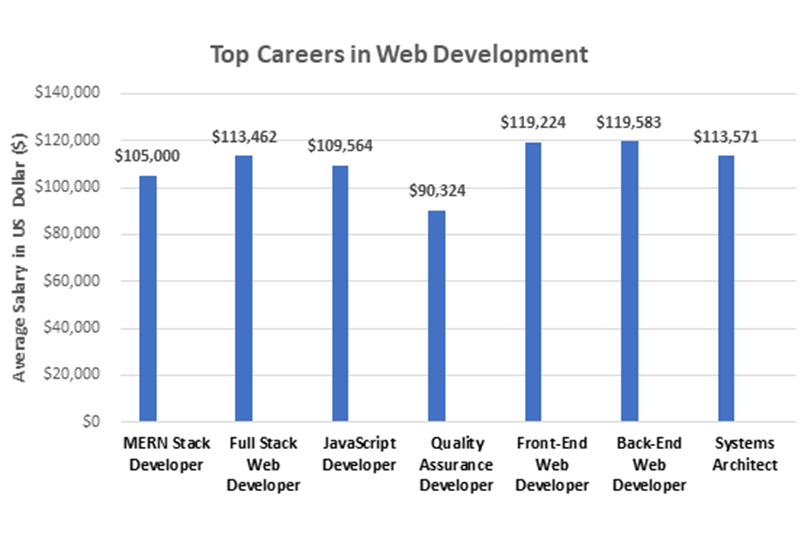
Career outlook after learning Full Stack from our Online Full Stack Training Bootcamp in New York
-
JavaScript Developer
-
MERN Stack Developer
-
Full Stack Web Developer
-
Back End Web Developer
-
Front End Web Developer
-
System Architect
Is the New York Market Exposed to Layoffs and Hiring Freezes?
Yes — the New York market is exposed, and honest candidates should hear that. Finance and media have both gone through publicized layoffs and selective hiring freezes, and office footprints have contracted in some segments while expanding in others. But the net picture is growth, not decline: new office openings, expanding engineering hubs, and campus growth from tech and healthcare employers continue to add headcount. The pattern matters more than the average — during freezes, companies cut generic skill sets and keep hiring for revenue-critical, full stack, cloud, and DevOps roles. Candidates anchored in Java, Spring Boot, cloud, and DevOps are exactly the profile companies protect during downturns, which is a core reason the JOPP curriculum is built the way it is.
Why Waiting Is the Wrong Move
Here is the truth about timing: delaying your start does not shorten the program — it only postpones the job offer. JOPP takes the time it takes because it builds everything in sequence: skills, then projects, then interviews, then client marketing, all the way to placement. That demanding stretch is precisely what employers pay for — you cannot shortcut your way to a $95k–$155k offer with a three-week course. The journey is long, but the destination is a full-time job offer. Every month you wait is a month of salary you will never recover. Start now.
The Bottom Line
There may be many coding bootcamps offering full stack training in New York, but if your goal is to actually get hired after the bootcamp, there is only one real choice: SynergisticIT's Online Full Stack Training Bootcamp in New York — the Java DevOps Full Stack Job Placement Program. It is the sure-shot way for a jobseeker to get hired after a bootcamp, backed by a 91.5% placement success rate, alumni placed at Visa, Apple, PayPal, Wells Fargo, Bank of America, Cisco, Deloitte, and hundreds more at salaries from $95k to $155k, verified alumni reviews, recognition in a USA Today feature on SynergisticIT's hiring model, and an unmatched ROI versus colleges. Explore the full SynergisticIT Job Placement Program and take the first step in your tech career journey — contact SynergisticIT today.