Important Notice— Our url is



Detroit jobseekers chasing software engineering or web development roles need training plus placement, not a certificate. SynergisticIT’s Job Placement Program and SynergisticIT’s Java Job Placement Program form the Best Full stack training Bootcamp in Detroit, Michigan with Job Placement—Java DevOps JOPP, not a short coding class.
Why Detroit Jobseekers Choose JOPP
Metro Detroit still hires engineers for mobility software, banking systems, healthcare platforms, and cloud delivery. Searchers looking for the Best software engineering Bootcamp in Detroit, Michigan or the Best web development Bootcamp in Detroit, Michigan with Job Placement keep running into the same failure: a MERN certificate, then silence from hiring managers. JOPP is different because it is full stack training plus staffing. Completers who finish projects, certifications, and assessments are marketed to 24,000+ employer contacts until they land offers. About 90% of hired JOPP graduates had never held a U.S. tech job; the other 10% are career changers and people returning after a break. About 30% already tried another bootcamp, Udemy, Coursera, or a university short course and still were not hired.
JOPP can be completed from anywhere in the USA, including Detroit, Dearborn, Warren, Troy, and Livonia. That nationwide delivery is why it is called a Job Placement Program, not a coding bootcamp. Coding bootcamps teach and then leave you on job boards. SynergisticIT’s Java DevOps Full Stack JOPP schedules interviews, prepares you for them, and stays with you until a tech employer makes an offer.
Mass-apply bots do not close that gap. Why AI job-apply tools fail is the same lesson Detroit applicants learn the hard way: volume without depth does not convert.
Detroit is actively hiring Full Stack, MERN, and MEAN developers as mobility, fintech, and cloud employers expand JavaScript product teams. Direct employers, not staffing firms, now dominate downtown, Dearborn, Warren, and Troy openings.
Hiring Employers
Employers that recruit Full Stack, MERN, and MEAN developers across Detroit and metro offices include General Motors, Ford Motor Company, Stellantis, Rocket Companies, Amazon, Google, Rivian, StockX, Intuit, PwC, Deloitte, EY, Ally Financial, Geotab, Eccalon, Accenture, Speechify, Latitude AI, Stryker, Booz Allen Hamilton, Contact Government Services, 24G, Danaher, Waymo, and Lear.
Salary Ranges
Junior full stack and MERN or MEAN developers in Detroit typically see $65,000–$90,000, with Michigan Full Stack I averages near $72,928 and many first-year software roles clustering around $80,501–$88,350. Mid-level engineers usually land $95,000–$130,000, close to Indeed’s Detroit full stack average of $101,067 plus about $5,500 in cash bonus. Senior individual contributors commonly earn $130,000–$175,000 in base-heavy packages, with Salary.com Developer III averages near $128,790 and Levels.fyi showing Detroit software engineer median total pay of $130,000, a 75th percentile near $174,000, and a 90th percentile around $205,000.
People and Jobs
Famous tech people from Detroit include Microsoft’s former chief Steve Ballmer, iPod and Nest inventor Tony Fadell, Rocket founder Dan Gilbert, Compuware builder Peter Karmanos Jr., and Groupon co-founder Brad Keywell, whose capital still feeds local startups. The Detroit-Warren-Dearborn metro employed about 24,870 software developers in the May 2025 federal release, with a median wage of $130,760. Demand clusters in automotive software, mortgage and banking platforms, health systems, and consulting, and Indeed recently listed more than one hundred software engineering jobs with city full stack titles averaging about $112,399. The market cooled after 2022, but mobility, AI, and cloud work keep absorbing JavaScript talent downtown and in the suburbs.
Pay Versus Metros
Benefits, equity, bonuses, and total compensation in Detroit trail Chicago cash and Ann Arbor product equity, yet stretch further after housing. Ann Arbor software bases often run $95,000–$115,000 at entry, $130,000–$150,000 mid-level, and $165,000–$195,000 senior, with initial equity of $20,000–$250,000 depending on level. Chicago frequently pays an 18–22% premium on specialized roles and larger consulting bonuses. Detroit Three offers lean on 10–12% bonuses, 401(k) matches near 6%, healthcare, and vehicle discounts, while RSUs stay modest except at Amazon, Google, Rivian, and StockX, where senior total compensation can reach $193,000–$371,000. Michigan’s 4.25% flat tax and cheaper housing make a Detroit $130,000 package compete with higher Chicago stickers. Cleveland and Columbus usually offer thinner stock and slightly lower bases, so Detroit wins on auto-tech cash while Chicago and Ann Arbor still win bonus and equity for the same MERN talent.
How JOPP helps after a career gap
- Rebuilds a current stack so a pause in employment is replaced with Java, Spring Boot, SQL, DevOps, and full stack project work hiring managers can inspect.
- Creates genuine project evidence instead of unexplained years, so interviews start with shipped work rather than apologies.
- Restores interview stamina through live coding, DSA, and behavioral drills after months or years away from technical conversations.
- Markets you as employable now, because the placement team presents a tested candidate, not a rusty resume.
- Adds vendor certifications (Oracle, AWS, Azure, Snowflake, Databricks, Microsoft) that signal the gap did not leave skills frozen.
- Handholds until an offer, including resume work and scheduled interviews, so you are not hunting alone after a break.
How JOPP helps recent graduates with no experience
- Converts coursework into production-shaped projects that look like enterprise tickets, not classroom labs. See how juniors with no experience get hired.
- Teaches the stack employers actually list: Java, Spring Boot, microservices, SQL, DevOps, plus MERN and MEAN—not a frontend-only shortcut.
- Closes the “years of experience” wall by documenting hands-on delivery hiring panels can probe line by line.
- Prepares you for real interview loops used by banks, automakers, and product firms, not toy quizzes.
- Puts your profile in front of clients instead of leaving a new graduate to freeze on LinkedIn Easy Apply.
- Aims at first tech jobs paying $95k–$155k after successful completion, rather than unpaid internships that never convert.
How JOPP helps jobseekers who want tech jobs
- Covers one employer-complete program so you are not paying for four or five disconnected bootcamps.
- Aligns skills to live client demand, because SynergisticIT has been in the tech industry for over 15 years and updates curriculum from real interviews.
- Screens you before the market sees you, so companies meet candidates already checked for technical and job fit.
- Trains for day-one contribution, with projects, assessments, and certifications required before marketing begins.
- Keeps only completers in the hiring pipeline; people who skip the full program and certifications are not the candidates employers keep rehiring.
- Walks with you after class ends—marketing, interview scheduling, and offer support—until you start work.
Detroit Roles, AI Demand, and Java
How do full-time, contract, staffing-agency, and freelance roles split in Detroit, and which path is most common for newcomers? Detroit’s software market is a mix, not a single ladder. Large employers such as GM, Ford, Ally, and regional banks still prefer full-time product and platform engineers for systems they will own for years. Contract and staffing-agency seats are common on automotive IT programs, ERP cutovers, and surge work, which is why Detroit job boards stay full of W2 contracts through firms serving Dearborn and downtown clients. Freelance full stack gigs exist, but they are usually short, poorly scoped, and rarely sponsor visas or train juniors. For recent graduates, full-time junior software engineering is the path that builds a career; contract-to-hire through a staffing mill is the path many take when they lack projects and depth. JOPP is built for direct full-time interviews, not a revolving contract bench.
Why does full stack stay in demand even with AI tools? AI can draft a React component or a boilerplate endpoint. It cannot own a payment flow, a vehicle-data service, or a claims system that must pass audit. Companies still need engineers who can design APIs, model SQL, secure Spring Boot services, review AI-generated code, and ship through CI/CD. Emerging full stack skills Detroit employers now ask about include TypeScript frontends, Spring Boot and microservices, REST and GraphQL, Docker and Kubernetes, GitHub Actions or Jenkins, AWS or Azure deploys, observability (Actuator, Prometheus, ELK), and AI-assisted features via Spring AI or similar libraries. That is why full stack should be learned in depth, not from a weekend MERN camp. Learn it from a firm that has been in the tech industry for over 15 years—SynergisticIT—and already hears what employers reject in interviews.
Why is MERN and MEAN demand cooling, and why is Java stronger? JavaScript stacks still appear on startup boards, but enterprise hiring in banking, fintech, government, insurance, and large retail has not moved off Java. Java’s object-oriented structure, mature tooling, and long-term support make massive codebases and large engineering teams easier to govern. Node.js is excellent at lightweight I/O; it struggles when the workload is heavy transaction processing, strict typing across hundreds of services, and decades of domain logic. Mission-critical systems at banks and government agencies stay on Java because downtime is not a blog post—it is a regulatory event. JOPP still teaches MERN and MEAN so you can work across the UI, but it treats Java as the employment core.
Just learning MERN is not enough to get hired. Employers want to save money and headcount. They expect Java, Spring Boot, DevOps, and SQL along with MERN and MEAN so one engineer can touch backend, data, and deployment. Full stack training is therefore part of SynergisticIT’s Java DevOps Full Stack Job Placement Program, not a separate toy track.
Why Employers Keep Hiring Completers
Hiring managers are tired of fake resumes, job-board spam, and staffing send-outs who cannot code without a script. They do not want to second-guess performance. Actual SynergisticIT JOPP candidates who finished the whole program and certifications are the ones companies rehire. People who did not complete JOPP are not that product. Completers are certified, already worked on projects, and can contribute from day one. They cover a wide tech stack and are tested to perform. SynergisticIT’s position is that successful JOPP grads are quality candidates—often compared by clients to people with 3–5 years of thinner, narrower experience—because the stack is deeper and current.
That is why firms such as Visa, Intel, eBay, Citi, Apple, PayPal, Walmart Labs, AutoZone, Wells Fargo, Capital One, Walgreens, Bank of America, SAP, Cisco Systems, Verizon, T-Mobile, Intuit, Ford, Hitachi, Western Union, Deloitte, Dell, USAA, Carfax, and Humana keep hiring JOPP candidates, with alumni offers commonly in the $95k to $155k range. Companies pay those salaries because completers perform, get promoted faster, and move into lead work; they are not guessing. A similar multi-stack, certified, project-proven hire from the open market would often cost two to three times as much in salary and ramp. Employers get real proficiency with no long lead time. Jobseekers get into companies that would otherwise price them out. It is a win-win—but only if the candidate actually finished JOPP.
Rewrite those employer benefits in working language:
Current tech-stack alignment. JOPP is shaped by client demand, industry events, and hands-on upskilling, so ramp-up time is shorter.
Pre-screened talent. Companies receive people already checked for technical and job fit before interviews.
Certifications that add weight. Completers are certified on Java, DevOps, AWS, Azure, Power BI, Snowflake, and related tools.
Multi-stack value. One junior who can contribute across backend, frontend, and deployment—or a data hire who can also support engineering and analytics—beats a single-skill resume.
Lower hiring risk. Structured training, projects, interview prep, and screening reduce failure risk.
Day-one contribution. Practical, job-ready work from the first sprint.
Genuine project-based resumes. Real skills, not embellished titles.
More output per dollar. Multiskilled hires take multiple responsibilities.
SynergisticIT’s Job Placement Program exists so Detroit employers meet that profile without gambling on job boards.
How JOPP Differs From Bootcamps
Curriculum quality. SynergisticIT is at Oracle CloudWorld, JavaOne, and the Gartner Data & Analytics Summit, and candidates are interviewing continuously, so the syllabus moves with the market. Watch tech event videos and Oracle CloudWorld coverage. Read SynergisticIT reviews and the USA Today feature.
Instructor quality. Most bootcamps use alumni, recordings, or a few hours a week. JOPP uses industry professionals; the average instructor has more than 10 years of domain experience.
Number of instructors. Many bootcamps have one or two people teaching everything. Java JOPP uses 5–6 specialists—separate instructors for Java, databases, advanced Java, and DevOps (data tracks similarly split analytics, engineering, and ML).
Cost and payment. Transparent: $10k before, balance about $26k after a job offer, payable over two years. If there is no qualifying job offer, no balance accrues. Most bootcamps take everything up front and advertise refunds with clauses that never pay out. JOPP takes partial fees before and the rest after hire into an $81k+ role.
Duration. About 4–5 hours a day, five days a week, across five months, live with instructors, no recorded-only model. Ask every other bootcamp that question in writing.
Student-to-instructor ratio. About 5-to-1, versus 20-to-1 elsewhere.
Projects. Built to current company stacks. Only projects you actually complete go on the resume.
Alumni success. Photos, audio, and video reviews show offers from $95k to $155k, often multiple offers. Claimed success rate: 91.5% for those who complete the program.
Certifications included at no extra cost from Microsoft, Oracle, Snowflake, Databricks, Azure, and AWS.
Career help after graduation. SynergisticIT markets to 24,000+ company contacts, owns outreach, prepares resumes, drills interviews, and schedules interviews. Most bootcamps hand you a PDF of “tips.” Get their placement promise in writing.
Why trust this. Photographs of alumni on the JOPP page, video reviews, offer letters, and years in business since 2010. No hidden-clause “guarantees.” Transparent cost and outcomes.
That is also why so many coding bootcamps have shut down: they sold job guarantees they could not keep. JOPP’s kept promise is narrower and harder: candidates who successfully complete JOPP get hired into tech companies. Do not stack four cheap courses. One Java DevOps Full Stack JOPP covers Java, Spring Boot, microservices, SQL, DSA, interview prep, MERN, MEAN, DevOps, cloud, and certifications. Compare the economics on the SynergisticIT ROI blog versus colleges.
Java DevOps Full Stack JOPP stack includes Core and Advanced Java (OOP, collections, concurrency, Java 21+), Spring Boot and microservices (JPA, Security, API gateways, resilience), DevOps (Git, Maven/Gradle, Jenkins, Docker, Kubernetes, Terraform), DSA, SQL/PL-SQL, and MERN/MEAN (MongoDB, Express, React, Angular, Node). That combination is the Best software engineering Bootcamp in Detroit, Michigan in practice, because Detroit employers do not hire “React only.”
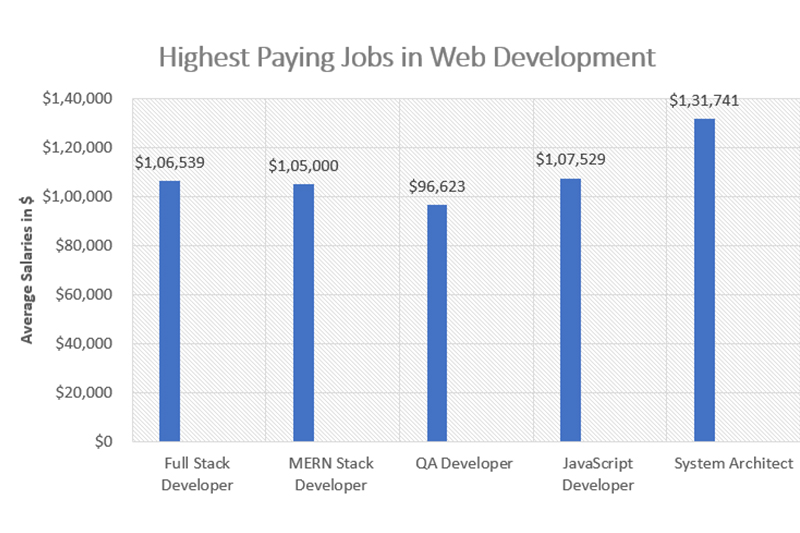
Our Full Stack training opens the door for many rewarding careers, such as:
-
MERN Stack Developer (105,000)
-
System Architect ($131,741)
-
Java Devops Developer ($136,623)
-
Full Stack Developer ($126,539)
-
Back End Web Developer ($123,770)
-
JavaScript Developer ($107,529)
-
Front End Web Developer ($109,735)
Detroit Visas, Layoffs, and Timing
What relocation, visa-sponsorship, and H-1B conversion support do Detroit employers actually offer? Direct sponsorship is concentrated at large, established filers—not at freelance gigs or tiny agencies. Ford, General Motors, and Stellantis regularly file H-1B petitions for software and engineering roles in Dearborn, Warren, Auburn Hills, and Detroit. Rocket Companies, automotive suppliers such as Aptiv, and consulting firms including Deloitte also appear in Michigan technology filings. University of Michigan is cap-exempt for qualifying research and IT roles. The City of Detroit files a small number of LCAs, which is not a junior-developer pipeline. Relocation packages show up most often on OEM internships and experienced full-time roles (housing help, hybrid days at Ford’s Michigan Central campus in Corktown or GM’s Hudson’s Detroit headquarters, which opened in January 2026). H-1B conversion is not automatic for newcomers: employers typically need a full-time role, lottery timing, and a candidate already performing. Staffing vendors file too, but those seats can be client-dependent and fragile. JOPP’s value for visa-sensitive jobseekers is full-time, skills-deep offers that make sponsorship a business decision, not a favor.
How exposed is Detroit to layoffs versus new campuses? The metro is split. In September 2026, Trinity Health filed a WARN notice to cut 557 Livonia IT roles (service desk, systems, applications, engineering) between late October and November as it outsources internal technology support—not clinical jobs. That is real contraction in healthcare IT. At the same time, GM moved global headquarters into Hudson’s Detroit on Woodward Avenue, a long-term downtown campus meant to attract technical talent, and Ford continues mobility and software work from the restored Michigan Central site. Headcount growth is tied to vehicle software, electrification, fintech, and hybrid office teams, while commodity IT support is being vendorized. Jobseekers who only know help-desk or thin MERN are more exposed to freezes. Jobseekers who can run Java services, SQL, and DevOps sit on the growth side of that split.
Delaying enrollment does not shrink JOPP. Waiting only pushes the offer date. The program is long because it has to produce skills, projects, interviews, and client marketing. Employers pay for that stretch of work. Start now; the path is demanding, and the payoff is a full-time job offer.
Start the Placement Path
Many programs advertise full stack training in Detroit. If the goal is getting hired after the bootcamp, the practical choice is SynergisticIT’s Best full stack training Bootcamp in Detroit, Michigan—Java DevOps JOPP, the Best web development Bootcamp in Detroit, Michigan with Job Placement because placement is the product. Completers who finish the whole program are the candidates companies trust. Everyone else is still a resume on a board.
Contact SynergisticIT and start the tech career journey.