 Important Notice— Our url is




If you are searching for the Top rated Full Stack training Bootcamp in San Antonio, Texas, your real goal is not another certificate — it is a full-time tech job offer. That is exactly what SynergisticIT's Java DevOps Full Stack Job Placement Program (JOPP) delivers, and why jobseekers across Texas choose the Top rated Full Stack Bootcamp in San Antonio, Texas with job placement over ordinary coding bootcamps. Since 2010, JOPP has combined immersive full stack training, real projects, certifications, interview preparation, and direct client marketing into a single program that ends in placement — not a hand shake and a goodbye.
San Antonio is one of the most underrated tech markets in America. Between USAA's 286-acre headquarters campus hiring software developers, H-E-B's massive digital transformation, Rackspace Technology, Valero, Frost Bank, CPS Energy, and a deep bench of defense, healthcare, and fintech employers, the Alamo City hires full stack developers year-round. The problem has never been demand — it has been that most training programs teach skills and then abandon jobseekers to fight alone in a crowded market. This guide breaks down the full stack landscape in San Antonio and explains why a job placement program beats a plain bootcamp every time.
San Antonio's full stack developer market is anchored by USAA, the city's technology flagship, alongside H-E-B Digital, which is building a 150,000-square-foot tech hub at its downtown Arsenal Campus to house over 1,000 digital roles. Together with Rackspace Technology and Southwest Research Institute, these employers define the metro's engineering landscape, supported by Frost Bank, Valero Energy, Whataburger, SWBC, and CPS Energy, all of which run substantial in-house software teams. Consulting and defense-driven engineering demand comes from Deloitte, Booz Allen Hamilton, CACI International, Guidehouse, AnaVation, Capgemini, IBM, Accenture, Interclypse, Integral Federal, Wyetech, and ICR, Inc., many tied to the city's "Cyber City USA" identity. Retail and logistics tech openings appear at Labatt Food Service, while robotics firm Plus One Robotics and national banks JPMorgan Chase and Wells Fargo round out active hiring. Staffing firms were excluded from this list.
Salaries in San Antonio trail national averages by roughly five percent, though the low cost of living widens the gap in real terms. Junior full stack developers with zero to two years of experience earn $85,500–$118,750, mid-level developers with two to six years earn $118,750–$156,750, and senior developers with six or more years command $156,750–$190,000. The overall average sits near $137,750 annually, though Indeed reports a more conservative $111,931 average and Glassdoor shows $115,821, reflecting variance between enterprise, startup, and government-contract pay bands.
San Antonio has produced notable technology leaders worth knowing. Lew Moorman, a Rackspace co-founder, now leads Scaleworks and Soilworks Capital as a leading startup investor. Dirk Elmendorf, another Rackspace co-founder, remains active in the local tech community. David Monroe, a San Antonio inventor with 54 patents spanning early cellphone cameras, Wi-Fi, and video teleconferencing, founded the San Antonio Museum of Science and Technology. Nicole Beebe, a former Air Force major, directs UTSA's renowned Cyber Center for Security and Analytics. Erik Nieves co-founded warehouse robotics maker Plus One Robotics.
The employment situation is mixed but resilient. San Antonio job growth led Texas at 1.9 percent from late 2024 to late 2025 with 7.5 percent private-sector pay growth, yet only about three percent of local workers are in tech, and the information sector shed 6.6 percent of jobs from May to August 2026 while professional and business services grew 8.9 percent.
Total compensation comparisons with Austin, Dallas, and Houston show San Antonio offers lower headline pay but stronger purchasing power. Austin's median of $134,120 and Dallas-area averages near $131,000–$138,000 in Plano and Irving exceed San Antonio, and Houston averages $117,855. However, San Antonio's cost of living runs roughly nine percent below average, and Texas has no state income tax statewide. Equity is scarcer in San Antonio, where large enterprises like USAA and Frost emphasize annual bonuses, profit sharing, and retirement matching over stock, while Austin's venture-backed startups offer meaningful equity with higher volatility.
What Is a Full Stack Bootcamp?
A full stack bootcamp is a short-term, intensive training program that teaches you to build complete web applications end to end — the frontend (what users see, built with HTML, CSS, JavaScript, React, or Angular), the backend (the business logic, built with Java, Node.js, or Python), the database layer (SQL, NoSQL), and increasingly the deployment layer (Git, Docker, CI/CD, and cloud platforms like AWS or Azure). Bootcamps compress what a computer science degree spreads over four years into roughly 3 to 9 months of project-based learning.
The honest truth is that a bootcamp, by itself, only checks the training box. Employers in San Antonio and across the USA are not short of applicants — they are short of proven, certified, project-tested candidates they can trust on day one. That gap between "trained" and "hired" is where most bootcamps fail their students, and it is precisely the gap SynergisticIT's Java DevOps Full Stack JOPP was built to close.
A Detailed Guide to Full Stack Bootcamps in San Antonio, Texas
Before choosing any program, you should understand what the local landscape actually offers.
- Types of bootcamps available: San Antonio jobseekers typically choose between in-person bootcamps, online live bootcamps, self-paced recorded programs, and university-affiliated certificate bootcamps. National names like Nucamp, Coding Temple, Fullstack Academy (online), and university continuing-education bootcamps serve Texas students remotely, while local options have historically been limited. The city's most prominent homegrown bootcamp, Codeup, abruptly ceased all operations in December 2023, leaving roughly 70–100 enrolled students unable to finish their programs — a cautionary tale about training providers that cannot back their promises. After that closure, San Antonio jobseekers have increasingly looked to national placement-focused programs that can be attended from anywhere in the USA.
- General fees: Most reputable full stack bootcamps charge $8,000 to $20,000, with some university programs exceeding $12,000 and part-time programs charging less. Payment usually falls into upfront tuition, installments, or third-party loans and income-share agreements. Read the fine print carefully — many "guarantees" carry refund clauses that are nearly impossible to redeem.
- Duration: Typical programs run 12 to 24 weeks full time, or up to 9 months part time. Shorter rarely means better; job-ready depth takes time.
- Live vs recorded instruction: This is the single most important question to ask. Many bootcamps market "live" programs that are mostly recorded sessions with a teaching assistant, or instructors who only teach a couple of hours per week. Always ask what percentage of instruction is live, and get it in writing.
- Success rates and hiring support: Very few bootcamps publish verifiable, third-party placement outcomes. Most provide only resume tips and a certificate, leaving the actual job hunt to the graduate. Some offer deferred payment or loan options, but refunds after a collapse like Codeup's depended on the Texas Workforce Commission stepping in.
- Alumni feedback: Public forums like Reddit's r/codingbootcamp and Google reviews show a consistent pattern — positive reviews about curriculum and community, and negative reviews about weak post-graduation job support, unresponsive career services, and placement rates far below marketing claims. Former Codeup students described losing access to curriculum and projects overnight when the school shut down.
- Who joins these bootcamps: Mostly career changers, recent graduates, and self-taught learners trying to formalize their skills. Notably, about 30% of candidates who join SynergisticIT's Job Placement Program have already completed other coding bootcamps or courses on Udemy, Coursera, or through university programs — and still could not get hired. That statistic tells you everything about training without placement.
Who Hires the Most Full Stack Developers in San Antonio?
Big enterprises do the most full stack hiring in San Antonio — by a wide margin. This is a corporate-headquarters and institutional town, not a startup town like Austin. The largest area employers include Joint Base San Antonio (military and cyber commands), H-E-B (roughly 20,000 local employees), USAA (about 19,000, with a 286-acre headquarters campus actively hiring software developers), and Rackspace Technology (about 6,500). Add Valero Energy, Frost Bank, CPS Energy, Southwest Research Institute, Christus Health, University Health, UT Health San Antonio, and NuStar/energy-tech firms, and you have a market dominated by enterprise and mid-size institutions with persistent software needs.
Startups exist — San Antonio's tech ecosystem includes cybersecurity ventures around Port San Antonio and the Texas Innocence/medtech cluster — but they hire in small numbers. For a full stack jobseeker, the practical takeaway is clear: learn the stack enterprises actually run on. That means Java, Spring Boot, Microservices, SQL, and cloud/DevOps tooling, which is exactly the spine of SynergisticIT's Java DevOps Full Stack Job Placement Program.
How Full-Time, Contract, Staffing-Agency, and Freelance Roles Split
In San Antonio, the full stack hiring market splits roughly as follows:
- Full-time direct roles (the largest share): Enterprise employers like USAA, H-E-B, Frost Bank, and CPS Energy prefer direct hires with benefits, especially for mission-critical systems.
- Contract and contract-to-hire roles: Very common at large enterprises that use 6-to-12-month contracts to evaluate developers before converting them. This is the most common entry path for newcomers and recent graduates, because it lowers the employer's risk.
- Staffing-agency placements: Firms like Robert Half, TEKsystems, Insight Global, Randstad, Kforce, and Aerotek fill a large share of contract roles and act as the gatekeeper between new developers and enterprise clients.
- Freelance and gig work: The smallest slice in San Antonio. Enterprise-driven markets offer limited freelance demand compared to coastal creative hubs.
For a recent graduate, the realistic first offer usually comes through a staffing or placement channel into a contract-to-hire or direct full-time role — which is why a program with a built-in staffing engine, like the Top rated Full Stack Bootcamp in San Antonio, Texas with job placement, removes the hardest step in the entire journey.
Remote, Hybrid, and Onsite Job Splits in San Antonio
San Antonio's full stack openings today split approximately into a minority fully remote (roughly 15–25% of postings), a large hybrid band (around 40–50%), and a substantial onsite share (around 30–40%) concentrated at USAA, H-E-B, Rackspace, and government-adjacent employers. Enterprise employers in banking, insurance, and defense lean hybrid or onsite for security and collaboration reasons, while smaller tech firms offer more remote flexibility. The practical implication for jobseekers: your skills must be strong enough to compete both locally and in the national remote job market — which is precisely the market SynergisticIT's 24,000+ client contact network serves, since JOPP can be completed from anywhere in the USA.
Job Boards and Staffing Companies San Antonio Jobseekers Use
The most-used job boards for San Antonio tech jobseekers are LinkedIn, Indeed, Dice, ZipRecruiter, Glassdoor, CareerBuilder, Built In, and company career portals like USAA's and H-E-B's own job sites. The major staffing companies hiring full stack developers in the area include Robert Half, TEKsystems, Insight Global, Randstad Technologies, Kforce, Apex Systems, and Modis. The catch: job boards and staffing firms both screen for proven skills, and jobseekers applying cold with no certifications, no real project experience, and no advocacy are usually filtered out before a human ever reads the resume.
Relocation, Visa Sponsorship, and H-1B Support in San Antonio
Official DOL data shows San Antonio employers filed over a thousand certified H-1B applications in a recent fiscal year, led by HCL America, University of Texas Health Science Center at San Antonio, USAA (United Services Automobile Association), UTSA, Kforce, H-E-B, and Rackspace US. USAA in particular has grown into one of the city's most active H-1B sponsors, with certified median wages well into six figures for technical roles. Typical support includes standard relocation packages for direct hires and H-1B transfers and green card sponsorship for strong candidates already working in the USA — but almost never for unproven entry-level applicants with no work history. That is another reason OPT/STEM and visa-dependent jobseekers choose a program that markets them directly to hiring managers.
How Exposed Is San Antonio to Layoffs and Hiring Freezes?
San Antonio's market has shown resilience with warning signs. Overall metro employment has continued to grow modestly — total payroll jobs were still about half a percent higher year over year in recent data — even as WARN layoff notices rose in 2025–2026, hitting healthcare, logistics, retail, and some technology employers. Rackspace announced a global restructuring of roughly 15% of its workforce as it reorganizes around AI, and the region saw over a thousand announced layoffs early in 2026. At the same time, the city's $200 million Ready to Work workforce program continues pushing thousands of residents into certification and training pathways. The lesson: in a market with real layoffs, employers become more selective, not less — which rewards candidates who arrive certified, project-tested, and pre-screened.
Why Full Stack Development Stays in Demand Despite AI Tools
AI coding assistants have made individual developers faster, but they have not replaced the role. Companies still need engineers who can architect whole systems, understand business requirements, integrate databases, secure applications, deploy to the cloud, and own outcomes across the stack. AI amplifies a skilled engineer; it cannot interview a stakeholder, debug a production incident across three services, or take responsibility for a release. Demand is shifting toward full stack developers who also work with emerging tech being asked in job descriptions today: AI-assisted development, LLM integration, cloud-native microservices, Kubernetes, CI/CD automation, event-driven architecture, and data engineering with Snowflake, Databricks, and Power BI. In short: AI tools raised the bar for entry-level developers — they did not lower demand for well-trained ones.
Why MERN and MEAN Demand Is Cooling — and Why Java Wins
Honest market analysis: MERN and MEAN stack demand has cooled relative to its hype years. JavaScript-only stacks still power plenty of startups and internal tools, but they are increasingly commoditized, crowded with bootcamp graduates, and underrepresented in the systems that pay the biggest San Antonio salaries. Java retains enterprise dominance for mission-critical systems — banking, fintech, insurance, healthcare, and government — exactly the industries that dominate San Antonio's economy. Java's object-oriented structure makes massive codebases and large engineering teams manageable, with mature tooling, security, and scalability. Node.js excels at lightweight, I/O-heavy operations but struggles with heavy computational workloads and large-scale long-lived enterprise systems. A jobseeker who learns Java, Spring Boot, and DevOps alongside modern frontend skills competes for a far larger, better-paying slice of the market than a MERN-only developer.
This is also why just learning full stack MERN development is not enough to get hired. Companies now expect Java, Spring Boot, DevOps, and SQL alongside MERN and MEAN, because they want to save resources and money by hiring fewer, multi-stack engineers. SynergisticIT's full stack training is part of its Java DevOps Full Stack Job Placement Program, covering Java, Spring Boot, Microservices, SQL, DSA, DevOps, MERN stack, and MEAN stack — the complete technology footprint employers actually test for.
And depth matters. Learning full stack MERN for employment should not be done from just any coding bootcamp, but from a company that has been in the tech industry for over 15 years — SynergisticIT — which knows from direct client interaction exactly what employers are looking for in jobseekers.
How SynergisticIT's JOPP Helps Jobseekers With Career Gaps
Jobseekers returning after a career gap or break face automatic resume filters and skeptical hiring managers. Here is how JOPP changes that equation:
- Your resume is rebuilt around current, real projects — the gap becomes a footnote next to demonstrable, modern technical work rather than the headline of your application.
- You re-enter the market with fresh certifications (Oracle Java, AWS, Azure, and more) that prove your skills are current, directly countering the "stale skills" assumption employers make about gap candidates.
- Structured daily immersion for about five months re-establishes work rhythm and discipline, so your first day on the job feels familiar rather than overwhelming.
- Technical screening before you are marketed to clients means employers see a validated candidate, not a risky bet on someone returning from a break.
- SynergisticIT markets you to its network of 24,000+ company contacts — your gap never has to survive a cold job-board screening process.
- Interview preparation and scheduling are handled with you, so you walk into interviews rehearsed, confident, and backed by real project stories. Roughly 10% of JOPP hires are career changers and gap candidates — proof the pathway works.
How JOPP Helps Recent Graduates With No Experience
Recent graduates with zero professional tech experience face the classic catch-22: jobs require experience, and experience requires a job. JOPP resolves it:
- You graduate the program with hands-on project experience on enterprise-style applications — the work experience employers look for, built before your first day on the job.
- You earn industry certifications at no extra cost from Microsoft, Oracle, AWS, Azure, Snowflake, and Databricks — credentials that separate you from thousands of degree-only applicants.
- You are trained across multiple stacks — backend, frontend, databases, and deployment — so one junior hire can contribute across teams, making you more employable than single-track peers.
- SynergisticIT schedules and prepares you for interviews with real hiring companies, replacing hundreds of cold applications with warm, pre-screened opportunities.
- You get a genuine, project-based resume rather than an embellished one, so your background survives technical questioning and background checks.
- You get hired into real tech roles at great companies — approximately 90% of JOPP graduates who land tech jobs had never worked in tech before. That is the entire point of the program.
Why Employers Prefer SynergisticIT JOPP Candidates
Employers are tired of fake, ineffective candidates, job boards that waste screening time, and staffing companies that forward unvetted resumes. SynergisticIT JOPP candidates solve this:
- Current tech stack alignment and job-ready technical skills: JOPP is shaped by tech-client demand, industry interaction at Oracle CloudWorld and the Gartner Data & Analytics Summit, and continuous, tech-industry-focused upskilling — so candidates need minimal ramp-up time.
- Pre-screened talent: rigorous technical screening happens before candidates go to market. Companies receive candidates already checked for technical and job fit.
- Certified across the stack: JOPP candidates hold certifications in Java, DevOps, AWS, Azure, Power BI, Snowflake, and more, adding credibility to an already diverse skill set.
- Multi-stack skills: one junior developer who can contribute across backend, frontend, and deployment — or a data scientist who can also do data engineering, analytics, and ML/AI work — delivers more value per hire.
- Reduced hiring risk: structured training, real projects, interview prep, and screening mean employers are not gambling. For more on the cost of a bad hire, read SynergisticIT's tips to avoid a bad hire.
- Day-one contribution and genuine project-based resumes: JOPP candidates are proven, tested, and practical — not resume-polished. They are quality candidates who compare favorably to people with 3–5 years of ordinary experience, with deeper and broader tech stack exposure.
Why Companies Hire JOPP Candidates at High Salaries
Tech companies hire SynergisticIT JOPP candidates at high salaries — $95,000 to $155,000 — because these candidates routinely perform better than experienced hires, are promoted faster, and take leadership positions earlier. When hiring managers want to stop second-guessing a new employee's work performance or technical skills, JOPP candidates are their choice. Hiring a similar multi-stack, certified, project-tested candidate from the open market would cost two to three times the salary. Companies like Visa, Intel, eBay, Citi, Apple, PayPal, Walmart Labs, AutoZone, Wells Fargo, Capital One, Walgreens, Bank of America, SAP, Cisco Systems, Verizon, T-Mobile, Intuit, Ford, Hitachi, Western Union, Deloitte, Dell, USAA, Carfax, and Humana keep hiring JOPP graduates because the math is a win-win: employers get real, technically proficient candidates with zero lead time to start working, and jobseekers get access to great companies they could not reach alone.
One important caveat: make sure candidates are actual SynergisticIT JOPP graduates who completed the entire program and its certifications. Candidates who did not complete JOPP will not reflect the program's quality.
How SynergisticIT Compares to Bootcamps and Staffing Companies
- Curriculum relevance: shaped by real-time feedback from 24,000+ tech client contacts and industry events — adjusted continuously to actual job market requirements, not a frozen syllabus.
- Instructor quality: industry professionals averaging 10+ years of experience — not recent alumni or recorded-session facilitators teaching a few hours a week.
- Number of instructors: 5–6 specialists per program — separate experts for Java, databases, advanced Java, DevOps, data analytics, data engineering, and data science/ML — versus the 1–2 generalists most bootcamps use.
- Cost and payment: transparent — $10,000 upfront, balance of $26,000 payable over two years only after you land a job offer of $81,000 or more. If there is no job offer, no further payments accrue. Most bootcamps collect everything upfront and offer refunds with hidden clauses.
- Instruction depth: 4–5 hours per day, five days a week, for around five months — fully live instruction, no recorded sessions. Ask every bootcamp you consider this question.
- Student-to-instructor ratio: 5:1, versus roughly 20:1 at typical bootcamps.
- Projects: tailored to current company requirements and tech stacks — and only the projects you actually work on go on your resume.
- Alumni success: grads land offers from $95k to $155k, often with multiple offers — with video, audio, and written reviews on the SynergisticIT reviews page. See also SynergisticIT's USA Today feature and its tech event video gallery from Oracle CloudWorld and Gartner.
- Certifications included at no extra cost from Microsoft, Oracle, Snowflake, Databricks, Azure, and AWS.
- Placement support after graduation: SynergisticIT markets you to its network and hand-holds you from enrollment through your first day at work — resume, interview prep, and scheduling included. Bootcamps issue a certificate and wish you luck.
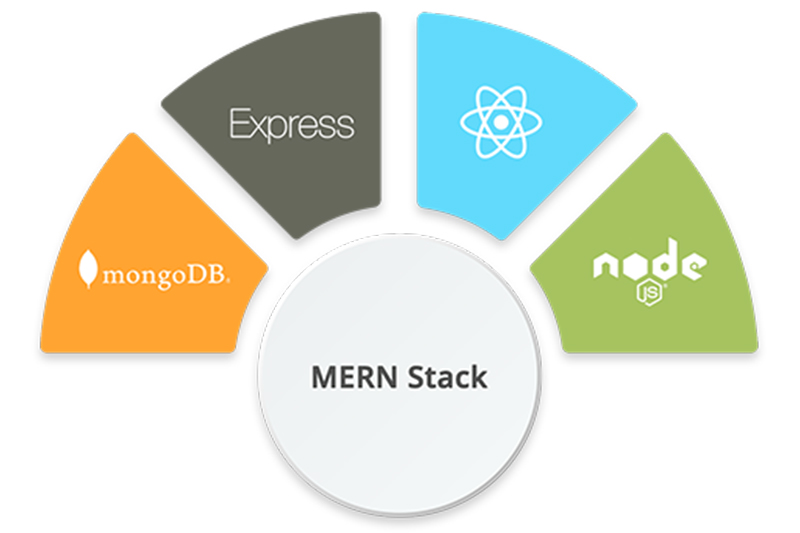
Full stack training is part of SynergisticIT's Java DevOps Full Stack Job Placement Program (JOPP) rather than a standalone MERN course. The JOPP tech stack includes:
- Core and Advanced Java
- Spring Boot and Microservices
- DevOps (CI/CD, Docker, Kubernetes, AWS DevOps Professional certification prep)
- PL/SQL and databases
- Data Structures and Algorithmics (DSA)
- MERN stack and MEAN stack
- Cloud technologies (AWS, Azure)
- Interview prep with access to 5,000+ real client interview questions
Learning MERN in a short bootcamp led by recent graduates does not provide the same depth as training from a company with over 15 years of industry experience. SynergisticIT continuously updates its curriculum based on direct client feedback and participation in major industry events, offering insights that classroom-based bootcamps cannot match.
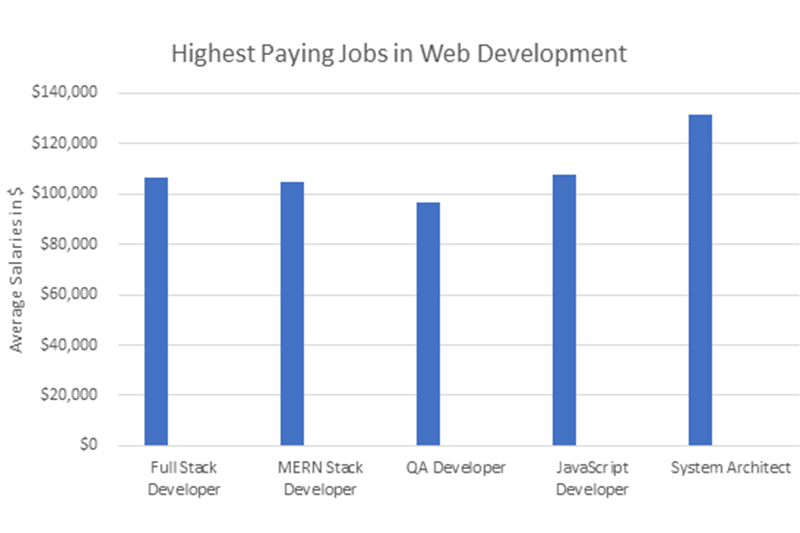
Full Stack Developer ($106,539)
MERN Stack Developer (105,000)
Java Devops Developer ($126,623)
JavaScript Developer ($107,529)
System Architect ($131,741)
Front End Web Developer ($109,735)
Back End Web Developer ($113,770)
JOPP Is a Job Placement Program — Not Just a Bootcamp
SynergisticIT's Job Placement Program can be done from anywhere in the USA and is the full stack coding training Bootcamp in San Antonio, Texas, plus staffing, combined — which is exactly why it is called a Job Placement Program and not a coding bootcamp. Rather than being a separate alternative, the Java DevOps Full Stack JOPP is the full stack bootcamp in San Antonio, Texas — with higher salaries, better placement results, and more comprehensive course coverage than standalone training.
Bootcamps largely fail at getting jobseekers hired, which is why so many — like Codeup — shut down after making promises they could not keep. Instead of doing four or five different bootcamps, or choosing a cheaper training company that promises job guarantees and never delivers, jobseekers can complete one program covering Java, Spring Boot, Microservices, SQL, DSA, interview prep, MERN/MEAN, and certifications. JOPP's graduates hold a 91.5% success rate, and its ROI versus colleges is broken down in detail in the SynergisticIT ROI blog. For more career-strategy reading, see SynergisticIT's guide on why procrastination is the real enemy of your tech career.
One final truth: waiting will not make JOPP shorter — it only pushes your job offer further away. The program takes time because it builds everything employers pay for: skills, projects, interview readiness, and client marketing all the way to placement. That demanding stretch is precisely what companies reward with a full-time offer. Begin today, because the road is long, but the destination is a signed offer letter.
Conclusion
There may be many coding bootcamps offering full stack training in San Antonio, Texas, but if your goal is to get hired after the bootcamp, there is only one choice: SynergisticIT's Top rated Full Stack training Bootcamp in San Antonio, Texas. It is the sure-shot way for a jobseeker to turn training into a real tech job offer at a great company. Ready to start? Contact SynergisticIT today and begin your tech career journey.