Important Notice— Our url is




If you are searching for the best Java training bootcamp in Hartford, Connecticut, your real goal is not just learning Java—it is getting hired. Anyone can watch tutorials, but very few programs actually walk with you until a signed offer letter lands in your inbox. That is exactly what separates a training program from a true placement program. For jobseekers in Hartford, Bridgeport, New Haven, and across Connecticut, the fastest proven route into Java developer roles is SynergisticIT's Job Placement Program (JOPP) — a structured program that combines immersive training, real projects, certifications, and active marketing to over 24,000 employer contacts until you are placed.
If your target is specifically backend, full stack, or DevOps engineering, the pathway is SynergisticIT's Java DevOps Full Stack Job Placement Program, which has been placing candidates into Fortune 500 companies like Visa, Apple, PayPal, and Wells Fargo since 2010. Java training is not a side offering at SynergisticIT—it is the core of the program. In the sections below, we break down why Java remains the most durable career bet in technology, what the Hartford tech market actually looks like, and why jobseekers who want outcomes—not just certificates—choose SynergisticIT's Java JOPP over ordinary coding bootcamps.
Companies Hiring Java Developers
The Hartford's Java hiring is dominated by insurance and financial services employers that run large enterprise Java estates. The Hartford, Travelers, Cigna, CVS Health's Aetna, Voya Financial, Lincoln Financial Group, Nassau Financial Group, Munich Re's Hartford Steam Boiler, ConnectiCare, and MassMutual regularly post full-time Java, Spring Boot, and AWS roles in and around Hartford. Alongside them, insurtech and software firms such as SS&C Technologies, Insurity, and Vertafore hire Java engineers to build policy, billing, and analytics platforms.
Beyond insurance, Java demand comes from healthcare, aerospace, and industrial technology. UnitedHealth Group (Optum), Hartford HealthCare, Cognizant, Infosys, Pratt & Whitney, Raytheon, Stanley Black & Decker, Otis Worldwide, ESPN, Lectra (Gerber Technology), and Eversource Energy have all recruited Java developers for full-time Hartford-area positions. Together, these 25 non-staffing employers form the backbone of the local Java job market, with Indeed alone listing 50+ open Java developer roles in the city.
Salary Ranges by Level
Compensation is competitive for a mid-sized metro. Junior Java developers typically earn $68,000 to $108,000, with entry-level averages near $91,000 to $108,300. Mid-level developers earn roughly $100,000 to $130,000, reflecting a Hartford average of about $111,854 and a state-wide Indeed average of $137,328. Senior developers earn $120,400 to $198,700, with posted Travelers senior roles ranging from $120,400 up to $230,000, and Glassdoor's senior average at $135,994; lead-level talent can reach $188,000 or more.
Why Java Demand Will Persist
Java will remain in demand because Hartford's insurers are modernizing decades of legacy policy and claims platforms built on Java, J2EE, and enterprise middleware, and every AI, cloud, and microservices initiative requires the Java and Spring Boot skills underpinning those systems. Posted Travelers roles like "Software Engineer I (Java & AWS)" and "Tech Lead (Java, Node.js, AWS)" confirm that Java plus cloud is the core hiring profile.
Famous Tech Figures from Hartford
Hartford has produced notable technology pioneers. Steve Russell, born in Hartford, created Spacewar!, widely considered the first video game, and wrote early Lisp implementations. H. Joseph Gerber, a Hartford-area inventor, held over 650 patents and revolutionized computer-aided design. Computer scientist Patrick Tufts, also Hartford-born, built recommendation systems used by Alexa Internet and Amazon. Nobel-winning scientist Barbara McClintock and precision-manufacturing inventor Samuel Colt round out the city's innovation legacy.
Hartford's Tech Employment Situation
Connecticut's 2026 unemployment rate stands at 4.8%, and Hartford led all U.S. metros in base-pay growth at 3.6% in August. The Hartford metro added 2,400 jobs in April 2026, though analysts warn AI could displace roughly 16% of finance and insurance roles, pushing insurers to hire developers who can automate and modernize.
What Is Java? When Was It Founded, and by Which Companies?
Java was created in 1995 by Sun Microsystems, under the technical leadership of James Gosling, who is widely known as the "father of Java." The language was originally designed under the codename "Oak" with a singular ambition: write once, run anywhere. Java code compiles to bytecode that runs on any device with a Java Virtual Machine (JVM), which made it the first truly portable enterprise language.
In 2010, Oracle Corporation acquired Sun Microsystems and became the steward of Java, a role it holds to this day. Under Oracle, Java has continued its steady evolution—Java 8 introduced lambdas and streams, Java 11 and 17 became long-term support milestones, and modern releases like Java 21 brought virtual threads that keep Java competitive for cloud-native, high-throughput workloads.
Java has now been in existence for over three decades. Very few technologies survive thirty years of change and remain dominant. Java has, and that longevity is precisely why it matters for your career.
Why Learning Java Matters: Industries That Run on It
Java is important to learn because it powers the systems that money and safety depend on. Banks, insurers, healthcare networks, retailers, airlines, and government agencies all run Java at their core. When you swipe a card, file an insurance claim, book a flight, or check a medical record, Java is very likely processing that transaction behind the scenes.
The industries using Java heavily include:
- Financial services and banking — trading platforms, payment processing, risk engines
- Insurance and insurtech — policy administration, claims processing, actuarial systems
- Healthcare technology — patient records, claims interoperability, health data platforms
- E-commerce and retail — order management, inventory, supply chain systems
- Telecommunications — billing and network management platforms
- Government and defense IT — large-scale secure enterprise systems
Why is Java future-proof? Because it modernizes constantly without breaking the systems built on it. Spring Boot and microservices keep Java relevant for cloud architecture. The JVM ecosystem supports modern languages like Kotlin and Scala. Massive codebases written in Java over the past 25 years are not going anywhere—enterprises extend them, not replace them. That means every year, more Java maintenance, modernization, and new development work is added to an already enormous base.
How Strong Is Hartford's Startup and Investment Scene?
Hartford is quietly becoming one of the Northeast's most credible insurtech and fintech innovation hubs. Connecticut has committed to a $100 million Innovation Clusters Program supporting biotechnology, financial technology, insurance technology, and defense-related advanced manufacturing. In August 2026, Governor Lamont announced a $20 million investment in a Hartford Innovation Center in the downtown innovation district, designed to connect startups, employers, and the 21 higher-education institutions of the Connecticut AI Alliance.
The startup scene in Hartford includes roughly 17–23 active venture-backed startups, with insurtech companies dominating the pipeline. Hartford ranks #8 among U.S. cities for fintech leaders and sits at the center of Connecticut's Innovation Corridor, ranked #12 in the country for tech talent. Venture funding into Hartford-based companies has totaled tens of millions of dollars in recent years across seed, private equity, and growth rounds—modest by Bay Area standards, but strong for a metro of its size and heavily concentrated in insurance, healthcare, and data-driven businesses.
Unicorn activity is limited locally, but acquisition activity is not: Hartford startups are frequently absorbed by the giant insurance and healthcare enterprises surrounding them—The Hartford, Travelers, Cigna, and Aetna/CVS Health all acquire, partner with, or vendor to local startups. Aetna's acquisition by CVS Health ($69 billion) reshaped the entire regional healthtech ecosystem. For Java developers, this matters enormously: every startup that gets acquired becomes an enterprise Java shop that needs engineers to integrate and scale what was acquired.
How Large Is Hartford's Tech Economy, and How Fast Is It Growing?
Connecticut hosts more than 9,640 technology establishments employing over 57,630 tech workers, and the Hartford region anchors the state's insurance-fintech core. Roughly 15% of all U.S. tech traded cluster GDP is produced within 120 miles of Hartford, placing the city inside one of the densest tech economies in America.
Over the last 3–5 years, Hartford's tech economy has grown in three directions:
- Insurance modernization — legacy platforms at The Hartford, Travelers, Cigna, and Aetna are being rebuilt around cloud, microservices, and Java-based APIs
- Health data and AI — healthcare payers are investing in data engineering, analytics, and AI/ML platforms
- Government and public-sector IT — state digital services, benefits modernization, and cybersecurity programs continue expanding
Company count and payroll have both trended upward as insurers build internal technology organizations that behave like software companies—hiring software engineers, data engineers, DevOps engineers, and Java full stack developers at scale.
Who Makes Up Hartford's Tech Workforce?
The demographics of tech jobseekers in Hartford, Connecticut reflect a mature, insurance-driven market:
- Age — the workforce skews experienced, with a large population of engineers aged 25–45, plus a growing cohort of mid-career changers from finance, actuarial, and insurance operations backgrounds moving into software roles
- Education — most roles require a bachelor's degree in computer science, engineering, or a related field, with a strong pipeline from UConn, Trinity College, University of Hartford, and Hartford-area community colleges; master's degrees are common in data-heavy roles
- Gender — the regional tech workforce remains male-majority, though insurance and healthcare tech employers in Hartford are more actively hiring women into engineering and data roles than pure-play tech firms
- Race and origin — Hartford's tech workforce is increasingly diverse, with significant representation of Asian, Black, and Hispanic professionals, and a substantial international talent pool
- Visa status — the region hosts a meaningful population of OPT, STEM OPT, H-1B, and green-card holders, especially around university pipelines in Hartford, Storrs, and New Haven
- Remote versus on-site mix — post-2020, most Hartford-area employers operate hybrid models, with insurance and healthcare employers favoring hybrid or on-site work for security-sensitive Java and data roles
Major Colleges Supplying Tech Talent to Hartford Employers
Hartford's employer base is fed by strong regional institutions:
- University of Connecticut (UConn) — its MS in Financial Technology is delivered in Hartford, and UConn supplies software engineering, data science, and fintech talent statewide
- University of Hartford — the Barney School offers a dedicated B.S. in Finance & Technology aimed squarely at fintech careers
- Trinity College — a strong computer science and engineering program in the heart of the city
- University of St. Joseph, Central Connecticut State University, and Connecticut State Community College — steady suppliers of software development and IT talent, increasingly integrated into the Connecticut AI Alliance
- Rensselaer at Hartford — a long-standing engineering graduate school serving working professionals
The Connecticut AI Alliance unites 21 institutions with the new Hartford Innovation Center, giving employers structured academic pipelines for projects and hiring.
Which Industry Clusters Drive Java Hiring in Hartford?
Hartford's Java demand is concentrated in five clusters:
- Insurance and insurtech — Hartford is the "Insurance Capital of the World"; The Hartford, Travelers, Cigna, and Aetna run enormous Java estates for policy, claims, and billing systems
- Fintech and financial services — #8 U.S. fintech ranking, payment processing, risk analytics, and fraud platforms built heavily in Java
- Healthtech — payer-side data platforms, claims interoperability, and healthcare analytics
- Defense and advanced manufacturing — Connecticut's defense corridor (Pratt & Whitney, Electric Boat, and their suppliers) drives secure-systems and embedded-enterprise Java work
- Government IT — state and municipal modernization programs in Connecticut run on Java-based enterprise frameworks
Will Java Survive AI Tools? Java vs. Other Technologies
Even with AI coding assistants everywhere, Java remains in demand because AI generates code, but enterprises run systems. ChatGPT-style tools can produce snippets, but they cannot own a payment platform processing millions of daily transactions, cannot be held accountable for a regulatory change, and cannot debug a distributed microservices outage at 3 a.m. What AI tools actually create is a productivity floor—every developer becomes faster—which raises expectations. Employers now want developers who understand architecture, cloud, DevOps, and systems deeply enough to direct and verify AI output. That favors engineers trained in depth, not casually.
Compare job opportunities and stability:
- Java — consistently ranked among the top 2–3 languages in job postings worldwide, dominant in enterprise backends
- Python — strong in AI/ML scripting and data work, but less dominant in the large-scale transactional systems that pay the highest engineering salaries
- JavaScript/Node — healthy frontend demand, but more crowded and volatile than backend Java
- C#/.NET — a solid niche, strongest in Microsoft-shop enterprises, but a smaller overall market than Java
- C++ — high performance niches, but steep entry and fewer junior openings
- AI/ML engineering — lucrative but concentrated in senior, research-heavy, or PhD-preferred roles
Stability is where Java wins outright. Java hiring is tied to Fortune 500 budgets, not startup cycles. It withstands hiring freezes and market corrections better than any other major language.
This is also why, if you are learning Java for employment, you should learn it in depth—not from any random coding bootcamp, but from a company that has operated inside the tech industry for over 15 years. SynergisticIT has been in the industry since 2010, works with Fortune 500 enterprise clients directly, and knows precisely what employers screen for. Java training is not a standalone course at SynergisticIT—it is embedded within the Java DevOps Full Stack Job Placement Program, covering Core Java through Spring Boot, microservices, DevOps, cloud, and interview-grade data structures and algorithms.
What's the #1 Language at Fortune 500 Companies?
Java is the #1 programming language used at most Fortune 500 enterprise companies. The reason is architectural: Fortune 500 firms need systems that are secure, auditable, scalable, and stable for decades. Java's type safety, mature security model, JVM performance, and enormous ecosystem of enterprise tools (Spring, Hibernate, Kafka, Kubernetes-adjacent tooling) make it the default choice for banking, insurance, retail, telecom, and healthcare platforms.
If the question is which technology offers long-term job and career success, the answer is Java—because it combines salary, longevity, and resilience:
- Salaries — SynergisticIT Java JOPP alumni land offers between $95k and $155k, often with multiple competing offers
- Career longevity — 30 years of continuous enterprise adoption, with no replacement on the horizon
- Market resilience — when tech hiring contracts, Java roles in insurance, banking, and healthcare—the industries that never stop—remain open
Java should be chosen over Python, AI/ML, C#, C++, and others when your goal is maximum reward per year of effort: the highest salaries, the longest career runway, and the ability to withstand the highs and lows of the job market. Deciding between stacks? Our guide on Full Stack, MEAN Stack, or MERN Stack — Which Career to Choose? breaks down the tradeoffs.
Are Coursera, Udemy, or Online University Bootcamps Enough to Get Hired?
Honestly—they are enough to get a certificate, not a job. Recorded course platforms are excellent for exposure and vocabulary, but hiring managers do not pay for certificates. To get hired, you need:
- Interactive live instruction with feedback on your actual code
- Knowledge of what companies are currently working on, not generic curriculum
- Hands-on enterprise-grade projects you can defend line by line in an interview
- Interview preparation against real client technical screens
That is precisely the gap SynergisticIT's Job Placement Program closes. It is why an estimated 30% of candidates who join SynergisticIT's JOPP have already completed other bootcamps or Udemy/Coursera/university courses, failed to get hired, and then succeeded after joining JOPP.
Why Employers Get "Bang for Their Buck" With JOPP Candidates
Enterprise companies hire SynergisticIT Job Placement Program candidates because they are genuinely the best value for money in the hiring market:
- Current tech stack alignment — JOPP is shaped by live tech-client demand and industry interaction, so candidates need minimal ramp-up time
- Pre-screened talent — every candidate passes rigorous technical screening before being presented; companies receive candidates already verified for technical and job fit
- Multi-stack certification — JOPP candidates hold certifications in Java, DevOps, AWS, Azure, Power BI, Snowflake, and more, at no extra cost, adding credibility across a diverse tech stack
- Multi-stack versatility — one junior developer who can contribute across backend, frontend, and deployment, or a data scientist who can also do data engineering and ML engineering
- Reduced hiring risk — structured training, projects, interview prep, and screening mean employers face no hit-or-miss gamble
- Day-one contribution — candidates work on real projects during the program, so they produce from their first week, not after a six-month onboarding curve
- Genuine project-based resumes — JOPP builds real skills and real projects; no fake or embellished experience that collapses under technical questioning
In short: companies hire JOPP candidates because they are trained, screened, project-ready, interview-prepared, and aligned with current roles—genuine employees with genuine skills who contribute to the bottom line from day one, at a fraction of the cost of finding equally skilled candidates on the open market.
How SynergisticIT Helps Career-Gap Jobseekers
If you have a career gap or break, SynergisticIT's JOPP helps you in five specific ways:
- It neutralizes the gap with recent, verifiable project work so your resume leads with what you can do now, not what happened years ago
- It rebuilds your technical foundation from fundamentals to advanced topics, ensuring you interview at the level of a current engineer, not a rusty one
- It markets you directly to 24,000+ employer contacts, bypassing the resume filters that typically discard gap candidates
- It prepares you for gap-related interview questions with coached, confident answers backed by demonstrable upskilling
- It stays with you until placement—interview scheduling, feedback loops, and continued marketing until the offer arrives
How SynergisticIT Helps Recent Graduates With No Experience
For those wondering how to get hired as a recent CS graduate, JOPP solves the "no experience" trap in five ways:
- It converts academic knowledge into enterprise-grade project work that hiring managers take seriously
- It adds industry certifications — Oracle Java, AWS DevOps, Azure, and more — that get past resume screening
- It trains you on the exact stacks employers list in job descriptions — Spring Boot, microservices, SQL/PL-SQL, cloud, CI/CD
- It provides interview preparation from thousands of real client questions so you perform when it counts
- It actively places you — SynergisticIT schedules interviews and markets you to employers, rather than leaving you to apply into the void
Remarkably, 90% of JOPP graduates hired into tech jobs had never worked in tech before; the other 10% are career changers and candidates with career gaps. Recent CS graduates should join SynergisticIT's Java JOPP because it delivers the three things that matter: real tech skills, real project work, and—most importantly—actual placement into tech roles at great companies.
How SynergisticIT Differs From Bootcamps and Staffing Firms
This is where the differences become decisive:
- Curriculum relevance — SynergisticIT participates in Oracle CloudWorld, JavaOne, and the Gartner Data & Analytics Summit, and its candidates interview daily, so the curriculum is adjusted in real time to live market requirements
- Instructor quality — no alumni instructors or recorded sessions; industry professionals average 10+ years of domain experience
- Number of instructors — 5–6 specialists per program (separate instructors for Java, databases, advanced Java, DevOps, data analytics, data engineering, ML), versus 1–2 generalists at most bootcamps
- Transparent cost — $10,000 before starting; the $26,000 balance only after you land a job paying $81,000 or more, payable over two years. No job offer means no payments accrue. Most bootcamps collect everything upfront with refund guarantees that can never be redeemed
- Duration and depth — 4–5 hours of live instruction daily, five days a week, over roughly five months. Fully immersive, zero recorded lectures
- Student-to-instructor ratio — 5:1 versus 20:1 or worse elsewhere
- Projects — tailored to real company requirements and tech stacks; only the projects you actually build appear on your resume
- Certifications included — Microsoft, Oracle, Snowflake, Databricks, Azure, AWS at no extra cost
- Post-graduation placement — SynergisticIT takes over your marketing to 24,000+ company contacts, prepares your resume, runs interview prep, and schedules interviews—versus bootcamps that hand you a certificate and some tips
- Verifiable trust — real alumni photographs, video reviews, and offer letters on the JOPP page, transparent costs, and no promises with hidden clauses
For more on evaluating providers, see How to Choose a Coding Bootcamp.
Why JOPP Beats Bootcamps — Even Though It Costs More
Most bootcamp graduates fail to land jobs because training alone was never enough—and we are watching a wave of bootcamps shut down because they made promises they could not keep. SynergisticIT's JOPP makes one promise and keeps it: candidates who successfully complete the program get hired. The program's placement success rate is 91.5%.
Yes, JOPP is expensive compared to a $13,000 bootcamp. But bootcamps that produce no job are infinitely expensive. JOPP saves you the money you would have wasted and, more importantly, the years you would have lost. The ROI of SynergisticIT's Job Placement Program versus colleges is the highest available: an initial $10,000 investment versus $200,000–$300,000 for a degree that shows negative ROI for its first ten years. Companies like Visa, Apple, PayPal, Walmart Labs, AutoZone, Wells Fargo, Capital One, Walgreens, Bank of America, SAP, Cisco Systems, Verizon, T-Mobile, Intuit, Ford, Hitachi, Western Union, Deloitte, Dell, USAA, Carfax, and Humana have hired SynergisticIT candidates at salaries of $95k to $155k.
The Tech Stack Inside the Java DevOps Full Stack JOPP
SynergisticIT's Java DevOps Full Stack JOPP covers the complete enterprise stack: Core Java (OOP, collections, multithreading), Advanced Java, Spring Boot, Hibernate, REST microservices, DSA, PL/SQL and databases, HTML/CSS/JavaScript, React-based frontend development, Git, Jenkins, Docker, Kubernetes, CI/CD pipelines, and AWS cloud — including preparation for the Oracle Certified Java Professional and AWS DevOps Professional certifications. If you are aiming at elite product companies and asking how to get hired in FAANG, this full stack plus DSA depth is the profile those interview loops actually test.
Available Anywhere in the USA — Training Plus Staffing Combined
SynergisticIT's Job Placement Program can be completed from anywhere in the USA, making it the best Java training bootcamp in Hartford, Connecticut combined with staffing—which is exactly why it is called a Job Placement Program, not a coding bootcamp. Most bootcamps just train and leave their students to fend for themselves in the job market, which is how jobseekers spend money and still end up unhired. SynergisticIT schedules your interviews, prepares you for them, and handholds you until the offer arrives. When you're targeting Java developer roles, your portfolio and interview performance matter as much as your knowledge—and SynergisticIT's 15+ years of tech industry experience and 24,000+ employer connections translate learning into offers.
Unlike bootcamps with fancy ads and too-good-to-be-true claims, SynergisticIT has results: view SynergisticIT's alumni reviews, its USA Today feature, and videos from Oracle CloudWorld and the Gartner Summit.

Full-Stack Mastery: The Advanced Technical Curriculum
The complete tech stack which is included in the Java DevOps full stack JOPP is engineered to align with the technical interview standards of major technology corporations. The program takes candidates through a rigorous multi-phase progression:
- Advanced Core Java: Object-Oriented Programming (OOP) paradigms, Collection Frameworks, Multi-threading mechanics, Exception Architecture, Lambda Expressions, and Stream APIs.
- Enterprise Java Frameworks: Spring Framework core, Spring Boot for rapid microservices construction, Spring Security for multi-tiered application authentication, and Hibernate ORM for relational database interaction.
- Modern Frontend Integration: React.js or Angular architectures, state management, asynchronous RESTful API consumption, and responsive interface design.
- Cloud Architecture & DevOps: Complete integration of CI/CD pipelines using Git/GitHub, Jenkins automation, Docker encapsulation, Kubernetes orchestration, and cloud deployment using Amazon Web Services (AWS).
-
For ambitious professionals determined to discover how to get hired in FAANG companies (Facebook/Meta, Amazon, Apple, Netflix, Google) and dominant global enterprises, this complete multi-stack mastery is an absolute prerequisite. Because of this architectural focus, the program successfully bypasses the baseline resume screening algorithms, placing candidates directly into technical interviews.
Verifiable Placements and Risk-Mitigated Financial Structures
The real-world validation of SynergisticIT's unified model is reflected in its corporate alumni network. SynergisticIT actively helps connect and schedule interviews, rigorously handholding its candidates until they get hired. To explore the foundational modules and start mapping your trajectory, you can access the SynergisticIT's Java JOPP page.
Furthermore, SynergisticIT provides an unmatched level of financial alignment with its enrollees. The program operates on a highly secure, risk-mitigated cost model: SynergisticIT JOPP only takes partial fees before training begins, and the remaining balance is paid exclusively once the jobseeker successfully gets hired for an $81k job or higher.
Unlike competing coding bootcamps which have fancy ads which advertise claims which are too good to be true, SynergisticIT JOPP relies entirely on clear, verifiable public results. The organization is a frequent contributor to major global technology symposiums. We also participate in OCW, the annual Gartner data analytics summit, and various industry leadership panels. Jobseekers can easily review the recorded career trajectories of successful alumni by exploring the collection of videos of tech events documenting real professional transitions. Furthermore, SynergisticIT’s long-term solution to the domestic technical talent deficit has been profiled in depth via a widely read Synergisticit’s usa today article.
Graduates completing this premium program consistently clear technical screens at some of the most visible and prestigious corporations in the world. Give examples and names of companies like Visa, Apple, PayPal, Walmart Labs, AutoZone, Wells Fargo, Capital One, Walgreens, Bank of America, SAP, Cisco Systems, Verizon, T-Mobile, Intuit, Ford, Hitachi, Western Union, Deloitte, Dell, USAA, Carfax, Humana, and many more hire Synergisticit's Candidates at salaries of $95k to $155k.
This level of professional return defines what a true coding Bootcamp with job assistance in Hartford, Connecticut standard looks like. It cements SynergisticIT as the premier choice for an intensive Best Java training with job placement in Hartford, Connecticut, and validates its standing as the absolute benchmark for enterprise code instruction.

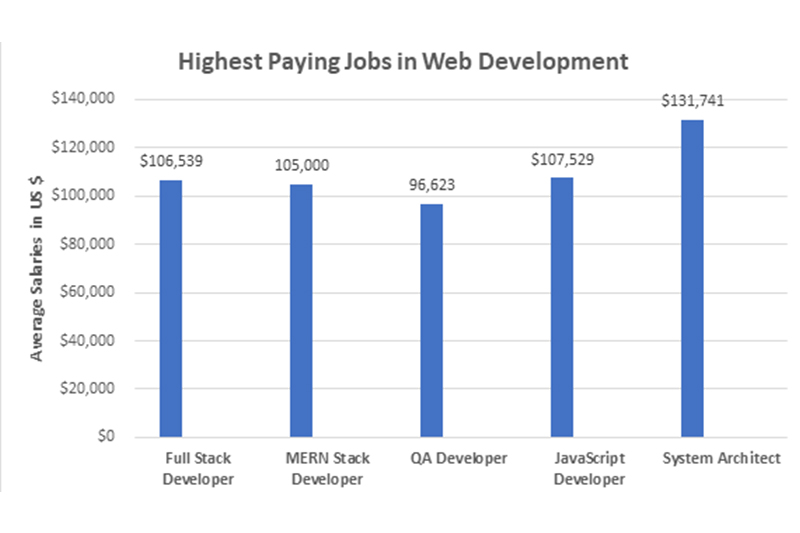
-
System Architect ($131,741)
-
Java Developer ($127,529)
-
Full Stack Developer ($106,539)
-
MERN Stack Developer (105,000)
-
Java Devops Developer ($136,623)
-
Back End Developer ($123,770)
-
Front End Web Developer ($79,735)
How AI Is Changing Hartford Tech Hiring Over the Next 12–24 Months
AI is reshaping Hartford job titles, productivity expectations, and role demand. Expect "software engineer" to absorb AI-tooling fluency as a baseline, "data analyst" roles to evolve into analytics-plus-automation hybrids, and new titles around AI governance and prompt engineering within insurance and healthcare enterprises. Productivity expectations are rising—teams of five are doing the work of eight with AI assistance—which raises the bar for junior hiring and makes structured, deep, project-based preparation more valuable, not less. Demand for Java, data engineering, cloud, and support roles tied to AI adoption is projected to grow as insurers and health systems operationalize it.
Waiting Won't Shorten the Program—It Only Delays the Offer
Here is the truth about timing: postponing your start does not make the road shorter; it only pushes your job offer further away. The program demands time because it genuinely builds everything an employer pays for—skills, real projects, interview readiness, and sustained client marketing until placement. That demanding stretch is the product. Companies do not offer $95k–$155k salaries for shortcuts; they pay for candidates who have already walked the hard road. The smartest move is to begin now, because the calendar passes either way—but only one version of it ends with a full-time job offer in your hands.
The Bottom Line
There may be many coding bootcamps and training firms making hiring promises and offering Java training in Hartford, Connecticut. But if your goal is to get hired after the program, there is only one choice: SynergisticIT's best Java coding training bootcamp in Hartford, Connecticut. It is the sure-shot way for a jobseeker to convert training into a signed offer.
Contact SynergisticIT today and take the first step in your tech career journey.