 Important Notice— Our url is




Best Full Stack Training Bootcamp in Dallas, Texas with Job Placement
Dallas jobseekers who type Best software engineering Bootcamp in Dallas, Texas or Best web development Bootcamp in Dallas, Texas with Job Placement are not shopping for another certificate. They want a hire. SynergisticIT’s Job Placement Program and SynergisticIT’s Java Job Placement Program were built for that outcome. SynergisticIT’s Java DevOps JOPP is the Best Full stack training Bootcamp in Dallas, Texas with Job Placement because it pairs live instruction with staffing, client marketing, and interview scheduling until an offer lands. You can complete it from anywhere in the USA, including North Texas, which is why it is training plus placement rather than a classroom that ends at graduation.
Dallas–Fort Worth engineering sits inside banks, insurers, telecom, semiconductors, and logistics campuses in Plano, Richardson, Irving, and downtown. Those employers do not staff mission-critical systems with a weekend MERN tutorial. They hire people who can ship Java, Spring Boot, SQL, DevOps, and a working frontend. That mix is why Java DevOps Full Stack JOPP, not a generic coding school, is the practical answer for Dallas.
Dallas is actively hiring full stack, MERN, and MEAN developers at large banks, telecom, semiconductor, and product firms rather than agencies, with junior cash pay often $82,000–$110,000 and senior packages commonly $150,000–$190,000.
Companies Hiring
Direct employers recruiting these stacks include JPMorgan Chase, State Farm, Fidelity Investments, Goldman Sachs, Capital One, Toyota North America, AT&T, Samsung Electronics America, Texas Instruments, McKesson, Amazon, BNY, GEICO, Bestow, Shield AI, Databricks, Pariveda, Globe Life, Invitation Homes, onsemi, Liberty Mutual, Optum, Citi, IBM, and Charles Schwab.
Salary Ranges
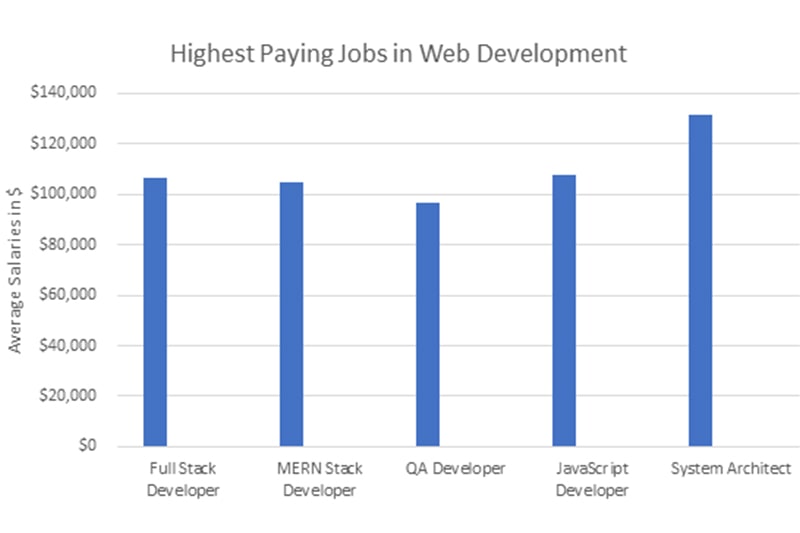
Junior full stack, MERN, and MEAN developers in Dallas typically earn $82,000–$110,000, mid-level engineers land $115,000–$145,000, and senior engineers see $150,000–$190,000, while posted averages sit near $106,856 with about $5,500 in cash bonus and metro medians around $131,490, with competitive mid-level total compensation often $150,000–$165,000 and senior fintech total pay reaching $185,000–$220,000.
Dallas Tech Scene
Dallas’s best-known tech figures include Mark Cuban, who sold Broadcast.com and remains a high-profile investor, H. Ross Perot, founder of Electronic Data Systems, Melissa Solis, who built GIACT Systems toward a $610 million exit, Skip Howard of Spacee and computer vision, and Sara Doutt, a 2026 Tech Titans startup CEO. CBRE ranks Dallas–Fort Worth eighth for North American tech talent and second for additions from 2022 to 2025, with 37,230 tech jobs added and 18.7 percent growth among large markets, about 29,840 specialized AI workers after at least 45 percent year-over-year growth, while CompTIA projects 11,013 net tech jobs in 2026 and a workforce near 388,026. Employment is concentrated in corporate engineering campuses rather than venture startups, with large Plano and Westlake finance hubs and AT&T’s headquarters shift supporting steady demand for JavaScript full stack work, and Samsung Electronics America moving its U.S. headquarters to Plano by late 2026.
Pay Versus Nearby Metros
Austin still posts higher headline software pay, with mid-level averages near $145,000 versus about $135,000 in Dallas and senior bands that can run $165,000–$220,000 against Dallas’s $150,000–$190,000, because Austin has more big-tech and venture-backed equity grants. Dallas offsets that with cheaper housing, a cost-of-living index near 103.2 versus Austin’s 119.3, so a $131,490 Dallas median and a $165,000 Austin median have similar purchasing power, while Houston usually trails both on equity and cash. Benefits at Dallas Fortune 500 campuses—401(k) matches, health coverage, and cash bonuses around $5,500—are strong, yet restricted stock and refreshers are thinner than Austin product companies, so total compensation often looks 10–15 percent lower on paper and closer after rent, and all three Texas metros share zero state income tax, which shrinks take-home gaps.
Why Full Stack Still Wins After AI Tools
AI coding assistants draft snippets. They do not own production. Dallas banks, payment firms, and government contractors still need engineers who can design APIs, secure data, review generated code, and keep releases alive at 2 a.m. Full stack demand holds because someone must connect the browser, the service layer, the database, and the pipeline. Tools raise the floor; they do not erase the job.
Companies now ask for more than a React page. Emerging full stack work in Dallas screens includes TypeScript, Spring Boot 3, microservices, API gateways, event-driven design, Kubernetes, CI/CD, observability, GraphQL beside REST, and cloud-native deploy on AWS or Azure. Hiring managers also probe AI-assisted coding judgment: can you reject a hallucinated query, add tests, and explain the tradeoff? That is employment skill, not prompt novelty.
If the goal is employment, MERN should be learned in depth, not as a two-week overlay. Depth belongs in a firm that has lived in the tech industry for over 15 years. SynergisticIT has that tenure. It hears what Visa, Citi, Apple, and similar clients actually reject in interviews. A random bootcamp records lectures. SynergisticIT rewrites labs when client tickets change. That is the difference between a hobby stack and a hireable stack.
Node.js is excellent at lightweight I/O. It strains when the workload is a core banking batch, a claims engine, or a regulated ledger. Java’s object-oriented structure keeps massive codebases and large teams coherent. MERN and MEAN demand has cooled because too many graduates arrived with identical todo apps and no enterprise backend. Dallas still runs mission-critical systems in banking, fintech, and government on Java. That is why Java is the better employment bet, with MERN and MEAN as supporting fluency rather than the whole résumé.
Learning full stack MERN alone is not enough. Companies want to save money, so they expect Java, Spring Boot, DevOps, and SQL along with MERN and MEAN. One engineer who can touch backend, frontend, and deployment beats three narrow juniors. Full stack training is not a side elective here. It is inside SynergisticIT’s Java DevOps Full Stack Job Placement Program.
How Dallas Roles Split for Newcomers
Dallas does not hire like a freelance bazaar. Fortune 500 campuses prefer full-time W-2 engineers on bands, background checks, and long-lived products. That is the most common destination for people who want stability after training.
Contract work is the surge valve. Cloud migrations, ERP cutovers, and release crunches go through vendors at billable hours. Pay can look high on a 1099 or W-2 contract, yet benefits and visa support are thinner. Staffing-agency roles sit between those poles: contract-to-hire, vendor management systems, and 12-month statements of work. Agencies feed a large share of entry interviews, which is why newcomers hear from them first.
Freelance is the smallest path for recent graduates. Banks and public-sector groups rarely let an unproven solo contractor touch customer data. Without a book of business, freelance in Dallas is a side hustle, not a first tech job.
For newcomers and recent graduates, the realistic ladder is structured training, then a full-time or contract-to-hire seat, not a pure freelance leap. SynergisticIT’s Job Placement Program JOPP markets completers into that full-time and contract-to-hire lane instead of leaving them to cold-apply on boards.
Career Gap: Six Ways JOPP Helps
A pause on the résumé is not a veto in Dallas if skills are current and projects are real.
- SynergisticIT JOPP replaces the blank years with dated, employer-shaped projects so the gap is no longer the first thing a recruiter sees.
- Live Java, DevOps, and SQL work proves the candidate did not freeze when the market moved.
- Interview coaching teaches how to narrate caregiving, layoff, or relocation without sounding defensive.
- Client marketing goes to 24,000+ contacts rather than a silent LinkedIn blast after a break.
- Certifications from Oracle, AWS, Azure, Microsoft, Snowflake, and Databricks give hiring managers a fresh, third-party signal.
- Screening happens before interviews, so employers meet someone already tested instead of guessing whether the gap hid rust.
Recent Graduates With No Experience: Six Ways JOPP Helps
Dallas juniors lose to “two years required” filters unless someone builds the missing proof.
- SynergisticIT’s Java DevOps Full Stack JOPP supplies project-based résumés, not campus labs that hiring managers ignore.
- DSA and interview drills match what Plano and Irving panels actually run.
- Day-one habits—standups, pull requests, pipelines—are practiced before the badge.
- 90% of JOPP graduates who land tech jobs had never worked a tech job before; the other 10% are career changers and people with gaps.
- Recent graduates should join because JOPP gives tech skills, project work, and the hire into strong companies, not a PDF certificate.
- About 30% of joiners already burned money on Udemy, Coursera, university bootcamps, or other coding schools and still had no offer; they come for placement, not another playlist.
Jobseekers Who Want a Tech Hire: Six Ways JOPP Helps
Wanting a tech job is not a strategy. Dallas screens for proof.
- Completers who finish the whole program and certifications are the candidates companies trust; people who skip modules are not JOPP-quality and should not be sold as such.
- Pre-screened talent reaches clients after technical and job-fit checks, so interviews are not fishing expeditions.
- Multi-stack coverage lets one junior help backend, frontend, and deployment teams—or a data-minded engineer move across analytics and engineering work.
- Reduced hiring risk: structured training, projects, interview prep, and screening cut the chance of a failed probation.
- Genuine project-based résumés replace embellished bootcamp templates that Dallas ATS tools and humans now flag.
- Handholding continues through scheduled interviews until an offer; most schools stop at “good luck.”
Kindness and stamina matter in a long search. Read the importance of kindness and pursuing hobbies for career success while you train; hiring panels notice composure as much as syntax.
Benefits of taking our Best Full Stack Training Bootcamp in Dallas, Texas?
Why Employers Pay JOPP Completers Well
Tech companies hire SynergisticIT JOPP completers at high salaries because actual graduates who finished the program outperform many people who only claim years on a résumé. They ramp faster, win promotions sooner, and move into lead work because the stack was pressure-tested before day one. Hiring managers are tired of fake or ineffective applicants from job boards and staffing mills. When they cannot afford to second-guess performance, JOPP completers are the safer choice. Incomplete attendees are not that product.
Visa, Intel, eBay, Citi, Apple, PayPal, Walmart Labs, AutoZone, Wells Fargo, Capital One, Walgreens, Bank of America, SAP, Cisco Systems, Verizon, T-Mobile, Intuit, Ford, Hitachi, Western Union, Deloitte, Dell, USAA, Carfax, Humana, and more keep hiring these completers at $95k to $155k. Alumni often hold multiple offers. The stated success rate is 91.5% for people who finish.
They are quality candidates with deeper stack range than many 3–5 year generalists who repeated one framework. A similar profile on the open market can cost a company two to three times the salary. Employers get certified, hands-on people with no lead time. Jobseekers get companies that would otherwise be priced out if they hired the same skill set as a senior free-agent.
Rewrite those advantages in plain Dallas terms: current stack alignment comes from live client demand, so ramp-up shrinks. Pre-screened talent arrives already checked. Completers carry Java, DevOps, AWS, Azure, Power BI, Snowflake, and related credentials on top of a wide stack. Multi-skilled hires cover extra teams, which is more value per dollar. Day-one contribution is the point of the projects. Lower risk follows because failure modes were trained out before the offer.
SynergisticIT’s Java JOPP is not a separate hobby course. It is the Full Stack Bootcamp training in Dallas, Texas, with staffing attached. Coverage includes Java, Spring Boot, microservices, SQL, DSA, interview prep, MERN, MEAN, DevOps, and cloud, plus certifications. That breadth is why results beat train-and-leave schools.
How SynergisticIT Differs From Bootcamps and Staffing Firms
Curriculum stays tied to real requisitions. SynergisticIT staff sit in Oracle Cloud World, Gartner Data Analytics, and other industry rooms, and candidates interview every week, so labs change in real time. Watch JavaOne, OCW, and related event videos. Staffing firms rarely teach. Bootcamps rarely hear yesterday’s client reject.
Instructor quality is not alumni reciting slides two hours a week. Average instructors bring more than 10 years in domain work. Number of instructors is 5–6 specialists on Java JOPP and on data science JOPP—not one generalist teaching every topic. Java, databases, advanced Java, and DevOps have separate voices, the same way data analytics, data engineering, and machine learning do.
Cost is transparent: $10k before training, balance about $26k after a job offer, payable over two years. If no job offer, no payments accrue. Most bootcamps take everything up front and advertise refunds with clauses nobody can use. JOPP takes partial fees first and the rest once the jobseeker is hired for $81k or higher.
Duration is 4–5 hours each day, five days a week, across about five months. It is live, immersive, and not recorded. Every enrollee should demand that in writing from any Dallas school they compare. Student-to-instructor ratio is 5-to-1, not 20-to-1.
Projects match current stacks and only honest project work goes on the résumé. Alumni success is public: photos, audio, and video on SynergisticIT reviews, plus offer-letter stories. Packages land in the $95k to $155k band, often with more than one offer. Certifications from Microsoft, Oracle, Snowflake, Databricks, Azure, and AWS are included, not upsold.
Career help after graduation is the staffing half. SynergisticIT markets into 24,000+ company contacts, owns outreach, rewrites the résumé, runs interview prep, and schedules interviews. Bootcamps hand you tips. Ask them to put delivery in writing. Why trust this: photographs of successful alumni on the JOPP page, video reviews, offer letters, years in business, no fake guarantees with hidden clauses, and published outcomes. Read the USA Today feature on SynergisticIT and the ROI comparison versus colleges. That ROI case is why JOPP beats serial cheap courses.
Bootcamps fail placement, which is why so many shut after promises they could not keep. JOPP’s promise is narrower and kept: candidates who successfully complete get hired into tech companies. Doing four or five coding schools, or a bargain shop with a hollow “job guarantee,” costs more than one complete Java DevOps Full Stack Job Placement Program. Most full stack bootcamps train and then leave students to fend for themselves. That is how people spend money and stay unemployed. JOPP is Full stack coding training in Dallas, Texas plus staffing, which is why it is called a Job Placement Program and not a coding bootcamp.
For a first-job playbook that matches this model, see Junior Software Engineer No Experience: Landing Your First Job.


Who can enroll in our Best Full Stack Training Bootcamp in Dallas, Texas ?
Our MERN Stack training in Dallas is not intended for a particular group. It is for anyone who wants to start a web development career. There are no prerequisites to sign up for our training, thus allowing beginners with zero tech knowledge to immerse in Full Stack. We will train you in Full development from scratch, so you can sign up, whether you are a:
Graduate/Undergraduate
Fresher
Working Professional
Programming Enthusiast
Career prospects after Full Stack Training in Dallas
MERN Stack Developer
Full Stack Web Developer
JavaScript Developer
Front End Web Developer
Back End Web Developer
Quality Assurance Developer
System Architect
Immerse yourself in Full Stack and learn some next-level coding skills for building dynamic applications. Prepare for the next step of your career under the end-to-end assistance of our skilled instructors.
Relocation, Visa, and H-1B Reality in Dallas
Dallas employers do sponsor, but sponsorship is role-specific, not a campus-wide gift. Relocation packages show up when a firm is moving a headquarters or consolidating badges—Samsung Electronics America shifting U.S. headquarters toward Plano, AT&T gathering thousands of workers onto a new Plano campus—more often than they show up for a first junior hire. Newcomers should expect interview travel help at best, not a full household move, unless the requisition says otherwise.
H-1B and conversion from OPT or STEM OPT concentrate at employers with immigration counsel and a history of filings. USCIS summaries for 2020–2025 show heavy Dallas-area approvals at KPMG, UT Southwestern, AT&T, Texas Instruments, Siemens and Ericsson in Plano, and American Airlines in Fort Worth, with Southwest Airlines also on the list. Consulting and university medical centers lead raw counts; product and telecom names matter more for software. Cap-subject roles still face lottery timing. Cap-exempt paths sit mainly at universities and research affiliates, not at every fintech.
Conversion support is strongest at large banks, chip firms, and telecom that already run PERM pipelines. Staffing vendors may file, yet juniors should verify who pays fees, whether the role is cap-subject, and whether transfer is allowed. JOPP can open interviews; it does not replace immigration counsel. Ask every Dallas offer in writing.
Layoffs Versus New Campuses in North Texas
Dallas is not immune to cuts, but it is not a single-product boomtown either. CompTIA’s 2026 workforce view still projected about 11,013 net new tech jobs and a metro tech workforce near 388,026, among the largest U.S. gains. CBRE’s 2026 talent scorecard recorded roughly 37,230 tech jobs added since 2022. Finance-sector tech postings stay thick. That is headcount growth spread across banks, insurance, healthcare IT, and telecom, which cushions a freeze in any one logo.
Selective pain exists. JPMorgan closed a Plano call center affecting 244 roles in 2026 even while its Legacy West engineering campus stays huge. National AI restructurings elsewhere do not automatically delete DFW corporate engineering, yet they do slow some vendor budgets. Office closures in Dallas more often mean consolidation into suburban campuses, not an exit from Texas. Goldman Sachs is building a Victory Park campus sized for 5,000-plus people later this decade. Wistron opened an AI supercomputing site at AllianceTexas with a $761 million investment and 800-plus full-time jobs. AT&T and Samsung headquarters moves add demand in Plano even as downtown footprints shrink.
For a jobseeker, the read is mixed but constructive: hiring freezes happen team by team, while net campus openings still need Java and full stack people who can pass a screen. Waiting for a “perfect” headline does not freeze the interview calendar in your favor.
Delaying enrollment does not shrink SynergisticIT’s JOPP. It only pushes the offer further out. The calendar is long because skills, projects, interviews, and client marketing have to happen in order. Employers pay for that grind. Begin now. The stretch is real; the payoff is a full-time offer.
Dallas has plenty of coding schools that advertise Full stack training. If the goal is to get hired after the bootcamp, the serious choice is SynergisticIT’s Best full stack training Bootcamp in Dallas, Texas. That path is the sure way a jobseeker turns instruction into employment. Contact us or call (510) 550-7200 and start the tech career journey with a program that does not leave you alone on the job board.