Important Notice— Our url is



Full Stack Bootcamp in Austin, Texas with Job Placement
Austin jobseekers searching for Full Stack, software developer jobs, technology jobs, or IT jobs do not need another certificate-only coding class. They need a path that builds hireable skills and then actually gets them in front of employers. That path is SynergisticIT’s Java DevOps Full Stack Job Placement Program (JOPP)—the Full Stack training Bootcamp in Austin, Texas plus staffing in one process, available from anywhere in the USA.
Hiring for full stack, MERN, and MEAN stack developers remains active among Austin product and enterprise employers that build consumer, cloud, payments, and industrial software. Direct companies recruiting include Apple, Dell Technologies, Oracle, Tesla, Visa, IBM, NVIDIA, Amazon, Google, Charles Schwab, JPMorgan Chase, Postman, Saronic, Light & Wonder, 3M, Ownwell, Gong, Relativity, AMD, HP, SailPoint, Procore Technologies, SonarSource, Realtor.com, and LPL Financial. These firms hire React, Angular, Node.js, Express, and MongoDB talent for hybrid or on-site Austin roles and are not staffing agencies.
Junior full stack, MERN, and MEAN developers in Austin typically earn $85,000 to $105,000, with many offers near $90,000 to $105,000 and some smaller-company entry roles starting closer to $70,000. Mid-level engineers commonly receive $110,000 to $145,000, and typical bands sit around $120,000 to $145,000 once a developer can own features across React or Angular front ends and Node.js services. Senior developers often receive $160,000 to $190,000, while stronger packages at large technology and finance employers reach $168,000 to $210,000, and staff-level work can exceed $200,000. Recent postings illustrate the spread, with Visa listing $131,600 to $210,300, Charles Schwab listing $90,000 to $200,100, Gong listing $117,000 to $185,000, HP listing $130,700 to $205,200, and LPL Financial listing $147,500 to $245,900. Citywide full stack averages land near $131,000 to $138,000, entry work clusters around $90,000, and senior or staff pay often approaches $200,000 before equity, bonuses, and benefits. Total compensation at large Austin campuses can rise further with stock grants, while startups may trade lower cash for equity.
Why Full Stack Stays in Demand Even With AI Tools
AI tools write snippets, generate tests, and speed boilerplate. They do not replace people who can own a product from database to browser to pipeline. Employers still need developers who can design APIs, protect data, reason about performance, review AI output, and ship under production constraints. Full Stack talent sits at that junction.
Companies in Austin and nationwide are asking for emerging Full Stack skills on top of core engineering: Spring Boot microservices, React and Angular interfaces, GraphQL, event-driven services, Docker and Kubernetes, CI/CD, cloud on AWS and Azure, API gateways, observability, and secure authentication with JWT and OAuth2. AI-assisted coding is a plus, not a substitute. Jobseekers who want those tools in context can study top AI tools to learn while they build real application depth.
MERN stack for employment should be learned in depth, not from a weekend coding bootcamp. It should be learned from a company that has been in the tech industry for over 15 years, knows what hiring managers reject, and markets candidates after training. That company is SynergisticIT. Surface-level MERN tutorials do not survive enterprise interviews. Depth, projects, and employer insight do.
Why MERN and MEAN Demand Is Cooling and Java Is Stronger
MERN stack and MEAN stack remain useful for lightweight web products. Their hiring heat has cooled for many jobseekers because the market is crowded with the same JavaScript portfolio apps, and because Node.js shines at I/O-bound work but struggles when workloads get heavy, CPU-intensive, or tightly transactional.
Java is the better employment bet for mission-critical systems in banking, fintech, government, insurance, retail platforms, and large internal tools. Java’s object-oriented structure makes massive codebases and large engineering teams easier to manage. Enterprises already run Java for years. They hire people who can extend those systems, not people who only shipped a Mongo-and-React demo.
Just learning Full Stack MERN is not enough to get hired. Companies expect Java, Spring Boot, DevOps, and SQL along with MERN and MEAN because they want to save resources and money. One hire who can work backend services, data stores, front-end screens, and deployment is cheaper than three narrow specialists. That is why Full Stack training is part of SynergisticIT’s Java DevOps Full Stack Job Placement Program rather than a thin JavaScript-only course.
The Java DevOps Full Stack JOPP tech stack includes Core Java and modern Java features, OOP, collections, concurrency, Spring Boot, microservices, REST, security, SQL and PL/SQL, DSA, interview prep, MERN and MEAN, Git, Maven, Jenkins, Docker, Kubernetes, and cloud deployment. That coverage is why recent graduates should join JOPP: they get tech skills, project work, and the most important outcome—hired into tech roles at strong companies.
About 90% of JOPP graduates who get hired into tech jobs have never worked a tech job before. The other 10% are career changers, people with career gaps, and similar re-entry candidates. That mix is the point of a job placement program, not a classroom that ends at a PDF certificate.
How SynergisticIT Job Placement Helps Three Jobseeker Scenarios
Career gap or career break
- Skills restart with current stacks. A gap looks fatal when the resume still shows old tools. JOPP rebuilds Java, Spring Boot, SQL, DevOps, and Full Stack work that Austin and national employers are posting now.
- Projects replace the empty years. Hiring managers ask what you built recently. Guided, company-shaped projects give you proof instead of a vague “I was studying.”
- The gap is explained, not hidden. Interview prep trains you to talk about the break with honesty and then pivot to what you can ship on day one.
- Certifications restore credibility. Oracle, Microsoft, AWS, Azure, Snowflake, and Databricks credentials, included at no extra cost, show the gap was used to get current.
- Marketing reaches employers who will listen. SynergisticIT takes outreach to a network of 24,000+ company contacts so you are not cold-applying into silence after time away.
- Screening proves you are ready. Technical assessments and mock interviews reduce the employer fear that a returning candidate will need months of babysitting.
Recent graduates with no experience
- Classroom theory becomes production shape. Graduates often know syntax and still fail interviews. JOPP turns courses into Spring Boot services, databases, front-end flows, and pipelines.
- Resumes stop looking empty. Only the projects you actually work go on the resume, so campus projects and internships are no longer the only story.
- DSA and interview muscle get built. Companies still test data structures, coding rounds, and system thinking. JOPP drills those until they are usable under pressure.
- Multi-stack range beats a single class project. A new grad who can touch Java, SQL, React or Angular, and DevOps is easier to staff than a peer with one tutorial app.
- Interviews are scheduled, not hoped for. Placement is not “here is a LinkedIn tip.” SynergisticIT prepares you, markets you, and schedules interviews.
- First roles can still pay well. Completers of the full program have landed offers in the $95k to $155k range with employers that rarely hire raw graduates without this kind of bridge.
Jobseekers who want to get hired into tech jobs
- One program instead of five bootcamps. Java, Spring Boot, microservices, SQL, DSA, interview prep, MERN, MEAN, and certifications sit in SynergisticIT’s Job Placement Program JOPP rather than a stack of disconnected courses.
- Employer-shaped curriculum. Because SynergisticIT sits in tech-industry conversations at Oracle CloudWorld, Gartner data analytics events, and live candidate interviews, the syllabus moves with real requisitions.
- Hands-on work, not recorded binge-watching. Live instruction 4–5 hours a day, 5 days a week, across about 5 months, with no recorded-session substitute for the core journey.
- Placement is the product. Coding bootcamps train and leave you to fend for yourself. JOPP is training plus staffing, which is why it is called a Job Placement Program.
- Multiple offers are the target. Unlike programs that cannot get people hired, JOPP candidates who finish are positioned for multiple job offers, not a single weak callback.
- Nationwide access with Austin relevance. You can complete JOPP from anywhere in the USA while competing for Austin software developer jobs, remote IT jobs, and enterprise technology
Why pursue Full Stack Career ?
Why Employers Pay High Salaries for Real JOPP Completers
SynergisticIT JOPP candidates have a large advantage only if they completed the whole program and certifications. If they have not finished, they will not be the candidates described here. Completers are certified, have already worked on projects, and can start contributing from day one. Employers hire people who are stronger technically, cover more stacks, and are tested to perform.
Tech companies hire these completers at high salaries because they often perform better than experienced people who have narrow, stale stacks. They are promoted faster and move into leadership once they prove delivery. Companies are tired of fake or ineffective candidates. They do not want to depend on noisy job boards and staffing companies that waste hiring-manager time. When managers refuse to second-guess work quality or technical skill, SynergisticIT’s JOPP completers become the choice.
That is why companies such as Visa, Intel, eBay, Citi, Apple, PayPal, Walmart Labs, AutoZone, Wells Fargo, Capital One, Walgreens, Bank of America, SAP, Cisco Systems, Verizon, T-Mobile, Intuit, Ford, Hitachi, Western Union, Deloitte, Dell, USAA, Carfax, and Humana keep hiring JOPP candidates at salaries of $95k to $155k. Completers are quality candidates with deeper tech-stack experience than many 3–5 year résumés that look senior on paper and thin in a live coding round.
If a company tried to buy a similar certified, project-proven, multi-stack person on the open market, it would often pay 2–3 times the salary. JOPP completers are a win-win: companies get real, technically proficient people with no long lead time, and jobseekers get into great companies that would cost clients far more to staff the same capability. Austin hiring teams comparing markets can also read best cities for tech jobs for how Full Stack and DevOps demand shows up across U.S. hubs.
Current tech-stack alignment and job-ready skills. JOPP is shaped by tech-client demand, industry interaction, and hands-on upskilling, so completers often need less ramp-up time.
Pre-screened talent. Employers receive people already checked for technical and job fit before interviews, not a pile of unfiltered board applicants.
Certified on more than one platform. Completers can hold credentials on Java, DevOps, AWS, Azure, Power BI, Snowflake, and related tools, which adds credibility to an already diverse stack.
Multi-stack value. A company may prefer one junior who can contribute across backend, frontend, and deployment, or a technically broad hire who can support neighboring teams, instead of paying for several single-skill contractors.
Lower hiring risk. Structured training, projects, interview prep, and screening cut the chance of a failed hire.
Day-one contribution. Completers are practical and ready to work from the first week, not the first quarter.
Genuine project-based resumes. JOPP emphasizes real work and real skills rather than fake or embellished resumes.
More output per dollar. Multiskilled completers can take multiple responsibilities, which is why they deliver more value for money when hired.
How SynergisticIT Is Different From Bootcamps and Staffing Firms
Curriculum quality. SynergisticIT is involved in tech-industry interactions at Oracle CloudWorld, Gartner data analytics events, and other conferences, and candidates are actively interviewing. Those signals adjust the curriculum in real time. Most bootcamps freeze a syllabus and keep selling it after the market moved. See SynergisticIT at JavaOne and OCW for that industry presence.
Instructor quality. Many bootcamps use recent alumni, recorded sessions, or teachers who appear a couple of hours a week. SynergisticIT uses industry professionals. The average instructor has more than 10 years of experience.
Number of instructors. Most bootcamps have 1 or 2 people teaching every topic, so depth never matches the job market. In Java JOPP and the data science track, 5–6 instructors specialize by subject: separate voices for Java, databases, advanced Java, and DevOps, and on the data side separate instructors for analytics, engineering, data science, and machine learning.
Cost and payment. Transparent cost: $10k before, and a balance of $26k after landing a job offer, payable over 2 years. If no job offer, no payments accrue. JOPP takes partial fees up front and the rest once the jobseeker is hired for an $81k job or higher. Most bootcamps take all fees upfront and advertise a refund “guarantee” that cannot actually be redeemed.
Duration and format. Instruction is 4–5 hours each day, 5 days a week, across about 5 months. It is immersive, with live lectures and no recorded sessions as the core. Every enrollee should ask competing bootcamps this in writing.
Student-to-instructor ratio. About 5-to-1, versus about 20-to-1 at many bootcamps.
Projects. Work is tailored to company requirements and live market stacks. Only the projects you work are reflected on your resume.
Alumni success. You can read, view, and listen to alumni reviews that show how the program produced a job offer. Alumni land high-paying offers from $95k to $155k, often with multiple offers. Check photographs, videos, and offer-letter evidence on the JOPP page and SynergisticIT reviews.
Certifications included. Microsoft, Oracle, Snowflake, Databricks, Azure, and AWS prep is bundled at no extra cost.
Career help after training. SynergisticIT markets to 24,000+ company contacts and takes over the marketing. Bootcamps often issue a certificate and leave hunting to the enrollee. Here, handholding runs from enrollment to the first day on the job: resume, interview prep, and scheduled interviews. Ask any other bootcamp for specifics in writing.
Why trust this model. Review alumni photos, video reviews, offer letters, years in business since 2010, the USA Today article on SynergisticIT, and SynergisticIT’s ROI compared to colleges. There are no fake promises with hidden clauses. Cost and outcomes are presented transparently.
The layout of our Full Stack Training
Our Full Stack training in Austin in The Java DevOps Full Stack JOPP tech stack includes Core Java and modern Java features, OOP, collections, concurrency, Spring Boot, microservices, REST, security, SQL and PL/SQL, DSA, interview prep, MERN and MEAN, Git, Maven, Jenkins, Docker, Kubernetes, and cloud deployment. That coverage is why recent graduates should join JOPP: they get tech skills, project work, and the most important outcome—hired into tech roles at strong companies.
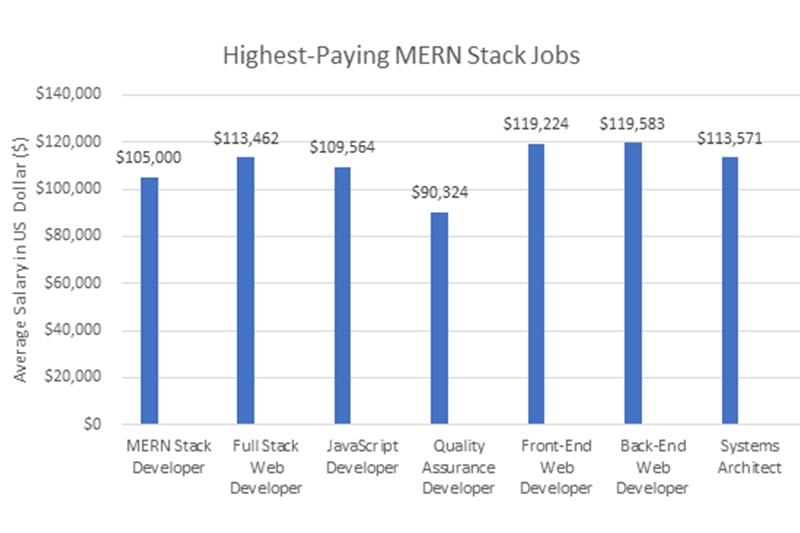
Jobs after Full Stack Training
Full Stack has a lot to offer to those who got the necessary skills and knowledge. Let’s analyze the career prospect after taking Full Stack training in Austin:
System Architect
Full Stack Developer
MERN Stack Developer
JavaScript Developer
QA Developer
Front-end Developer
Back-end Developer
Why Coding Bootcamps Fail Jobseekers—and Why JOPP Is Built Differently
A large number of coding bootcamps have shut down because they sold job guarantees they could not keep. They trained, branded the student “job-ready,” and then disappeared from the search. SynergisticIT JOPP makes a promise it organizes the company around: candidates who successfully complete JOPP get hired into tech companies.
Instead of doing 4–5 different coding bootcamps, or paying a cheaper training shop that promises jobs and then does not deliver, jobseekers can complete one Java DevOps Full Stack Job Placement Program that covers what employers actually screen for. About 30% of people who join JOPP already tried other coding bootcamps, Udemy, Coursera, or university bootcamps and did not get hired. That is expensive proof that training without placement is not a career plan.
JOPP can be done from anywhere in the USA. It is the Full Stack coding training Bootcamp in Austin, Texas combined with staffing, which is why it is not labeled a coding bootcamp. Bootcamps teach and leave you in the market. JOPP schedules interviews, prepares you for those interviews, and works until job offers from strong tech companies show up. SynergisticIT JOPP alumni reach high salaries and a 91.5% success rate for those who complete the program. That combination is why the program shows a highest-ROI path versus multi-year college spend on the ROI comparison above.
Start the Austin Full Stack Job Placement Path
There may be many Full Stack bootcamps or coding bootcamps. If your goal is to get hired after the bootcamp, there is one choice: SynergisticIT’s Full Stack training Bootcamp in Austin, Texas. There may be many coding bootcamps that offer Full Stack training in Austin, Texas; if employment is the goal, SynergisticIT’s Full Stack training Bootcamp in Austin, Texas is the sure path that ties skills, projects, certifications, interviews, and offers together.
Do not collect another unused certificate. Join the program that treats software developer jobs, IT jobs, and technology hiring as the finish line. Contact us and start your tech career journey with SynergisticIT’s JOPP today.