Important Notice— Our url is


If you are searching for the best Java training Bootcamp in Detroit, Michigan, you are already thinking the right way about your tech career. Java remains one of the most hiring-ready programming skills in the American job market, and Detroit, Michigan is quietly rebuilding itself into a serious technology hub where enterprise software, fintech, healthtech, and mobility companies compete for backend, full stack, and DevOps talent. The challenge is not finding a Java course, it is finding a program that actually ends with a job offer instead of just a certificate. That is exactly where SynergisticIT stands apart, because its Java DevOps Job Placement Program is not a standalone coding class, it is a complete placement engine that trains, certifies, prepares, markets, and handholds you until you are hired.
This is why the best Java training Bootcamp with job placement in Detroit, Michigan is SynergisticIT's Job Placement Program. Unlike conventional bootcamps that take your fees, hand you a completion certificate, and wish you luck, SynergisticIT's JOPP combines a coding bootcamp, staffing services, and software development into one employer-aligned pipeline. Its Java DevOps Job Placement Program has been placing jobseekers into full-time tech roles since 2010, with alumni earning $95k to $155k at Fortune 500 enterprises. Whether you are a recent CS graduate wondering how to get hired as a recent cs graduate, a career changer, or someone returning after a break, this guide explains why Java, why Detroit, and why SynergisticIT should be your only serious choice.
Detroit's Java hiring market is anchored by its automakers, financial firms, and growing tech scene. Companies in and around the city that hire or have hired Java developers for full-time roles include General Motors, Ford Motor Company, Stellantis, Rocket Companies, Ally Financial, Blue Cross Blue Shield of Michigan, DTE Energy, Henry Ford Health, Little Caesars, and StockX, all of which post Java, full-stack, and software engineering openings in metro Detroit.
The region's broader Java employer base also features United Wholesale Mortgage, Urban Science, SambaSafety, CrowdStrike, BAE Systems, Bosch, Aptiv, Lear, BorgWarner, Compuware, Detroit Labs, SoFi, Samsara, General Dynamics, and Amazon, which collectively employ tens of thousands of technology workers across Southeast Michigan.
On pay, junior Java developers in Detroit typically earn $74,700–$105,400, with an average around $105,753 and top juniors reaching $125,725. Mid-level developers generally earn $94,000–$138,000, while senior developers earn on average about $138,098 and can reach up to $179,000, with lead developers averaging $132,643. The overall average Java developer salary in the city is $107,906, with most roles falling between $93,300 and $120,800.
Java demand in Detroit should stay strong because the regional economy runs on enterprise-scale software: automakers like GM, Ford, and Stellantis are investing billions in EV and software-defined vehicle platforms, while fintech employers such as Rocket and Ally rely on Java for large transactional systems. A 2026 Detroit Future City report estimates the region could add roughly 20,300 tech jobs and $6.8 billion in new tech wages within five years, signaling sustained hiring for backend skills like Java.
Detroit has produced notable tech figures, including former Microsoft CEO Steve Ballmer, Nest founder and iPod co-creator Tony Fadell, DoubleClick co-founder Kevin O'Connor, Rocket Companies founder Dan Gilbert, and Sun Microsystems co-founder Bill Joy. Economically, Detroit's unemployment rate averaged 10.6% in early 2026, but its labor force grew 2.9% between May 2025 and May 2026, and major employers like Rocket Companies, Stellantis, and Henry Ford Health keep thousands of full-time workers in the city, making tech one of its most promising growth sectors.
What Is Java, When Was It Founded, and Which Companies Created It?
Java was created in 1995 at Sun Microsystems by James Gosling and his engineering team, originally under the internal name Oak. When Sun Microsystems launched it publicly, Java's promise of "write once, run anywhere" changed software forever, because a Java application compiled once could run on any operating system through the Java Virtual Machine. In 2010, Oracle Corporation acquired Sun Microsystems, which means Java has been stewarded by Oracle for over 15 years and has existed as a technology for more than three decades.
That longevity matters more than most jobseekers realize. A language that has survived 30+ years of technology cycles is not a trend, it is infrastructure. Java's releases continue to evolve, with modern versions adding performance, security, and cloud-native features that keep it aligned with today's microservices and containerized environments. Very few technologies in computing history have remained this dominant for this long, and that is precisely why learning Java from an employer-aligned program like SynergisticIT's Java DevOps Job Placement Program is a career decision backed by three decades of enterprise proof.
Why Java Is Important to Learn and Which Industries Use It
Java matters because it powers the systems the world actually runs on: banking transactions, insurance claims processing, healthcare record systems, e-commerce backends, telecom networks, and government IT platforms. It is the backbone of enterprise application development for a simple reason: Java is stable, scalable, secure, and supported by an enormous ecosystem of frameworks and tools.
The industries that depend on Java daily include:
- Banking and financial services, where core transaction systems, payment rails, and trading platforms run on Java
- Insurance, for policy administration, claims engines, and actuarial systems
- Healthcare and healthtech, where HIPAA-grade backend systems are built on Java and Spring
- Automotive and mobility, critical in Detroit, where connected-vehicle software, telematics, and manufacturing systems rely on Java-based architectures
- Retail and e-commerce, powering order management, inventory, and recommendation services
- Telecommunications, billing systems, and network provisioning tools
- Government and defense, where long lifecycle stability makes Java the preferred choice
Why Java Is Future-Proof
Java is future-proof because of how it absorbs new paradigms instead of being replaced by them. The modern Java stack includes Spring Boot, microservices, REST APIs, containers, Kubernetes, CI/CD pipelines, and cloud platforms like AWS and Azure. Java developers who pair core language depth with DevOps and cloud skills are exactly what Fortune 500 hiring teams shortlist. Add to that the sheer volume of legacy and modern Java systems in production, billions of lines of code that must be maintained, extended, and modernized, and you get sustained, recession-resistant demand. When you learn Java through SynergisticIT's Java DevOps full stack Job Placement Program, you are not learning a language in isolation; you are learning the entire enterprise delivery stack that employers hire for.
How Strong Is the Startup and Investment Scene in Detroit, Michigan?
Detroit's startup ecosystem has matured dramatically over the past decade. The city anchored its revival around mobility innovation, fintech, and urban technology, supported by a dense network of accelerators and capital sources. TechTown Detroit is the city's best-known startup incubator and accelerator, serving hundreds of tech and small-business ventures annually. Nearby, Ann Arbor SPARK and university-linked programs at the University of Michigan feed engineering talent and spinouts into the Detroit metro. Organizations like MICHauto and the state's mobility initiatives actively connect startups with automakers and suppliers.
On the funding side, Michigan startups have raised hundreds of millions of dollars annually in recent years, with the state's venture activity peaking alongside the 2021–2022 national boom and settling into a healthier, more selective market since. Detroit's standout successes include StockX, the sneaker and collectibles marketplace that reached multi-billion-dollar unicorn valuations, and Rocket Companies, the fintech empire behind Rocket Mortgage, which went public in one of the largest IPOs ever produced in Michigan. Acquisition activity is steady too, as regional startups in fintech, logistics, and supply-chain software are routinely absorbed by larger national players, while enterprise giants like Ford invest billions into software-defined vehicle divisions and connected platforms. For a Java developer, this startup and enterprise mix means both venture-backed product companies and Fortune 500 stability are hiring in the same metro.
Will Java Survive AI Tools? Why Java Demand Persists
The arrival of AI coding assistants has made some jobseekers nervous, but the reality is the opposite for Java professionals. AI tools generate code snippets; they do not architect distributed systems, understand a bank's regulatory constraints, debug production incidents at scale, or take accountability for mission-critical software. Enterprises still need engineers who can review, secure, integrate, and own what AI produces. Because Java dominates the regulated, large-scale end of the market, Java developers are positioned as the people who supervise automation rather than the people replaced by it.
Compare job opportunities and stability across technologies and Java consistently comes out ahead for long-term careers. Python and ML/AI roles are growing but crowded and often concentrated in research-heavy or hype-sensitive niches. JavaScript and frontend frameworks churn every few years. C# is strong but largely tied to the Microsoft ecosystem, and C++ remains powerful but niche. Java occupies the enterprise sweet spot: enormous installed base, moderate supply of genuinely deep practitioners, and compensation that rewards depth. That is why Java should be learned in-depth, not from any random coding bootcamp, but from a company that has been in the tech industry for over 15 years. SynergisticIT is that company, and its Java training is part of its Java DevOps full stack Job Placement Program, so every module you study is filtered through what SynergisticIT's 24,000+ employer contacts are actually hiring for.
Which Technology Offers Long-Term Career Success?
If the question is which technology delivers long-term job security, salary growth, and career longevity, the answer across enterprise America is Java. Java is the most long-lasting technology used by enterprise clients, with systems in continuous production since the mid-1990s that are still being extended today. Java withstands the highs and lows of the job market better than any rival language because demand is structural, tied to banking, insurance, healthcare, government, and automotive systems that cannot simply be rewritten when a trend changes.
What's the #1 Programming Language at Fortune 500 Companies?
Java is widely regarded as the #1 programming language used at most Fortune 500 enterprise companies. Studies of enterprise job postings and the internal technology stacks of banks, insurers, retailers, and telecoms consistently place Java at or near the top of backend usage. That is why Java should be chosen over Python, AI/ML stacks, C#, C++, and other languages when your priority is rewarding outcomes in salaries and career longevity. SynergisticIT's JOPP alumni routinely land offers between $95k and $155k, a range that reflects what enterprises will pay for verified, project-proven Java talent. The evidence is in the outcomes you can verify yourself on the SynergisticIT JOPP page.
Are Coursera, Udemy, or Online University Bootcamps Enough to Get Hired?
Honestly, no. Coursera, Udemy, and university-affiliated online bootcamps are genuinely useful for earning a certification or certificate, and they are affordable ways to explore a topic. But hiring managers do not hire certificates, they hire demonstrated ability. To get hired, you need interactive live instruction, real-time feedback on your code, exposure to what companies are actually working on, and hands-on projects that mirror production environments. Self-paced platforms cannot provide any of that at the depth employers require, which is why so many learners finish a Coursera specialization or Udemy bundle and still cannot pass a technical screen.
SynergisticIT's Job Placement Program closes that gap deliberately. You get live instructor-led training instead of recorded videos, structured feedback on every project, and curriculum shaped by real interviews its candidates are actively attending. Learning becomes practice, practice becomes portfolio, and portfolio becomes offers.
Why Employers Get Value for Money From SynergisticIT JOPP Candidates
Companies hire SynergisticIT Job Placement Program candidates because they represent genuine value for money and the best bang for their hiring buck. JOPP candidates arrive with completed projects and industry certifications, so they can perform from day one. Employers gain skilled employees at a fraction of the cost they would incur sourcing similarly skilled candidates from the open job market, where screening is expensive, slow, and unreliable. Enterprise companies hire SynergisticIT candidates because they get genuine employees with genuine skills and verified experience who contribute to the bottom line from day one, instead of hit-or-miss candidates whose resumes may not survive a first technical interview.
Specifically, employers hire JOPP graduates because of:
- Current tech stack alignment and job-ready skills shaped by tech-client demand, industry interaction, and hands-on upskilling, so candidates need less ramp-up time
- Pre-screened talent: rigorous technical screening happens before candidates are ever sent to market, so companies receive candidates already verified for technical and job fit
- Certifications across Java, DevOps, AWS, Azure, Power BI, Snowflake, and more, adding credibility to an already diverse tech stack
- Multi-stack capability: one junior developer who can contribute across backend, frontend, and deployment, or a data professional who spans data engineering, analytics, and ML/AI teams
- Reduced hiring risk, because every candidate has gone through structured training, real projects, interview prep, and screening
- Genuine project-based resumes built on real work rather than embellishment
In short, companies hire JOPP candidates because they are positioned as trained, screened, project-ready, interview-prepared, and aligned with current tech roles.
Who Makes Up the Tech Workforce in Detroit, Michigan?
Detroit's tech workforce reflects the region's industrial and institutional character. By age, it skews younger than the national engineering average, with a strong pipeline of 22-to-34-year-old graduates from Wayne State University, the University of Michigan, Michigan State, and Oakland University, alongside a substantial cohort of mid-career professionals who transitioned from automotive and manufacturing engineering into software roles. By education, the majority hold bachelor's degrees in computer science, engineering, or information systems, with a growing share of master's degree holders in data and ML fields.
By gender, women make up roughly a quarter of the region's tech workforce, with active local initiatives working to raise that share. By race, Detroit's tech workforce is more diverse than coastal tech hubs due to the city's majority-Black population and regional demographics, though leadership representation remains an acknowledged gap. On visa status, the metro includes a meaningful population of H-1B professionals and OPT/STEM OPT candidates, particularly in automotive software and data roles, alongside US citizens and permanent residents. On work location, the mix has settled into a hybrid pattern: major employers like Ford, Rocket, and the region's healthcare systems maintain on-site or hybrid expectations, while startups and national remote employers offer fully distributed roles. For a jobseeker in the metro, the practical takeaway is that remote-accessible, employer-networked placement matters more than physical proximity to a downtown office, which is exactly what an online national program like SynergisticIT's provides.
A Java Coding Training Bootcamp in Detroit, Michigan Plus Staffing Combined
Here is the distinction most jobseekers miss: SynergisticIT's Job Placement Program can be done from anywhere in the USA, and for Detroit jobseekers it functions as the Java coding training Bootcamp in Detroit, Michigan plus staffing combined. That combination is why it is called a Job Placement Program and not a coding bootcamp. Most coding bootcamps just train and then leave their students to fend for themselves in the job market, which is why so many bootcamp graduates spend thousands of dollars and still do not get hired afterwards.
When you are targeting Java developer roles, your portfolio and interview performance matter as much as your knowledge. SynergisticIT promotes hands-on project experience and structured preparation designed to translate learning into offers. With 15+ years of tech industry experience and 24,000+ employer connections, enrollees get access to a wide network of employers plus in-depth knowledge of what those employers are looking for. If you are deciding between paths, SynergisticIT's Job Placement Program and its Java-focused track deliver training, marketing, and placement via placement support rather than a certificate and a wave goodbye.
How SynergisticIT Helps Career-Gap Jobseekers and Recent Graduates
For jobseekers with a career gap or break, SynergisticIT's Job Placement Program helps in five concrete ways:
- Rebuilding a credible, current technical profile through live project work that replaces a stale resume with verifiable, recent experience
- Interview coaching that addresses the gap directly, so you answer career-break questions with confidence instead of apology
- Marketing to 24,000+ employer contacts who trust SynergisticIT's screening, giving returning candidates access they could not generate alone
- Certifications from Oracle, AWS, Microsoft, Snowflake, and others at no extra cost, providing third-party proof that your skills are current
- Handholding from enrollment through offer, including resume rebuilding, mock interviews, and scheduled interviews until placement
For recent graduates with no experience who want to get hired for tech jobs, JOPP helps in five ways:
- Converting academic knowledge into employer-verified skills through an immersive, live, instructor-led curriculum instead of passive coursework
- Building a portfolio of projects tailored to real company tech stacks, so your resume reads like a contributor, not just a student
- Providing the employer network recent grads do not have, with direct marketing to companies that already hire SynergisticIT candidates
- Structured interview preparation, including behavioral and scenario-based rounds, so your first interviews are not your practice runs
- Placement accountability, because SynergisticIT's fee model depends on you getting hired, aligning the company's incentives with yours
Why 30% of JOPP Candidates Have Already Done Other Bootcamps
Roughly 30% of candidates who join SynergisticIT's Job Placement Program have already completed other coding bootcamps or courses on Udemy, Coursera, or university bootcamps without getting hired. Only after that failure did they join SynergisticIT's JOPP. That statistic is the clearest possible indictment of the standard bootcamp model, and the clearest endorsement of the JOPP model.
Most bootcamp graduates fail to land jobs because bootcamps optimize for graduation rates, not placement: recorded or lightly attended lectures, generic curriculum, one instructor covering everything, resume templates with no real projects, and a handshake farewell at the end. JOPP is superior because every element that bootcamps treat as optional, screening, projects, interview prep, employer marketing, and placement until hired, is the core product. Yes, JOPP is a larger investment than a typical bootcamp, but it delivers far better results and saves the time and money you would otherwise burn on bootcamps that produce no outcome. SynergisticIT's Job Placement Program has the highest ROI compared to colleges, and you can read the full breakdown in SynergisticIT's ROI comparison blog.
Companies That Hire SynergisticIT Candidates at $95k–$155k
Graduates of the Java DevOps full stack JOPP are hired by companies including Visa, Apple, PayPal, Walmart Labs, AutoZone, Wells Fargo, Capital One, Walgreens, Bank of America, SAP, Cisco Systems, Verizon, T-Mobile, Intuit, Ford, Hitachi, Western Union, Deloitte, Dell, USAA, Carfax, Humana, and many more, at salaries ranging from $95k to $155k. If your ambition is figuring out how to get hired in FAANG, the honest path runs through enterprise-grade Java, DevOps, and cloud skills plus a network that already places candidates into top-tier companies, not through certificate collecting. For context on choosing between large enterprises and startups, SynergisticIT's guide on big tech vs startup jobs for CS grads is worth reading, and for a broader view of the market, see SynergisticIT's most in-demand tech jobs for new grads.
Why Recent CS Graduates Should Join SynergisticIT's JOPP
If you are researching how to get hired as a recent cs graduate, understand that JOPP gives recent graduates three things in sequence: deep tech skills, real project work, and the most important one, a full-time job at a great tech company. Notably, 90% of JOPP graduates who get hired at tech jobs have never worked in tech before; the other 10% are career changers and candidates with career gaps. That ratio exists because JOPP assumes no prior professional experience and builds candidates from fundamentals to offer-ready.
This is also why bootcamps keep failing jobseekers, and why we see a steady stream of bootcamps shutting down after making promises they could not keep. SynergisticIT JOPP makes a promise it keeps: candidates who successfully complete the program get hired into tech companies. But not all Java training and bootcamps are created equal. Java should be learnt in-depth, not from any random coding bootcamp or training company, but from a company that has been in the tech industry for over 15 years and knows precisely what clients and companies are looking for. That is why SynergisticIT's JOPP alumni earn the highest salaries and the program carries a 91.5% success rate.
The full tech stack in SynergisticIT's Java DevOps full stack JOPP includes Core and Advanced Java, Spring Boot, Hibernate, microservices, REST APIs, PL/SQL and databases, Data Structures and Algorithms, the MERN stack for full stack breadth, DevOps tooling covering CI/CD, Docker, Kubernetes, Git, Jenkins and Maven, plus AWS cloud, with preparation for Oracle Java certification and AWS DevOps Professional certification. It is the stack Fortune 500 job descriptions ask for, taught as one integrated program rather than disconnected modules. Enrollment details and the complete curriculum are on the Java DevOps full stack Job Placement Program page.
How SynergisticIT Compares to Bootcamps, Staffing Firms, and Career Companies
- Curriculum quality and relevance: SynergisticIT participates in tech-industry events like Oracle CloudWorld and the Gartner Data Analytics Summit, and its candidates are actively interviewing every week, so curriculum is adjusted in real time to job market requirements
- Instructor quality: bootcamps use graduated alumni, recorded sessions, and instructors teaching a few hours a week; SynergisticIT uses industry domain experts, with the average instructor holding 10+ years of experience
- Number of instructors: bootcamps rely on one or two instructors for everything; SynergisticIT's Java JOPP runs with 5–6 specialist instructors, separate experts for Java, databases, advanced Java, DevOps, and equivalent specialization across the data science track
- Cost and payment: transparent $10k upfront with the balance due only after landing a job offer, payable over two years; if no job offer arrives, no payments accrue. Most bootcamps take all fees upfront and advertise refund guarantees that cannot actually be redeemed
- Duration and format: 4–5 hours of live instruction each day, five days a week, over roughly five months, with no recorded sessions substituted for teaching
- Student-to-instructor ratio: 5:1 at SynergisticIT versus roughly 20:1 at typical bootcamps
- Projects: tailored to company requirements and current tech stacks, and only the projects you actually work on appear on your resume
- Alumni success: documented text, video, and audio reviews show alumni landing offers from $95k to $155k, frequently with multiple offers
- Certifications included at no extra cost from Microsoft, Oracle, Snowflake, Databricks, Azure, and AWS
- Post-graduation career and placement support: SynergisticIT markets candidates to 24,000+ company contacts, handling resume preparation, interview prep, interview scheduling, and handholding from enrollment through the first day on the job, while bootcamps typically issue a certificate and hand the job hunt back to you
- Why trust us: photograph, video, and audio proof of successful alumni is public on the JOPP page, along with years in business and verifiable job outcomes, with no hidden-clause promises
Detroit's Industry Clusters Driving Java Hiring
The industry clusters driving local Java hiring in Detroit, Michigan are distinct and durable. Fintech and banking lead the metro, powered by Rocket Companies, Ally Financial, Credit Acceptance, and regional bank operations that run Java-based lending, mortgage, and payments platforms. Automotive and mobility technology is uniquely Detroit, with Ford, GM, Stellantis, and suppliers building connected-vehicle, telematics, and manufacturing software with substantial Java estates. Healthtech and healthcare IT hiring comes from Henry Ford Health, Blue Cross Blue Shield of Michigan, Trinity Health, McLaren, and a growing set of digital-health vendors. Insurance remains a steady Java employer through regional carriers and national operations. Logistics and supply chain companies along the freight corridors of southeast Michigan build tracking and warehouse systems on Java microservices. Defense and government IT hiring flows from the US Army Ground Vehicle Systems Center in Warren, the Detroit Arsenal, and state and municipal modernization projects. Together these clusters generate continuous demand for Java, DevOps, and cloud skills, at every experience level.
How AI Is Changing Detroit's Tech Job Market Over the Next 12–24 Months
Over the next 12–24 months, AI will reshape job titles and expectations in Detroit's tech market rather than eliminate it. Expect software engineer roles to absorb AI-assisted coding tooling, with productivity expectations rising for features delivered per sprint. Job titles are already fragmenting into hybrid profiles like platform engineers, AI-integration developers, and data engineers with ML exposure, while pure manual QA and basic support roles face compression. Demand is shifting toward people who can build the systems AI runs on: data pipelines, backend services, cloud infrastructure, and MLOps. For Detroit specifically, automotive AI, in-vehicle intelligence, and manufacturing analytics will pull investment, but the underlying hiring will still require engineers who understand distributed systems deeply. Java plus DevOps plus cloud remains the safest preparation for that shift, which is exactly the composition of SynergisticIT's Java DevOps JOPP.
How Large Is Detroit's Tech Economy and How Fast Has It Grown?
Detroit's tech economy has grown substantially over the last three to five years. The metro's tech employment has expanded into the tens of thousands of positions across software, IT services, data, and engineering, with the regional tech payroll rising steadily as automotive companies reclassified thousands of roles from mechanical to software engineering. Company count has grown through startup formation around TechTown, downtown's Campus Martius tech corridor, and corporate innovation centers opened by Ford, GM, and national firms setting up mobility software offices in the city. National tech-sector turbulence in 2022–2024 slowed growth everywhere, but Detroit's mix of Fortune 500 stability and mobility-focused investment cushioned the metro better than pure-tech markets. The net effect: steady, structural hiring demand for backend and full stack talent, with Java consistently among the most requested skills in metro job postings.

Core and Advanced Java (OOP, collections, concurrency, modern Java features, testing)
- Spring Boot and microservices (REST APIs, security, service patterns)
- Data layer (SQL/PL-SQL concepts, ORM patterns, practical database work)
- Frontend full-stack exposure (MERN/MEAN-related skills as market-aligned)
- DevOps and CI/CD (Git, Maven/Gradle, Jenkins/GitHub Actions, Docker, Kubernetes basics)
- Cloud fundamentals (AWS/Azure-oriented deployment readiness)
- DSA and interview engineering for real hiring loops
- Certifications and project portfolio that support employer confidence
This is why Java training inside JOPP is not “Java-only in isolation.” It is employment-shaped full-stack readiness.
Introduction to Java & Oops
Servlet
JSP
JQuery
Hibernate
Spring
Microservices
JavaScript
SynergisticIT's Job Placement Program can be completed remotely from anywhere in the USA, making it effectively the best Java coding training bootcamp in Detroit, Michigan without requiring relocation. It is called a "Job Placement Program" — not a coding bootcamp — precisely because it combines bootcamp-style training with staffing and placement services. Most coding bootcamps train students and leave them to fend for themselves in the job market, which is a major reason so many job seekers spend thousands of dollars and never land a job afterward.
When targeting Java developer roles, your portfolio and interview performance matter as much as your knowledge. SynergisticIT promotes hands-on project experience and structured interview preparation designed to translate learning directly into job offers, backed by 15+ years of tech industry experience and 24,000+ employer connections that give enrollees real insight into what employers are actually looking for.
Why JOPP Beats Bootcamps: The 30% Statistic
Roughly 30% of candidates who join SynergisticIT's JOPP have already completed other coding bootcamps or courses via Udemy, Coursera, or university programs without success—and only then found job offers after completing JOPP. While JOPP requires a higher investment than many bootcamps, it saves time and money in the long run by avoiding repeated, unsuccessful training cycles. SynergisticIT's Job Placement Program also delivers the highest ROI compared with traditional college degrees — see the full breakdown in SynergisticIT's ROI comparison to colleges.
Real Companies, Real Salaries
Graduates of SynergisticIT's Java JOPP have been hired at companies including Visa, Apple, PayPal, Walmart Labs, AutoZone, Wells Fargo, Capital One, Walgreens, Bank of America, SAP, Cisco Systems, Verizon, T-Mobile, Intuit, Ford, Hitachi, Western Union, Deloitte, Dell, USAA, Carfax, and Humana, with salaries ranging from $95,000 to $155,000.
How
How to Get Hired as a Recent CS Graduate
If you are wondering how to get hired as a recent CS graduate, the answer starts with proving you can build and ship real software, not just pass coding quizzes. 90% of JOPP graduates who get hired into tech roles have never held a tech job before; the remaining 10% are career changers or candidates returning after a career gap. Many bootcamps fail — and a large number have shut down entirely — because they promised job outcomes they could not deliver. SynergisticIT's JOPP keeps its promise: candidates who complete the program get hired, reflected in a 91.5% success rate and some of the highest starting salaries in the industry.
How do I get hired in FAANG or comparable enterprise tech companies? The path runs through deep technical mastery, real project experience, and structured interview preparation — exactly what the Java DevOps Full Stack Job Placement Program is designed to deliver, covering Core and Advanced Java, Spring Boot, microservices, DevOps (Docker, Kubernetes, Jenkins, CI/CD), PL/SQL, data structures and algorithms, and full-stack frameworks. SynergisticIT schedules interviews, preps candidates for technical and behavioral rounds, and hand-holds every step until an offer is signed — and only requires partial fees upfront, with the balance due once a candidate secures a job paying $81k or higher.

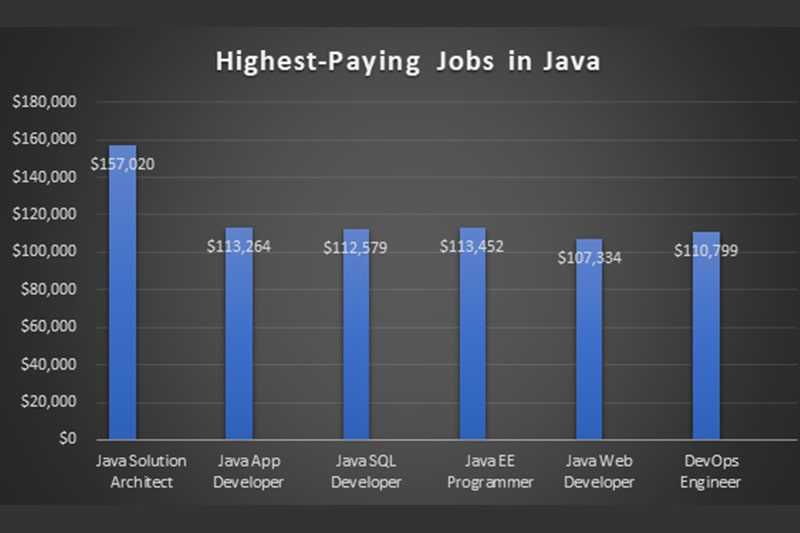
Java Solution Architect ($157,020)
Java App Developer ($113,264)
DevOps Engineer ($110,799)
Java EE Programmer ($113,452)
Scrum Master ($97,872)
Java SQL Developer ($112,579)
Java Web Developer (107,334)
User Interface Developer (107,250)
Results Instead of Too-Good-To-Be-True Advertising
Unlike other bootcamps that run fancy ads with claims too good to be true, SynergisticIT JOPP has results. The company participates in Oracle CloudWorld, the Gartner Data Analytics Summit, and other industry events, and you can watch event videos on SynergisticIT's YouTube channel to see its industry engagement firsthand. You can read SynergisticIT reviews on its website, including text, audio, and video testimonials from placed alumni, and review its USA Today feature article describing how SynergisticIT changes how tech companies source talent. Its ROI analysis versus colleges shows why its outcomes beat degree programs on cost and time.
On fees, SynergisticIT JOPP takes only partial fees before placement, with the balance due once the jobseeker is hired for a job of $81k or higher, payable in installments over two years. That structure is the ultimate proof of alignment: SynergisticIT only finishes getting paid when you finish getting hired.
Why Waiting Is the Only Guaranteed Way to Fail
Here is a truth worth sitting with: postponing your start will never compress the length of SynergisticIT's JOPP, it will only push your job offer further into the future. The program simply cannot be rushed, because everything employers pay for takes real time to build: genuine skill depth, portfolio projects, interview readiness, and client marketing that continues until placement. That demanding stretch is not overhead, it is the product. Every month you delay is a month added to the distance between you and a signed offer. The journey is long, but its reward is a full-time job with a strong salary. Begin today and let the calendar start working for you instead of against you.
The Bottom Line: One Real Choice for Getting Hired
There may be many coding bootcamps or training firms making placement promises, and many that offer Java and coding training in Detroit, Michigan. But if your goal is to actually get hired after completing a bootcamp, there is only one choice: SynergisticIT's best Java coding training Bootcamp in Detroit, Michigan. SynergisticIT's Java coding training Bootcamp in Detroit, Michigan is the sure-shot way for a jobseeker to get hired after a bootcamp, because it is the only program in the market that combines immersive Java and DevOps training, real project work, certifications, rigorous screening, interview preparation, and active employer marketing to a 24,000+ company network, all sustained until you sign your offer. Start your tech career journey today by reaching out through SynergisticIT's Contact Us page, and take the first step toward your Java developer offer.