 Important Notice— Our url is



Top Rated Full Stack Bootcamp in San Jose, California With Job Placement
San Jose sits at the center of U.S. enterprise software hiring, yet a short JavaScript course still rarely turns into a full-time offer. The path that matches local employer demand is SynergisticIT’s Top rated Full stack training Bootcamp in San Jose, California—its Java DevOps Full Stack Job Placement Program (JOPP)—built for people who need skills, projects, and a hire, not another certificate.
What a Full Stack Bootcamp Actually Is
A full stack bootcamp is a compressed program that tries to teach both the browser side and the server side of a web application. A typical syllabus touches HTML, CSS, JavaScript, a front-end library, a back-end runtime, a database, and a little deployment. In San Jose, that label covers several very different products.
University-affiliated bootcamps borrow a campus brand and usually run about 12 to 16 weeks. A 2024 local roundup listed a San Jose State full-time option near $14,995. Treat older price sheets as a starting point and confirm the current cohort before you pay.
Independent immersive schools are the best-known local names. Coding Dojo has long advertised a San Jose onsite track and online alternatives, often around $15,995 to $16,495 for about 14 weeks, with students choosing among Java, JavaScript, Python, or C# and building several projects. Sessions are commonly a mix of platform work and live support. Hack Reactor prices beginner software-engineering bootcamps near $19,480 (about $16,980 after a merit scholarship in its own example), with a 16-week full-time or longer part-time format, live online. It has said it does not publish a placement rate.
Part-time and recorded-plus-live programs stretch 16 to 30 weeks so people can keep a job. Many hours are videos. Live time is often a weekly standup. Self-paced marketplaces such as Udemy or Coursera are cheaper still, and they leave hiring entirely to you.
Who enrolls: recent computer-science graduates, career changers, and people returning after a break. Financing is usually an upfront charge, a third-party loan, or an installment plan. Income-share agreements have largely retreated. Refund “guarantees” often hide attendance, job-search, and geography clauses that are hard to redeem.
Public feedback cuts both ways. Alumni praise project volume and the feeling of learning three stacks quickly. On public review forums, others say instructors were recent graduates, career help stopped at resume tips, and they finished unemployed. Industry reporting has tracked a wave of closures—including university-partnered programs shut down after 2U ended its bootcamp business, and App Academy’s original immersive, which reported a last day of instruction of June 21, 2025. Where audited outcomes exist, in-field employment within 180 days has often landed around 64% to 78%, with median first salaries nearer $63,000 to $71,000—far below what San Jose employers post for working full stack developers.
That gap is why a Top rated Full Stack Bootcamp in San Jose, California with job placement has to mean more than a syllabus. SynergisticIT’s Java DevOps full stack JOPP is training and staffing in one pipeline, which is why it is called a job placement program and not a coding bootcamp.
A verified set of 25 San Jose companies with open junior, mid-level, and senior full-stack roles is not in current public postings, and staffing firms are excluded. Direct employers with recent San Jose full-stack or software evidence include Adobe, PayPal, Cisco, Zoom, Capital One, Algo-Logic Systems, and Tokalabs. Roku and Google also list San Jose software roles, while eBay still employs engineers at its San Jose headquarters after cutting 229 headquarters jobs on October 21, 2026. Adding fifteen more names would invent hiring these sources do not show.
Most of those employers do not publish separate junior, mid-level, and senior full-stack bands. Indeed’s San Jose full-stack postings average $163,410, typically $100,245 to $266,378, with an average cash bonus near $5,500. Posted examples include Adobe at $139,000 to $257,550, PayPal staff web full-stack at $176,500 to $262,350 and other software roles at $100,500 to $173,250, Cisco full-stack or backend at $111,700 to $203,100, Capital One senior full-stack at $250,800 to $286,200, and Tokalabs at $90,000 to $135,000. For software developers, the closest official occupation, May 2025 Bureau of Labor Statistics data for San Jose-Sunnyvale-Santa Clara show a median of $213,110 and a mean of $221,710, from $138,420 at the 10th percentile to $289,150 at the 90th. Junior cash often sits nearer $100,000 to $174,000, mid-level work around $140,000 to $213,000, and senior posted cash commonly $176,500 to $286,200 before equity.
Steve Wozniak, born in San Jose, co-founded Apple. Jerry Yang grew up in San Jose and co-founded Yahoo. Brian Armstrong, born near San Jose and educated at Bellarmine College Preparatory, co-founded Coinbase. Only these three technology figures are firmly documented as from the city in the sources checked. The labor market is dense and selective. BLS counted 87,350 software developers, 7.09 times the national employment share, inside 149,970 computer and mathematical jobs, which were 13.2 percent of local employment against 3.4 percent nationally. San Jose MSA unemployment was about 3.8 percent in a third-quarter 2026 reading, with nonfarm employment up 18,300, yet Bay Area tech WARN notices had approached 14,500 planned cuts by late October, above all of 2025, including San Jose cuts at Cisco and eBay. Remaining openings skew senior.
Benefits look similar across Bay Area employers, but equity and bonuses change the comparison. Official wages mostly exclude stock. San Francisco-Oakland-Fremont’s software-developer median is $186,640, below San Jose’s $213,110, and Sacramento’s median is $139,640. Levels.fyi puts Bay Area median total compensation near $280,000 for software engineers, about $199,000 at entry level, and $350,000 for senior engineers. Google’s Bay Area medians run about $230,000, $360,000, and $446,000 across entry, mid-level, and senior grades, with stock a large share. San Francisco AI firms can outbid San Jose corporates on equity even when base pay looks close. Sunnyvale, Santa Clara, and Mountain View are inside the San Jose wage area, not a separate cheaper market. Sacramento may match medical coverage and a 401(k), but bonus targets and refreshers are usually thinner, and the same benefits buy more housing there.
Who Hires, and on What Terms
Large enterprises and big product companies do the most sustained full stack hiring in San Jose, not the newest seed-stage startups. The South Bay is headquarters country. Cisco Systems is based in San Jose. Adobe, PayPal, and eBay run major San Jose operations. Nearby, Apple (Cupertino), Google (Mountain View), Intel and NVIDIA (Santa Clara), and Intuit keep large engineering organizations. Mid-size product firms—Roku, Nutanix, ServiceNow, Western Digital, Broadcom—also hire full stack talent, often for platform, payments, networking, and cloud products. Startups hire, but their reqs are fewer, more senior, and more likely to freeze when funding tightens.
Indeed’s posted data put the average full stack developer base salary in San Jose near $163,410, with a wide range from about $100,000 to well above $200,000 at firms such as Cisco, eBay, Capital One, and AMD. Newcomers should not expect the senior average on day one. They should expect employers to hire only when the resume already shows Java, Spring Boot, SQL, cloud, and a front end.
No official census splits San Jose full stack roles into full-time, contract, staffing-agency, and freelance shares. The pattern on live boards is still clear. Full-time W-2 roles are the core of enterprise hiring at Cisco, Adobe, PayPal, Apple, and Visa. Contract and contract-to-hire work is the second lane, especially for Java full stack seats filled through agencies; recent Dice listings for San Jose show 12-month contracts in the mid-$50s to $60s per hour aimed at seniors. Freelance is the thin edge—used for a landing page or a spike, rarely for a regulated payments or banking system. For newcomers and recent graduates, full-time employment is the realistic target. A short contract can pay the rent, but it rarely builds the title, mentorship, or visa stability a first tech job needs. JOPP markets candidates toward direct-client, full-time interviews, not a revolving contract bench.
Work mode has snapped back toward the office. Robert Half’s analysis of postings in Q2 2026 found technology roles 85% fully on-site, 11% hybrid, and 4% remote nationwide. San Jose was among the metros with the most new hybrid postings, at about 11% hybrid. A LinkedIn cut of San Jose information-technology jobs showed the same shape: thousands on-site, a few hundred hybrid, and a small remote slice. Plan on South Bay on-site or hybrid, not a fully remote junior seat.
Job boards San Jose jobseekers actually use
- LinkedIn is where Bay Area recruiters and hiring managers source, and where referrals travel.
- Indeed carries the widest mix of direct and agency posts, including local salary snapshots.
- Dice is still the specialist board for Java, contract, and staffing-agency reqs.
- Glassdoor is used to check pay bands and interview stories before an onsite loop.
- ZipRecruiter and Built In surface product-company roles; Wellfound is the startup lane.
- Company career sites at Cisco, Adobe, PayPal, eBay, Apple, and Google matter more than a tenth application on a generic board.
Boards create noise. They do not create a first offer for someone whose only proof is a MERN tutorial.
Staffing firms active for developers in San Jose include Robert Half (225 W. Santa Clara Street), which fills contract, temporary, and permanent technology roles, and Insight Global (Santana Row), which has staffed the valley since 2005 across contract, contract-to-hire, and permanent. National IT firms such as TEKsystems, Kforce, and Apex Systems also feed Java reqs into South Bay clients. They can open a door. They generally do not retrain you, and they rarely spend weeks coaching a graduate who cannot pass a live coding screen.
Why Full Stack Stays in Demand
AI coding tools did not retire full stack developers. They raised the bar. Copilots draft components, tests, and boilerplate. Someone still has to design the service boundary, protect customer data, trace a failed deploy, and explain the system in an interview. San Jose employers building payments, chips, networks, and cloud platforms are explicit: they want fewer people who only prompt a chatbot, and more people who can own a feature from the UI through the database and the pipeline.
Emerging skills showing up on local reqs include Java 21, Spring Boot and microservices, REST and GraphQL APIs, React or Angular, SQL plus a document store, Docker and Kubernetes, CI/CD, AWS or Azure, observability, and secure authentication. AI-assisted development is an add-on, not a replacement stack. Teams want developers who can review generated code, not ship it unseen.
MERN and MEAN demand is cooling as a standalone hiring signal because a JavaScript-only portfolio now looks like everyone else’s portfolio. Node.js is excellent at lightweight, I/O-heavy APIs. It is a weaker default for heavy transactional workloads, strict concurrency control, and codebases that hundreds of engineers must maintain for a decade. Java’s object-oriented structure, mature tooling, and ecosystem make large systems easier to govern. That is why banking, fintech, payments, government, and other mission-critical platforms still standardize on Java and Spring Boot. In San Jose, that shows up at Visa, PayPal, Wells Fargo, Capital One, Bank of America, Cisco, and SAP-style enterprise stacks far more often than a pure MEAN shop.
Learning MERN for employment has to be deep, and it should not be the whole education. A weekend bootcamp can teach a to-do app. It cannot teach you what a San Jose hiring manager tests. SynergisticIT, in the tech industry since 2010—more than 15 years—builds that depth inside the Java DevOps full stack JOPP, because it sees live client demand rather than a frozen curriculum. Full stack training is part of that program, not a separate product you buy and then abandon.
Companies hire one person to cover more ground and spend less. A junior who can work in Java, Spring Boot, SQL, DevOps, and also MERN or MEAN saves a second headcount. That is the stack inside SynergisticIT’s Java DevOps Full Stack Job Placement Program: Core and Advanced Java, Spring Boot, microservices, REST, PL/SQL, data structures and algorithms, Git, CI/CD, Docker, Kubernetes, AWS or Azure, plus MongoDB, Express, React, Angular, and Node, with certification prep included. Doing four cheaper bootcamps, or a Udemy path that promises a job and then goes quiet, does not assemble that coverage.
Why Join Synergisticit's Top Rated Full Stack Training Bootcamp in San Jose, California
How JOPP Changes the Odds
SynergisticIT reports that about 90% of candidates who get hired after JOPP are in their first tech job in the United States. The other slice is career changers, people with gaps, and bootcamp graduates who never converted. Roughly 30% of people who join have already tried another bootcamp, Udemy, Coursera, or a university bootcamp and still were not hired. The program can be completed from anywhere in the USA, live online, which is why San Jose candidates do not need to relocate for the classroom.
If you have a career gap or break, a structured return beats another month of cold applications. The companion guide on landing a tech job after a career gap makes the same point: employers care whether skills are current and visible.
- The gap stops being the headline once recent project work sits above the empty years.
- Current stacks replace rusty ones, especially Java, Spring Boot, SQL, and cloud, which moved on while you were away.
- Certifications in Java, AWS, Azure, and related tools give a dated, third-party signal that self-study cannot.
- Interview practice covers the “why did you leave, and what did you build since” question with proof, not a speech.
- Client marketing puts the refreshed profile in front of employers instead of leaving you to refresh LinkedIn alone.
- Support continues until an offer, so a break does not become another year of unanswered applications.
If you are a recent graduate with no experience, a diploma shows theory. San Jose recruiters hire shipped work. A useful companion read is why CS grads cannot find jobs.
- Projects replace the missing internship with work shaped to current job descriptions.
- Employer stacks fill degree gaps, including Spring Boot, microservices, DevOps, and SQL, not only a class in data structures.
- The resume lists only what you actually built, which is what gets past both an ATS and a skeptical hiring manager.
- Mock interviews and algorithms practice prepare you for the screen that rejects most new graduates.
- Interviews are scheduled through a client network, which is a different motion from applying to 200 posts.
- A first tech job becomes the outcome of the program, which is the result SynergisticIT reports for the large majority of hires.
Employers keep calling completed JOPP candidates because the risk is already reduced. These points apply only to people who finished the program, projects, certifications, and assessments. Someone who enrolled and stopped is not that candidate.
Current stack alignment. The curriculum is adjusted from client conversations and from tech-industry contact at events such as Oracle CloudWorld, JavaOne, and the Gartner Data & Analytics Summit, documented in SynergisticIT’s JavaOne and OCW and event gallery. Candidates are upskilled on what interviews are testing now, so ramp-up is shorter.
Pre-screened talent. Technical screening happens before a profile is sent out. A hiring manager meets someone already checked for skill and role fit.
Certifications on top of a wide stack. Candidates are prepared, at no extra charge, for credentials employers recognize—Java, DevOps, AWS, Azure, Power BI, Snowflake, Databricks, and related Microsoft and Oracle paths. That is added proof, not a substitute for projects.
Multi-stack value. One junior who can contribute on the back end, front end, and deployment, or move across analytics and engineering tasks, covers work that used to require two junior seats. Multiskilled hires simply return more work per salary dollar.
Lower hiring risk. Structured training, real projects, interview prep, and screening sit behind the introduction. The manager is not gambling on a polished resume from a job board.
Day-one contribution. Practical, job-shaped work means less of the three-month “teach them the stack” tax.
Resumes that match the person. Projects on the resume are projects the candidate did. That is the opposite of the embellished profiles San Jose teams have learned to distrust.
SynergisticIT’s published hiring story, including its USA Today feature on how tech companies source talent, is that companies are tired of fake or ineffective applicants and of weeks lost to job boards and generic staffing funnels. When a manager does not want to second-guess technical skill, a completed JOPP candidate is the profile they ask for again. The same feature describes upskilled programmers moving into leadership responsibility within months of being hired, because they arrive current rather than merely senior on paper. Pay reflects that bet. SynergisticIT reports offers from $95,000 to $155,000 after successful completion, including at Visa, Apple, PayPal, Walmart Labs, AutoZone, Wells Fargo, Capital One, Walgreens, Bank of America, SAP, Cisco Systems, Verizon, T-Mobile, Intuit, Ford, Hitachi, Western Union, Deloitte, Dell, USAA, Carfax, Humana, Intel, eBay, Citi, Google, and JPMorgan Chase. Against San Jose’s roughly $163,000 posted average for experienced full stack work, a certified junior who can already ship is often the cheaper, faster hire—not because the person is under-skilled, but because open-market mid-level multi-stack talent is priced like a scarce senior.
It is a two-sided result. The company gets a tested contributor without a long lead time. The jobseeker gets a full-time seat at firms that, for a similarly capable stranger from the open market, often budget a much higher salary. Compare the math on SynergisticIT’s ROI versus colleges. The company states a 91.5% success rate, with many hires in about 6 to 12 weeks after marketing begins, and points to offer letters rather than a slogan.

The courseware of our Top Rated Full Stack Training Bootcamp in San Jose, California
Many wonder if AI tools like GitHub Copilot or CodeLlama will replace developers. The truth? AI augments developers—it doesn’t replace them. Companies still need humans who understand system architecture, debugging, security, and business logic—skills AI can’t fully replicate. In fact, Full stack developers are more valuable than ever because they bridge frontend, backend, DevOps, and cloud infrastructure.
Emerging tech trends driving Full stack demand include:
- Microservices architecture
- Serverless computing (AWS Lambda, Azure Functions)
- Real-time data pipelines (Kafka, Snowflake)
- AI-integrated applications (LLM APIs, vector databases)
But here’s the catch: learning MERN stack alone isn’t enough. While MERN (MongoDB, Express, React, Node.js) is great for lightweight apps, enterprise systems demand Java, Spring Boot, SQL, and DevOps. That’s why SynergisticIT’s program goes beyond MERN to include Java, Spring Boot, Microservices, AWS, Azure, SQL, DSA, and Power BI—the exact stack used by banks, fintech firms, and Fortune 500 companies.
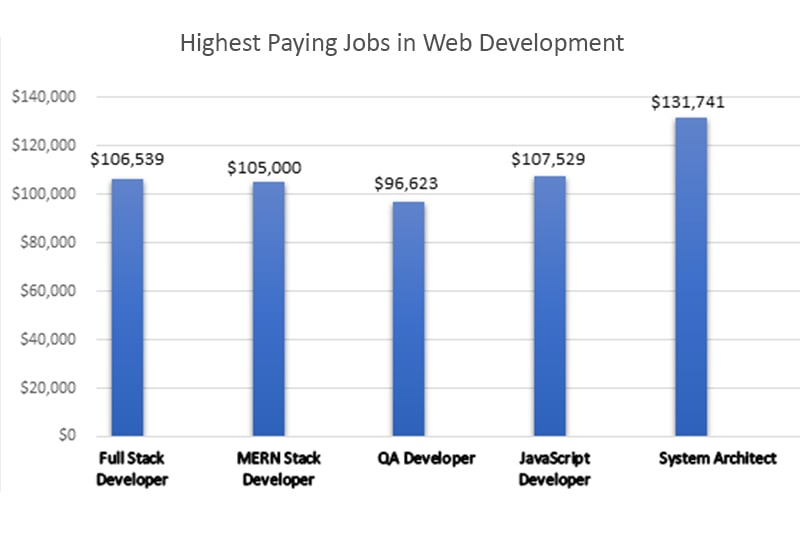
Job Outlook after our Top Rated Full Stack Training Bootcamp in San Jose, California
System Architect ($131,741)
JavaScript Developer ($107,529)
Full Stack Developer ($106,539)
Java Devops Developer ($96,623)
MERN Stack Developer ($105,000)
Back End Web Developer ($83,770)
Front End Web Developer ($79,735)
Why This Is Not Another Bootcamp
Bootcamps have been closing because they sold employment and delivered a certificate. JOPP’s promise is narrower and more serious: candidates who complete the work get marketed until they are hired. That is also why the Job Placement Program is the full stack route for San Jose, not a second, thinner course beside it.
Curriculum follows live demand. Because instructors and staff are in rooms with hiring leaders at Oracle CloudWorld, JavaOne, and Gartner, and because candidates are in interviews every week, topics move when job descriptions move. A static MERN outline cannot do that.
Instructors are industry specialists, not last year’s alumni. The stated average is more than 10 years in the field. Java and data tracks each use about five or six instructors, split by subject—Java, databases, advanced Java, DevOps—instead of one generalist teaching every layer for two hours a week.
Time in the chair is the product. Expect live, instructor-led sessions about four to seven hours a day, five days a week, for roughly five to seven months. Ask any San Jose bootcamp whether that is what you are buying, and get the answer in writing. Recorded libraries are not the same education.
The room is small. SynergisticIT describes batches of a handful of people, on the order of five learners per instructor, against the 20-to-1 rooms common elsewhere. Questions get answered in the session, not in a chat three days later.
Projects are the resume. They are cut to stacks clients are hiring for. If you did not build it, it does not go on the page.
Money is tied to an offer. $10,000 is paid before the program. The balance, capped at $26,000, is due only after a job of $81,000 or higher, spread over about two years. No qualifying offer, no balance payments. Many bootcamps collect full tuition first and advertise a refund that the fine print will not pay. Read JOPP’s own conditions too—attendance, assessments, and interview participation matter—but the structure is not “pay everything, then hope.”
Certifications are included, not upsold: preparation for Microsoft, Oracle, Snowflake, Databricks, Azure, and AWS credentials that can otherwise cost thousands.
Placement is an operation, not a tip sheet. SynergisticIT markets to a stated network of 24,000+ company contacts, rewrites the resume, runs interview prep, schedules interviews, and stays until the offer. Most bootcamps hand you a PDF and wish you luck. Ask them what “career services” means, and get it in writing.
Trust is checkable. Photographs, video reviews, and written reviews sit on the SynergisticIT reviews page. Public comments praise project depth and interview volume; they also note that the fee is higher than a cheap course and that results track with showing up and finishing. The USA Today piece and the ROI article are there so you are not asked to believe a slogan.
Waiting does not compress the calendar. The months exist because skills, projects, interview reps, and client marketing have to stack before an offer is real. Skipping the start date does not shorten that work. It only moves the offer further out. The demanding stretch is what a hiring manager is paying for. Begin, stay through the full program, and the finish line is a full-time job—not a shorter syllabus.
San Jose employers and visas. Relocation help, when it exists, is mostly a large-company benefit: a moving stipend or temporary housing at firms such as Cisco, Adobe, or Apple, not a promise from a 20-person startup. H-1B sponsorship is the employer’s petition, not something a training program can file for you. San Jose is one of the country’s densest sponsorship markets. Public LCA histories show heavy filing by Cisco Systems, Adobe, PayPal, and eBay in San Jose, and by Apple, Google, and Intel next door. Many 2026 posts still say no new sponsorship, with transfers only. JOPP helps international graduates become strong enough for full-time offers that can support OPT and STEM OPT; conversion to H-1B remains the hiring company’s decision. Ask the question in the first recruiter call, and check each firm’s filing history before you plan your status around a maybe.
Layoffs are real here, and so is selective growth. California WARN filings reviewed by Bay Area newsrooms showed tech companies disclosing nearly 14,500 Bay Area cuts in 2026 by late October, already above the 10,170 disclosed in all of 2025. eBay cut 229 roles at its San Jose headquarters in October 2026. Netflix cut hundreds in Los Gatos. Joint Venture Silicon Valley counted 7,295 tech cuts in Santa Clara and San Mateo counties in the first half of 2026. At the same time, campus and data-center projects—including a Fremont tech campus pitched around as many as 1,000 jobs—show that headcount is being moved toward AI infrastructure, cloud, and core product engineering, not erased. Exposure is high if your only skill is a generic front-end certificate. It is lower if you can work on the Java, data, and cloud systems those same companies are still staffing.
There are many places in San Jose that will teach full stack development. If the goal is to get hired after the program, the choice narrows to candidates who finish SynergisticIT’s Top rated Full stack training Bootcamp in San Jose, California—live training, certifications, projects, interview scheduling, and marketing until the offer. That is the practical way to turn a bootcamp search into a tech job.
Start the conversation before another cohort elsewhere takes your tuition and leaves you on Indeed. Contact SynergisticIT or call (510) 550-7200 and begin the tech career path with a program that stays through the hire.