 Important Notice— Our url is




If you are looking for the top-rated Java coding bootcamp in Louisville, Kentucky, you probably want more than just a certificate—you want a program that leads to a job offer. Louisville’s tech economy is growing in healthtech, fintech, logistics, insurance, and enterprise IT, and employers in these fields regularly hire Java developers who can start contributing right away. This guide will explain what Java is, why it remains a leading enterprise technology, how Louisville’s startup and hiring scene works, and why so many jobseekers choose SynergisticIT’s Job Placement Program instead of ordinary bootcamps. At SynergisticIT, Java training is part of the Java DevOps Full Stack Job Placement Program, which includes in-depth technical training, real project experience, certifications, interview prep, and direct marketing to a network of over 24,000 employers. Unlike traditional bootcamps that train you and then leave you to face the job market alone, this program supports you from enrollment until you sign a job offer. In the sections below, you’ll learn how to get hired as a recent CS graduate, how to land roles at top enterprise companies, and why SynergisticIT’s top-rated Java coding bootcamp with job placement in Louisville, Kentucky has a 91.5% placement success rate.
Louisville, Kentucky is home to a flourishing tech ecosystem with over 500 technology-related companies spanning healthcare IT, logistics tech, fintech, and SaaS, and Java remains one of the dominant programming languages across its major employers.
Companies Hiring Java Developers in Louisville
The companies that hire and have hired Java Developers for full-time roles in Louisville include Humana, the city's largest employer with its growing Digital Health & Analytics division; UPS, which runs major technology operations at its Worldport hub including the ORION route-optimization system; GE Appliances, which builds IoT products; and Waystar, the Nasdaq-listed revenue cycle SaaS firm with around a dozen Louisville engineering openings. Other prominent employers hiring Java talent include BrightSpring Health, ScionHealth, Norton Healthcare, Baptist Health, and UofL Health, all of which sustain steady IT and engineering hiring. The financial and consumer sector is represented by Republic Bank, Stock Yards Bank & Trust, Global Payments, TransUnion, Optum, and PwC, while food and beverage giants Papa John's, Yum! Brands, Brown-Forman, and Kroger employ significant data and software talent. Rounding out the list are homegrown technology firms Appriss, the $1.3 billion data analytics company; El Toro, the pioneering IP-targeting adtech platform; ControlTouch Systems; Logistik; and Louisville Geek, all of which post software development roles in the metro area.
Java Developer Salary Ranges in Louisville
Salary data shows Louisville software developers average about $123,635 annually, with typical ranges of $104,987 to $143,803. Junior Java Developers with 0 to 2 years of experience typically earn $65,000 to $85,000, while mid-level developers with 3 to 5 years earn $90,000 to $120,000. Senior Java Developers generally earn $125,000 to $160,000, with top earners at the 90th percentile reporting salaries approaching $172,783.
Why Java Demand Will Persist
Java Developers will remain in demand in Louisville because the city's core industries- healthcare, logistics, and finance- run on enterprise Java systems that require continuous modernization, and Java is listed among the dominant languages alongside AWS as the leading cloud platform across major Louisville employers. Humana's continued AI and data expansion, UPS's logistics technology, and the $125 billion healthcare corridor all guarantee sustained backend engineering needs.
Famous Tech Figures and the Local Tech Economy
Notable Louisville tech leaders include Michael Davis, founder of Appriss; Vik Chadha, co-founder of Backupify and UnifyCX; Stacy Griggs, CEO of El Toro; Tom Cottingham, co-founder of TechRepublic; and Kent Oyler, co-founder of High Speed Access. Louisville's tech employment situation stays strong, with the University of Louisville recently securing $8 million in state funding for manufacturing technology programs, strengthening a robust pipeline of tech talent and jobs.
What Is Java, When Was It Founded, and Which Companies Created It?
James Gosling and his engineering team at Sun Microsystems created Java in 1995, originally under the codename "Oak." The vision was simple but radical for its time: "write once, run anywhere." Java programs compile to bytecode that runs on the Java Virtual Machine (JVM), meaning the same code works on any operating system or device. In 2010, Oracle Corporation acquired Sun Microsystems and has stewarded the language ever since, releasing a steady cadence of modern versions (Java 17 and Java 21 are today's long-term support releases) that keep the platform competitive with far younger languages.
Java has now been around for over 30 years, which is a long time in the tech world. This kind of staying power matters for your career. A language that lasts through decades of change is one you can rely on for long-term job opportunities.
Why Java Is Important to Learn
Java matters because it powers the systems the world's economy actually runs on:
- Banking and payments — transaction processing, trading platforms, and core banking backends are overwhelmingly Java.
- Insurance and healthcare — claims processing, patient data platforms, and enterprise integrations
- E-commerce and retail — high-scale order management and inventory systems
- Android and enterprise software — Android's foundation and countless internal enterprise tools
- Big data infrastructure — Hadoop, Kafka, Spark, and Elasticsearch all run on the JVM.
When you learn Java, you pick up important skills like object-oriented design, memory management, working with multiple processes, and understanding distributed systems. These basics apply to almost any technology you’ll use in your career. That’s why employers see strong Java skills as a sign of solid engineering ability.
Industries Using Java and Why It Is Future-Proof
Java is widely used in financial services, healthcare, insurance, telecom, logistics, government IT, automotive, and retail—the same industries that drive Louisville’s economy. Java is considered future-proof for several reasons. First, millions of enterprise systems already use Java and will need to be maintained, updated, and moved to the cloud for years to come. Second, the Java ecosystem keeps evolving with tools like Spring Boot, microservices, Kotlin, GraalVM, and containerized Java, which help keep it modern and cloud-ready. Third, Java’s backward compatibility allows old and new systems to work together, making it a practical choice for companies that can’t rebuild everything from scratch. While other languages may come and go, Java continues to grow in value.
How Strong Is the Startup and Investment Scene in Louisville, Kentucky?
Louisville has quietly built a credible, founder-friendly startup ecosystem. The region has roughly 70 VC-backed startups that have raised a combined $773.9M, and local startups closed 27 funding rounds over the past 24 months, raising $368M in disclosed capital, with a median round of about $2.1M. In early 2025 alone, Louisville companies raised $29.5M across 17 deals, flowing mostly into healthcare and logistics tech.
The support infrastructure is real: accelerators like XlerateHealth (healthcare), Velocity Indiana, Render Capital, and Endeavor's Southeast office mentor high-growth founders, while Startup Louisville and the state-funded GLI ecosystem hub offer coaching, pitch nights, and navigation support. Capital comes from Chrysalis Ventures (Louisville's flagship early-stage VC), Keyhorse Capital (which manages the Kentucky Enterprise Fund), Connetic Ventures, Poplar Ventures, Access Ventures, LEVO Capital, and active angel networks including the Enterprise Angels, Bluegrass Angels, and Kentucky Angels. Kentucky sweetens the pot with a 25% state tax credit for angel investors in Louisville startups. Acquisition activity is steady, with Chrysalis and regional firms active in both venture and buyout transactions, and corporate arms like Humana Ventures making tactical healthcare investments.
Why Java Will Remain in Demand Even With AI Tools
AI coding assistants can create code snippets, but they don’t build or maintain complex systems like those used in banks. Companies still need engineers who understand system design, security, working with multiple processes, data accuracy, and compliance rules on a large scale. Java is used in critical, long-lasting systems, so companies can’t risk relying on code that’s just generated by AI. Compared to newer, trend-based technologies, Java jobs are more stable, offer steady pay, and bounce back faster during tough times because the demand is based on ongoing modernization and cloud migration, not short-term trends.
That is also why You should learn Java in depth, not from some random coding bootcamp, but from a company that has lived in the tech industry for over 15 years and knows exactly what employers screen for. That company is SynergisticIT, and its Java training is embedded inside the Java DevOps Full Stack Job Placement Program.
Which Technology Provides Long-Term Career Success?
Every jobseeker should ask: which technology will still be hiring in 20 years? Java is the answer. It is the most long-lasting technology used by enterprise clients, and it should be chosen over Python, AI, ML, C#, C++, and other languages because:
- Java is the #1 programming language used at most Fortune 500 enterprise companies — banks, insurers, retailers, telecoms, and airlines run on Java backends
- Java jobs offer the most rewarding salary outcomes, with SynergisticIT alums routinely landing offers between $95k and $155k
- Java careers have unmatched longevity — 30 years in, demand is still growing.
- Java endures the job market's highs and lows because it is tied to systems that cannot easily be turned off.
Python and ML roles are real but crowded and often research-oriented. C# ties you largely to the Microsoft ecosystem, and C++ to niche systems work. Java spans every industry, every cloud, and every enterprise budget line.
Are Coursera, Udemy, or Online University Bootcamps Enough to Get Hired?
Honest answer: they are good for getting a certification, but they are not enough to get hired. Recorded courses can't provide interactive live learning, instructor feedback, exposure to what companies are actually working on, or hands-on, evaluated projects. Recruiters see thousands of resumes listing Udemy certificates; almost none show production-grade work. What gets you hired is live instruction, real-time correction of your mistakes, team-based projects built to employer specifications, and mock interviews with real feedback—exactly what SynergisticIT's Job Placement Program delivers. The program doesn't stop at teaching; it markets you, schedules your interviews, and supports you until you sign an offer.
What Is a Coding Bootcamp? Different Types of Coding Bootcamps
A coding bootcamp is a short, intensive training program that teaches programming skills,usually lasting 3 to 6 months.Itcan be an alternative to, or a supplement for, a four-year degree. Common types include:
- Full-time immersive bootcamps — 40+ hours/week, in-person or live online
- Part-time bootcamps — evenings and weekends for working professionals
- Self-paced online bootcamps — recorded content with minimal live support
- University-affiliated bootcamps — run by third-party providers under a college brand
- Specialized bootcamps — focused on one stack such as Java, data science, or DevOps.
The problem with nearly all of them is the same: they train and then abandon you to the job market.
Coding Events and Hackathons in Louisville, Kentucky
Louisville’s tech community is both active and welcoming. Code Louisville offers free coding tracks with mentors, and the broader Startup Louisville group organizes pitch nights, founder meetups, and a full calendar of events. XlerateHealth and Render Capital run programs focused on healthcare and entrepreneurship. The University of Louisville and Jefferson Community & Technical College host student hackathons, workshops, and career fairs. Groups like Louisville Tech and local JavaScript, Python, and data meetups also meet every month. Going to these events helps you build your network, but networking alone won’t give you the Java skills employers want. The top-rated Java coding bootcamp with job placement in Louisville, Kentucky, offers both the skills and the job support you need.
Why Employers Get More Value From JOPP Candidates
Companies hire SynergisticIT JOPP candidates because they are the best bang for their hiring buck. JOPP graduates have already worked on real projects and earned certifications, so they perform from day one — and employers gain skilled employees at a fraction of the cost of sourcing similarly skilled candidates from the open job market. Open-market hires are a hit-or-miss gamble; JOPP candidates are verified, screened, project-proven professionals. Specifically:
- Current tech stack alignment and job-ready skills — JOPP is determined by tech-client demand, industry interaction at events like Oracle CloudWorld and the Gartner Data & Analytics Summit, and real-time curriculum adjustment, so candidates need less ramp-up time.
- Pre-screened talent — rigorous technical screening happens before candidates ever reach the market
- Certified in Java, DevOps, AWS, Azure, Power BI, Snowflake, and more — adding credibility to an already diverse stack
- Multi-stack skilled — one junior developer who contributes across backend, frontend, and deployment, or a data scientist who also handles data engineering, analytics, and ML/AI work
- Reduced hiring risk — structured training, projects, interview prep, and screening mean no risk of failure.
- Genuine project-based resumes — real work, never embellished or fake
In short: companies hire JOPP candidates because they are trained, screened, project-ready, interview-prepared, and in line with current tech roles.
Is our Top Rated Java Coding Bootcamp in Louisville, Kentucky worth pursuing ?
How JOPP Helps Jobseekers With Career Gaps or Breaks
For jobseekers with a career gap or break, SynergisticIT's Job Placement Program provides:
- A structured re-entry narrative — fresh projects and certifications that reframe the gap as a growth story
- Updated, current-stack skills — Java 21, Spring Boot microservices, DevOps, and cloud, not outdated tooling
- Resume and interview coaching that addresses the gap directly and confidently
- Marketing to 24,000+ employer contacts who trust SynergisticIT's screening
- Post-placement support — 12 months of guidance after you land the job
How JOPP Helps Recent Graduates With No Experience
For recent graduates wondering how to get hired as a recent CS graduate, JOPP provides:
- Employer-grade technical skills that a CS degree alone rarely delivers
- Real project work for your resume, so you interview with experience, not just coursework
- Certifications from Oracle, AWS, Microsoft, Snowflake, Databricks, and Azure at no extra cost
- Interview preparation including mock interviews and a database of 5,000+ real client questions
- Actual placement — interviews are scheduled for you, and the program holds your hand until the offer.
Notably, 90% of JOPP graduates hired into tech roles have never worked in tech before—the other 10% are career changers and candidates with career gaps. If you want to get hired in FAANG and Fortune 500 environments, the path is the same: deep fundamentals, real projects, and a network that puts you in front of the right hiring managers.
Demographics of Tech Jobseekers in Louisville, Kentucky
Louisville's tech jobseeker pool skews toward early-career professionals and career changers: mostly ages 22 to 35, with a growing cohort of 35-to-50 career switchers entering from healthcare, logistics, and manufacturing backgrounds. Educationally, the mix includes CS and engineering graduates from the University of Louisville, Bellarmine, and regional KCTCS colleges, alongside bootcamp grads and self-taught candidates. The workforce is increasingly diverse, with strong representation of international students and work-authorized candidates on OPT/STEM OPT, H-4, and H-1B pathways, who seek employers that understand visa compliance. The remote-versus-on-site mix has stabilized toward hybrid, with major employers like Humana, UPS, Norton Healthcare, and GE Appliances offering hybrid arrangements, while logistics-adjacent IT roles remain more on-site. Gender and racial diversity in Louisville tech has improved through programs like Code Louisville and BIT502, though senior roles remain underrepresented.
Major Colleges Supplying Tech Talent in Louisville
The talent pipeline flows from the University of Louisville's J.B. Speed School of Engineering (computer science and computer engineering), Bellarmine University, Jefferson Community and Technical College (whose BIT502 program combines paid apprenticeships with IT degrees), Sullivan University, Spalding University, and the wider KCTCS system. The Metropolitan College partnership — joining UPS, UofL, JCTC, and local government — has spent 25+ years combining tuition benefits with workforce preparation. Local employers absorb much of this pipeline, but supply still falls short of enterprise Java demand — which is exactly the gap SynergisticIT fills nationwide.
Why It Is Called a Job Placement Program, Not a Bootcamp
SynergisticIT's Job Placement Program can be done from anywhere in the USA and combines the top-rated Java coding bootcamp in Louisville, Kentucky,, with staffingcombined —which is why it is called a Job Placement Program. Most coding bootcamps train students and leave them to fend for themselves in the job market, so jobseekers spend money and never get hired. When you target Java developer roles, your portfolio and interview performance matter as much as your knowledge. SynergisticIT promotes hands-on project experience and structured preparation designed to translate learning into offers, backed by 15+ years of tech industry experience and 24,000+ employer connections.
Consider that roughly 30% of candidates who join JOPP have already completed other coding bootcamps or Udemy/Coursera/university programs — and failed to get hired before joining JOPP. That is why JOPP is superior: open pricing ($10k upfront, balance payable over 2 years only after landing a job offer of $81k or higher — if no offer, no balance payments accrue), 5–6 specialist instructors per track (versus 1–2 generalists at typical bootcamps), a 5:1 student-to-instructor ratio (versus 20:1), 4–5 hours of live instruction daily, five days a week for five months with zero archived sessions, industry-professional instructors averaging 10+ years of experience, and curriculum adjusted in real time from Oracle CloudWorld, Gartner Data & Analytics Summit, and live candidate interview feedback. As its ROI analysis juxtaposed to colleges shows, the total $36k investment returns far more, far faster, than a four-year degree — the highest ROI path available. Companies like Visa, Apple, PayPal, Walmart Labs, AutoZone, Wells Fargo, Capital One, Walgreens, Bank of America, SAP, Cisco Systems, Verizon, T-Mobile, Intuit, Ford, Hitachi, Western Union, Deloitte, Dell, USAA, Carfax, and Humana have hired SynergisticIT candidates at salaries of $95k to $155k.
The Java DevOps Full Stack Tech Stack
The Java DevOps Full Stack JOPP covers Core and Advanced Java (OOP, collections, multithreading, memory management), Data Structures & Algorithms, PL/SQL and databases, Spring Boot and microservices (REST APIs, JWT/OAuth2 security, service discovery, gateways, resilience), DevOps/CI-CD (Git, Maven/Gradle, Jenkins, GitHub Actions, Docker, Kubernetes, Terraform, Ansible, monitoring), cloud deployments on AWS and Azure, plus preparation for the Oracle Java certification and AWS DevOps Professional certification. MERN-stack full-stack skills round out the curriculum so graduates can work across backend, frontend, and deployment teams.
Why Most Bootcamp Graduates Fail
Bootcamps fail jobseekers because they guarantee outcomes they cannot deliver — which is why we see a large number of bootcamps shutting down after making promises they could not keep. Fancy ads with too-good-to-be-true claims are not results. SynergisticIT JOPP makes one promise it keeps: candidates who successfully complete the program get hired into tech companies, with a 91.5% placement rate and alums earning among the highest starting salaries in the industry. Unlike refund "guarantees" with hidden clauses you can never redeem, JOPP's payment structure aligns incentives — the company only earns its balance when you earn your offer. You can verify everything: graduate successphotos, offer letters, and video reviews, highlights from Oracle CloudWorld and the Gartner Data & Analytics Summit, the USA Today feature on how SynergisticIT changes how companies source talent, and the ROI comparison against colleges. If you are re-entering the market after a layoff, pair this with the guide on how to get hired again after a layoff, and review how to choose a coding bootcamp before committing anywhere.
Industry Clusters Driving Java Hiring in Louisville
Louisville's Java hiring is anchored by healthtech and healthcare (Humana, Norton Healthcare, Baptist Health, and the startup cluster around XlerateHealth), insurance and insurtech, fintech and payments, logistics and supply chain (anchored by UPS's Worldport global air hub and a growing logistics-tech startup base), advanced manufacturing and automotive IT (Ford's two Louisville plants and GE Appliances' smart-appliance engineering), defense and government IT (proximity to Fort Knox and Louisville Metro government digital services), and business services and consulting (Deloitte and regional firms serving enterprise clients). Each of these clusters runs Java at its core — claims processing, payment rails, shipment orchestration, and platform integrations are all Java territory.
AI's Impact on Louisville Tech Jobs Over the Next 12–24 Months
Over the next 12–24 months, AI is changing job titles and productivity expectations in Louisville rather than eliminating software demand. Expect growth in roles like AI-integration engineer, data engineer, ML operations, and prompt-and-platform engineering, alongside rising expectations that developers ship more per sprint using AI tooling. Demand is shifting from pure support roles toward software engineers who can build and maintain AI-augmented systems — and Java developers who add cloud, data, and DevOps skills sit squarely in the winners' circle. The University of Louisville is even launching dedicated AI workforce preparation through its Cardinal Intelligence initiative.

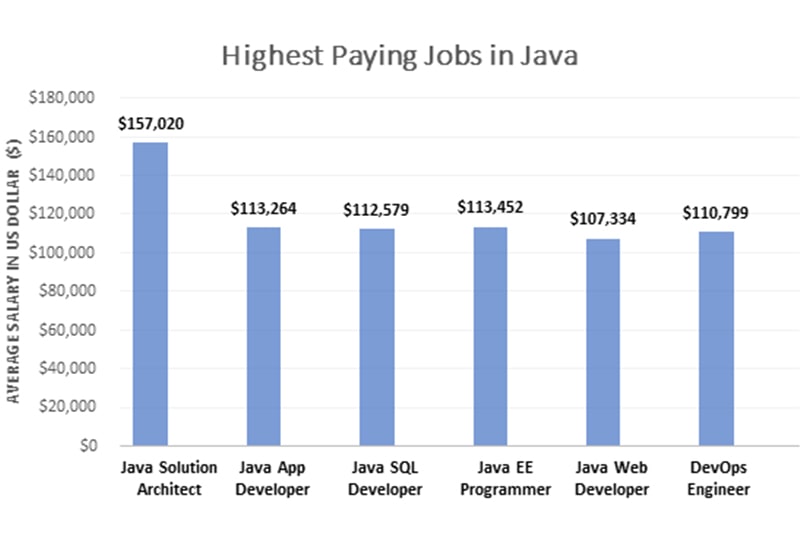
Job prospects after our Top Rated Java Coding Bootcamp in Louisville, Kentucky
Java SQL Developer ($112,579)
User Interface Developer (107,250)
DevOps Engineer ($110,799)
Java EE Programmer ($113,452)
Java Solution Architect ($157,020)
Java App Developer ($113,264)
Java Web Developer (107,334)
Scrum Master ($97,872)
Project Manager ($85,052)
How Large Is Louisville's Tech Economy and How Fast Is It Growing?
Louisville's tech economy spans thousands of technology workers throughout healthcare systems, logistics giants, insurers, manufacturers, government, and a startup base of 70 VC-backed companies that have collectively raised over $770M. Growth over the last 3–5 years has been steady: $29.5M raised across 17 deals in early 2025, 27 local funding rounds raising $368M in a recent two-year window, sustained payroll expansion in healthtech and logistics IT, and a rising company count fed by university pipelines and low operating costs that attract bootstrapped and venture-backed founders alike. Louisville will never be a coastal mega-hub — and that is its advantage: less competition, lower costs, and employers hungry for verified Java talent.
Why Waiting Is the Only Guaranteed Loss
Here is the truth no bootcamp ad will tell you: delaying your start does not sHere’s something most bootcamp ads won’t tell you: waiting to start doesn’t make the program any shorter—it just delays your admission. JOPP takes time because it builds real skills, step by step, with projects you can put on your resume, interview practice until you’re confident, and marketing to employers until you get an offer. This hard work is exactly what companies are willing to pay for. Every month you wait is a month of salary you miss out on. The journey may be long, but at the end is a full-time job offer. The best time to start was yesterday. The next best time is today. and training firms offering Java and coding training in Louisville, Kentucky — and many of them will promise you a job after their program. But if your goal is to actually get hired after the bootcamp, there is only one choice: SynergisticIT's top-rated Java coding Bootcamp in Louisville, Kentucky. It is the sure-shot way a jobseeker gets hired — trained by industry specialists, certified on in-demand stacks, prepared project-by-project and interview-by-interview, and marketed directly to 24,000+ employer contacts until the offer arrives.
Contact SynergisticIT today and begin the first step in your tech career journey.