Important Notice— Our url is



Atlanta jobseekers hunting for Java, software engineer, or developer jobs do not need another certificate that sits unused on LinkedIn. They need a path that turns coding skill into interviews and a full-time offer. SynergisticIT built that path as a Java coding training Bootcamp in Atlanta, Georgia with job placement, available to candidates anywhere in the USA. Start with SynergisticIT’s Job Placement Program and the specialized SynergisticIT Java Job Placement Program. Both exist so people targeting tech jobs can learn what hiring managers actually test, build projects that belong on a resume, and get marketed to employers instead of being left to cold-apply after class.
This is not a classroom that ends with a PDF. Java training sits inside SynergisticIT’s Java DevOps full stack Job Placement Program. The company has 15+ years in the tech industry and 24,000+ employer connections, so the work is shaped by what enterprise clients ask for in live interviews. If your search is how to get hired as a recent CS graduate, or how to re-enter tech after a break, the Atlanta-focused program below is designed around offers, not slogans.
Atlanta keeps hiring Java talent because banks, airlines, logistics, and utilities still run large Spring and JVM backends. Employers that hire and have hired Java developers for full-time Atlanta roles include The Home Depot, Delta Air Lines, Equifax, The Coca-Cola Company, UPS, AT&T, Cox Communications, Southern Company, Intercontinental Exchange, U.S. Bank, JPMorgan Chase, Morgan Stanley, BlackRock, FanDuel, Capgemini, Infosys, Accenture, Tata Consultancy Services, NTT DATA, EPAM Systems, Conduent, Nagarro, Hermeus, Georgia System Operations Corporation, and State Farm.
Market pay in Atlanta typically clusters near $80,828 for junior Java work, about $88,407 to $116,000 overall, and $120,257 for senior Java, with posted bands such as $63,140–$82,000, $86,129–$127,189, $90,000–$130,000, $116,000–$145,000, $120,000–$148,000, and $92,459–$153,550. Junior full-time ranges often fall around $70,000–$104,640, mid-level around $100,000–$145,000, and senior around $110,000–$175,000, with some leads higher.
Java stays in demand because Atlanta’s fintech, payments, healthcare IT, airline, and retail platforms still depend on Java microservices, AWS, and Kotlin-adjacent JVM stacks that need people who can keep core systems reliable as they modernize.
When Was Java Founded, and Which Companies Shaped It?
Java did not appear as a weekend tutorial language. In 1991, Sun Microsystems launched the Green Project, led by James Gosling with Mike Sheridan and Patrick Naughton. The early language was called Oak and aimed at consumer devices before the team pivoted toward the internet. Sun Microsystems presented Java publicly at SunWorld on May 23, 1995, with the promise of write once, run anywhere. That public debut is why 2026 marks more than 31 years of Java in production, and more than 35 years since the original project began.
Sun Microsystems itself grew out of Stanford-era workstation work in the early 1980s, with founders including Andy Bechtolsheim, Vinod Khosla, and Scott McNealy, later joined by Bill Joy. Java became Sun’s most lasting software legacy. In 2009, Oracle agreed to buy Sun Microsystems; the deal closed in 2010, and Oracle has stewarded Java, the JVM, and the commercial JDK since then. Open-source work continues through OpenJDK, which distributions from Amazon, Red Hat, Eclipse, and others still build on.
That history matters for jobseekers. Java is not a fad stack invented for a single product cycle. Banks, retailers, telecom firms, and government systems have spent decades on it. Learning it is learning the language those systems still run.
Why Java Is Worth Learning After Three Decades
Java remains worth mastering because large companies do not rip out core platforms every time a new language trends on social media. It is strongly typed, portable across operating systems, backed by a huge library ecosystem, and proven at high transaction volume. Hiring managers still post Java developer, backend engineer, full stack, and software engineer roles because production services, payment rails, claims engines, and inventory systems need people who can maintain and extend them.
After 31+ years in public use, Java has a release cadence, a global talent pool, and tooling that enterprises already paid to standardize. That longevity is the point. A language that survived the browser wars, the mobile wave, the cloud migration, and now AI tooling is not waiting for permission to stay relevant.
Which Industries Use Java, and Why Is It Future-Proof?
Java shows up wherever software must be reliable, auditable, and scalable.
- Banking and payments use it for transaction processing, risk engines, and card networks because downtime is expensive.
- Insurance and healthcare use it for claims, member portals, and compliance-heavy workflows that cannot be rewritten every year.
- Retail and e-commerce use it for catalogs, order management, and supply-chain services that spike during peak seasons.
- Telecom and logistics use it for billing, provisioning, routing, and high-volume messaging.
- Government, manufacturing, and enterprise SaaS use it for internal platforms that outlive any single product team.
It is future-proof because those systems are already in production. Replacing a Fortune 500 backend is a multi-year capital decision, not a weekend refactor. Cloud vendors still ship first-class Java support. Spring Boot, microservices, and container platforms keep the language current without throwing away the installed base. Jobseekers in Atlanta benefit twice: the metro has finance, logistics, healthcare, and corporate tech centers, and Java is the common language those employers already operate.
Will AI Tools Kill Java Jobs?
AI coding assistants can draft boilerplate. They do not own production incidents, security reviews, or the business logic inside a twenty-year payments platform. Enterprises still need developers who understand concurrency, memory, APIs, data models, and deployment. Java sits in those layers. Tools change how a developer types; they do not remove the need for someone who can explain a failing service to a hiring panel.
Compared with trend-driven stacks, Java job volume is less fashion and more maintenance-plus-modernization. Python is strong in data and scripting. C# is strong in Microsoft shops. C++ is strong in systems and performance work. AI and ML roles are real, but they often sit on top of data platforms and still need production engineers. For long-term employment stability, Java remains the language enterprise clients keep staffed through hiring freezes and boom cycles. It withstands highs and lows because the work is tied to revenue systems, not demo apps.
If the goal is employment, Java should be learned in depth, not as a two-week survey. A random coding bootcamp that skims syntax will not prepare you for Spring, databases, DevOps, and system-design interviews. Learn it from a company that has been in the tech industry for over 15 years, knows what employers screen for, and treats training as part of hiring. That company is SynergisticIT. Java training is not a side course there. It is part of SynergisticIT’s Java DevOps full stack Job Placement Program.
Which Technology Is Best for Long-Term Career Success?
The technology for long-term job and career success is the one enterprise clients will still fund in ten years. Java is the most durable of those choices. It is the backbone language of large clients, which is why it should be chosen over treating Python, AI, ML, C#, C++, or the language-of-the-month as your only bet. Those skills can complement a career. They rarely replace the need for people who can keep mission-critical services running.
Java also produces some of the most rewarding outcomes in salary and career length. SynergisticIT alumni land offers in the $95k to $155k range after completing the program, because they are hired into roles companies already budget for. That is not hype around a new title. It is pay attached to systems that stay online.
What’s the #1 Programming Language Used at Most Fortune 500 Enterprise Companies?
Java is the #1 programming language used across most Fortune 500 enterprise companies for core backend and production applications. Nearly all of those firms still rely on Java somewhere in their stack. When a jobseeker asks which language large employers standardize on, the practical answer is Java, then often C# or Python depending on the team. Enterprise companies—organizations with 1,000+ employees and roughly $1 billion+ in revenue—prefer platforms they can staff, audit, and scale. Java fits that requirement, which is why it remains the safer long-term bet for software engineer and developer jobs.
Are Coursera, Udemy, or Online University Bootcamps Enough to Get Hired?
Coursera, Udemy, and online university bootcamps are useful for a certification and for first exposure to a topic. They are not enough to get hired. Hiring teams want interactive learning, critique from instructors, projects that match current client stacks, and proof you can talk through design decisions. Recorded modules cannot give feedback when your API design is wrong. They cannot tell you what Atlanta and national employers asked in interviews this month. They cannot market you.
SynergisticIT’s Job Placement Program is built for that gap. You learn live, you get feedback, you work hands-on projects, and you practice the material companies are actually shipping. The Java DevOps Full Stack JOPP is the track for people who want Java, cloud, and deployment skills in one employment pipeline.
Why Employers Call JOPP Candidates Value for Money
SynergisticIT’s Job Placement Program candidates are value for money for employers—the bang for their buck—because they already completed projects and certifications. They can contribute from day one. Companies gain skilled people at a fraction of the cost of hunting similarly prepared talent on the open market, where resumes are uneven and ramp-up is slow.
That is why enterprise companies hire JOPP candidates. They are getting genuine employees with genuine skills, not a hit-or-miss board applicant. The hire is screened, trained, and expected to add to the company’s bottom line immediately.
How JOPP Helps Jobseekers With a Career Gap
A break on a resume is not a life sentence if the next months produce proof of skill. SynergisticIT already publishes practical guidance on landing a tech job after a career gap, and the Java track applies that model directly.
- Skills are rebuilt against current stacks, so a gap does not leave you explaining outdated tools.
- Projects refill the empty years with work you can discuss in interviews instead of apologizing for time away.
- Certifications on Java, AWS, Azure, and related tools give employers a third-party signal while your recent job history is thin.
- Resume and interview coaching translate the break into a narrative of readiness, not a red flag.
- Client marketing to 24,000+ employer contacts opens doors that cold applications after a pause usually never reach.
How JOPP Helps Recent Graduates With No Experience
How to get hired as a recent CS graduate is less about GPA and more about whether you can ship, debug, and interview. Degree programs rarely finish that last mile.
- Tech skills go beyond campus Java into Spring Boot, APIs, cloud, and DevOps, which entry-level postings actually list.
- Project work becomes your experience, so “no commercial job” does not mean “no evidence.”
- Interview scheduling and preparation replace the silence that follows mass-applying with a campus resume.
- Employer access puts recent grads in front of teams that would otherwise demand two years of work they never had a chance to get.
Placement into tech roles at strong companies is the outcome 90% of hired JOPP graduates reach without a prior tech job; the other 10% are career changers, people with gaps, and similar profiles.
Why This Is a Job Placement Program, Not a Coding Bootcamp
SynergisticIT’s Job Placement Program can be completed from anywhere in the USA. For Georgia jobseekers it functions as the Java coding training Bootcamp in Atlanta, Georgia plus staffing. That combination is why it is called a Job Placement Program, not a coding bootcamp.
Most coding bootcamps train, collect tuition, and leave students to fend for themselves. People spend money, finish a cohort, and still cannot get hired. When you target Java developer roles, portfolio and interview performance matter as much as knowledge. SynergisticIT promotes hands-on project experience and structured preparation designed to turn learning into offers. 15+ years of tech-industry experience and 24,000+ employer connections give enrollees a wide network and a clear view of what employers want.
30% of candidates who join SynergisticIT’s Job Placement Program already tried other coding bootcamps or Udemy, Coursera, or university bootcamp courses and did not get hired. They join JOPP after that miss. Bootcamp graduates often fail because instruction is thin, projects are generic, instructors are alumni reading slides, and “career services” means a resume template. JOPP is expensive compared with a video course, but it is superior because it saves the money and months wasted on programs that produce no offer. The highest ROI versus college-only paths is documented on SynergisticIT’s ROI blog.
Why Companies Hire SynergisticIT JOPP Candidates
Alumni have been hired at Visa, Apple, PayPal, Walmart Labs, AutoZone, Wells Fargo, Capital One, Walgreens, Bank of America, SAP, Cisco Systems, Verizon, T-Mobile, Intuit, Ford, Hitachi, Western Union, Deloitte, Dell, USAA, Carfax, Humana, and many more at salaries of $95k to $155k. Employers keep coming back for reasons that are operational, not promotional.
- Current tech stack alignment and job-ready skills. JOPP is shaped by tech-client demand, industry interaction, and hands-on upskilling, so candidates often need less ramp-up time.
- Pre-screened talent. Companies receive people already checked for technical and job fit before interviews.
- Certifications included. Candidates may be certified on Java, DevOps, AWS, Azure, Power BI, Snowflake, and others, which adds credibility to a diverse stack.
- Multi-stack skill. A company may prefer one junior who can contribute across backend, frontend, and deployment, rather than three narrow specialists.
- Reduced hiring risk. Structured training, projects, interview prep, and screening cut the chance of a failed hire.
- Day-one contribution. Candidates are practical and ready to work from the first week.
- Genuine project-based resumes. The focus is real projects and skills, not embellished history.
In short, companies hire JOPP candidates because they are trained, screened, project-ready, interview-prepared, and aligned with current tech roles.
How SynergisticIT Differs From Bootcamps and Staffing Firms
Curriculum quality. SynergisticIT stays in the market at Oracle CloudWorld, the Gartner Data & Analytics Summit, and other tech events. Candidates are actively interviewing, so the curriculum is adjusted in real time to actual openings.
Instructor quality. Many bootcamps use graduated alumni, recorded sessions, or teachers who appear a few hours a week. SynergisticIT uses industry professionals. The average instructor has more than 10 years of experience.
Number of instructors. Most bootcamps assign one or two people to every topic. In both the data science and Java Job Placement Program, SynergisticIT uses 5–6 instructors who specialize. There is a separate instructor for data analytics, data engineering, data science and machine learning; on the Java side, separate instructors for Java, databases, advanced Java, and DevOps.
Cost and payment. Pricing is transparent: $10k before the program and a balance of $26k after a job offer, payable over 2 years. If there is no job offer, those later payments do not accrue. JOPP takes partial fees first and the rest once the jobseeker is hired for an $81k role or higher. Most bootcamps take all fees up front and advertise refunds that are hard to redeem.
Duration. Instruction is 4–5 hours each day, 5 days a week, spread over 5 months. It is immersive, live, and not a library of recordings. Every enrollee should ask competing bootcamps to put their live-hour count in writing.
Student-to-instructor ratio. 5-to-1 at SynergisticIT, versus about 20-to-1 at many bootcamps.
Projects. Work is tailored to company requirements and live tech stacks. Only projects you actually complete go on the resume.
Alumni success. Read, watch, and listen to alumni reviews describing offers. Alumni land high-paying jobs from $95k to as much as $155k, sometimes with multiple offers.
Certifications included at no extra cost from Microsoft, Oracle, Snowflake, Databricks, Azure, and AWS.
Career help after training. SynergisticIT markets to 24,000+ company contacts and takes over outreach. Bootcamps often issue a certificate and leave job hunting to the student. Here, support runs from enrollment through the first day on the job: resume, interview prep, and scheduled interviews. Ask any bootcamp for specifics in writing.
Why trust the program. Check photographs of successful alumni on the JOPP page, video reviews, offer letters, and years in business. There are no fake guarantees with hidden clauses. Cost and outcomes are stated plainly. See SynergisticIT reviews, the USA Today article, and videos from tech events in the SynergisticIT video and photo gallery. Unlike bootcamps with ads that sound too good to be true, JOPP leads with results and industry presence at OCW and Gartner.

JOPP is not just a bootcamp—it’s a job placement program with a proven track record of getting candidates hired at top companies.
The Tech Stack: What You’ll Master in JOPP
Backend & Core Java:
- OOP, concurrency, collections, streams, lambdas, memory management, Java 17/21/25 features.
- Spring Boot, Spring MVC, Spring Security, REST APIs, microservices architecture.
- Hibernate, JPA, PL/SQL, database optimization.
DevOps & Cloud:
- Git, Maven, Gradle, Jenkins, Docker, Kubernetes, Terraform, Ansible.
- AWS, Azure, GCP deployment and cloud-native development.
- Monitoring (Prometheus, Grafana), logging (ELK stack), CI/CD pipelines.
Frontend & Full Stack:
- React.js, Angular, Node.js, Express.js, MongoDB, RESTful API and GraphQL development.
- JWT/OAuth2 authentication, real-time apps with Socket.IO.
Data Structures & Algorithms:
- Arrays, linked lists, trees, graphs, sorting/searching, dynamic programming, system design.
Competitive Coding & Interview Prep:
- 200+ coding assessments, mock interviews, behavioral and scenario-based training.
This comprehensive stack ensures you’re prepared for any Java developer, DevOps, or full-stack role in today’s market.
Introduction to Java & Oops
Servlet
JSP
JQuery
Hibernate
Spring
Microservices
JavaScript
JOPP vs. Other Bootcamps: A Detailed Comparison
Why Most Bootcamps Fail to Deliver
Common pitfalls of other bootcamps:
- Limited Curriculum: Focus on basics, outdated tech, or only frontend/backend.
- Minimal Live Instruction: Reliance on pre-recorded content, little real-time support.
- No Real Job Placement: At best, “job assistance” or resume workshops, not active placement.
- Unrealistic Guarantees: “Money-back” offers with impossible conditions or low salary thresholds.
- Lack of Industry Feedback: Outdated skills, poor employer alignment, and little access to real-world projects.
Result:
Most graduates struggle to land interviews, face repeated rejections, or accept low-paying roles far below their expectations.
Why JOPP Is Superior
SynergisticIT’s JOPP stands out for:
- Depth and Breadth: Covers the full Java DevOps stack, cloud, and system design.
- Live, Immersive Training: 5–7 hours/day, 5–7 months, with direct access to expert trainers.
- Active Job Placement: Resume marketing to 24,000+ clients, interview scheduling, and support until you’re hired.
- Proven Results: 91.5% placement rate, average salaries of $95k–$155k, and alumni at top companies.
- Partial Upfront Fees: Only 30% upfront, with the balance due after securing a job of $81k+.
- Continuous Industry Engagement: Curriculum updated based on feedback from Oracle CloudWorld, JavaOne, Gartner Summit, and direct employer input.
SynergisticIT’s alumni have secured roles at top-tier companies with salaries ranging from $95k to $155k, including:
- Visa, Apple, PayPal, Walmart Labs, AutoZone, Wells Fargo, Capital One, Walgreens, Bank of America, SAP, Cisco Systems, Verizon, T-Mobile, Intuit, Ford, Hitachi, Western Union, Deloitte, Dell, USAA, Carfax, Humana.
These are not contract or temp roles—JOPP graduates land full-time, career-track positions.
Placement Outcomes and ROI
- 91.5% placement rate—the highest in the industry.
- Average time to hire: 6–12 weeks after program completion.
- 90% of hires had no prior tech job experience; 10% were career changers or had gaps.
- 30% of JOPP candidates previously attended other bootcamps or online courses without success.
- Highest ROI compared to colleges and other bootcamps—graduates recoup their investment within months and earn significantly more over their careers.
See the ROI blog for a detailed comparison.
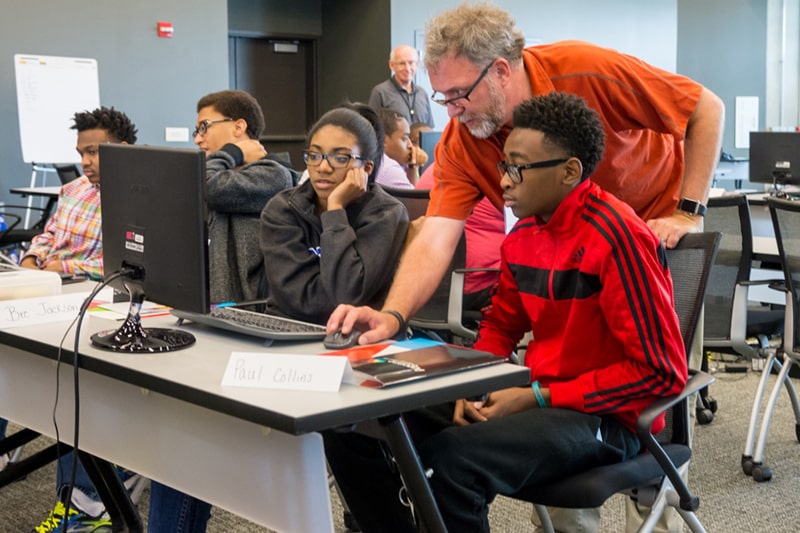
Why Recent CS Graduates Should Join JOPP: “How to Get Hired as a Recent CS Graduate”
The Challenge for New Grads
Despite earning a computer science degree, many recent graduates struggle to land their first tech job. The reasons include:
- Lack of practical, job-ready skills: College curricula often lag behind industry needs.
- No real-world project experience: Employers want candidates who can deliver from day one.
- Poor interview preparation: Technical and behavioral interview skills are rarely taught in academia.
- ATS and resume pitfalls: Many grads fail to optimize their resumes for applicant tracking systems.
In today’s market, knowing “how to get hired as a recent CS graduate” means bridging the gap between theory and practice.
How JOPP Bridges the Gap
- Hands-On Projects: Build and deploy enterprise-grade applications.
- Interview Mastery: 200+ coding assessments, mock interviews, and scenario-based training.
- Resume Optimization: ATS-compliant branding, LinkedIn, and GitHub guidance.
- Direct Employer Access: Active marketing to 24,000+ tech clients.
- Job Placement Support: From application to offer, with ongoing mentorship.
Result:
Recent CS grads who join JOPP are hired faster, earn higher salaries, and launch their careers with confidence.
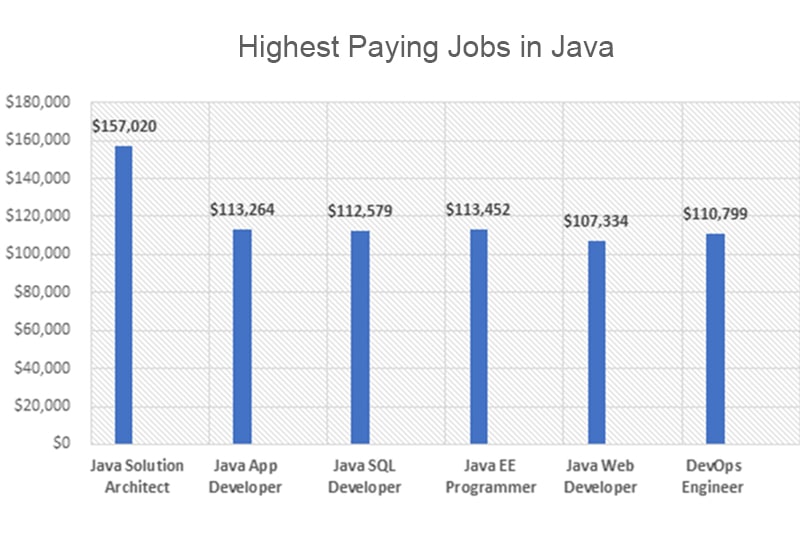
Career Options after Java Training at SynergisticIT
There are a splendid number of job options you can consider after taking our Java training in Atlanta, such as:
Java Solution Architect ($157,020)
Ui Developer (107,250)
DevOps Engineer ($110,799)
Java SQL Developer ($112,579)
Java Web Developer (107,334)
Scrum Master ($97,872)
Project Manager ($85,052)
How to Get Hired as a Recent CS Graduate
How to get hired as a recent CS graduate usually fails for a simple reason: campus projects do not match enterprise interviews. Recent CS graduates should join SynergisticIT’s JOPP because it supplies tech skills, project work, and the missing piece—getting hired into tech roles at strong companies. 90% of JOPP graduates who get hired never held a tech job before.
Bootcamps often fail that test, which is why so many have shut down after promises they could not keep. SynergisticIT JOPP makes a promise it keeps: candidates who successfully complete the program get hired into tech companies. Not all Java training is equal. Java should be learned in depth from a firm with over 15 years in the industry, not from any coding bootcamp that only teaches syntax. That is why JOPP alumni reach some of the highest salaries and a 91.5% success rate.
The same program is available anywhere in the USA. It is the Java coding training Bootcamp in Atlanta, Georgia combined with staffing. Coding bootcamps train and walk away. JOPP schedules interviews, prepares candidates, and stays until offers arrive.
Tech Stack Inside the Java DevOps Full Stack JOPP
The Java DevOps full stack JOPP is built for the jobs Atlanta and national employers post, not for a static syllabus.
- Core and advanced Java: OOP, collections, concurrency, Java 21+ features, testing, and clean-code practice
- Spring Boot and microservices: REST APIs, Spring Security, JPA/Hibernate, service discovery, API gateways, and observability
- DevOps and CI/CD: Git, Maven/Gradle, Jenkins, Docker, Kubernetes, Terraform, and cloud deploys on AWS, Azure, or GCP
- Data structures and algorithms for coding rounds
- MERN/MEAN pieces—React, Angular, js, MongoDB—so graduates can work across the stack
- SQL and PL/SQL on MySQL, Oracle, and PostgreSQL
Skills can shift as client demand shifts. That is the point of a program tied to live hiring.
How to Get Hired in FAANG and Other Large Tech Employers
How to get hired in FAANG is the search phrase. The practical path is still the same: depth in Java or a related stack, projects that survive a screen share, and interviews you are coached to finish. SynergisticIT JOPP connects candidates, schedules interviews, and handholds until hire. Alumni have joined teams at Visa, Apple, PayPal, Walmart Labs, AutoZone, Wells Fargo, Capital One, Walgreens, Bank of America, SAP, Cisco Systems, Verizon, T-Mobile, Intuit, Ford, Hitachi, Western Union, Deloitte, Dell, USAA, Carfax, Humana, and many more at $95k to $155k.
For location context on why Atlanta remains a strong tech-job market, see SynergisticIT’s guide to best cities for tech jobs. Pair that with the Java Job Placement Program if your target title is Java developer or software engineer.
Start Now: The Offer Does Not Arrive While You Wait
Delaying does not shrink SynergisticIT’s JOPP. It only pushes the offer date further out. The calendar is long because skills, projects, interviews, and client marketing all have to happen before placement. Employers pay for that demanding stretch, not for a weekend certificate. Begin while you still have the runway—the work is substantial, and the payoff is a full-time job offer.
There are many coding bootcamps and training firms that advertise Java and coding training in Atlanta, Georgia. If the goal is to get hired after the bootcamp, the serious choice is SynergisticIT’s Java coding training Bootcamp in Atlanta, Georgia. That program is the sure path for a jobseeker who wants an offer, not another unfinished course. Contact SynergisticIT and start the tech career journey with a team that stays until you are working.