 Important Notice— Our url is



Top Rated Java Coding Bootcamp in Los Angeles, California:
If you are searching for a Top rated Java coding Bootcamp in Los Angeles, California, this guide will walk you through everything you need to know before you spend a single dollar on training. Los Angeles is one of the largest technology markets in North America, with roughly 350,000 high-tech workers across the metro area and a tech sector that generates over $120 billion in economic value according to the Los Angeles Economic Development Corporation. Yet thousands of bootcamp graduates in Southern California finish their programs every year and still struggle to get hired. The reason is simple: most bootcamps train, issue a certificate, and then leave jobseekers to fend for themselves in a brutal job market. This guide explains what a coding bootcamp actually is, why Java remains the most durable career bet in software, how the Los Angeles tech economy really works, and why a program that combines coding bootcamp training + staffing + job placement — SynergisticIT's Job Placement Program — delivers outcomes that ordinary bootcamps cannot. Java training is a core component of SynergisticIT's Java DevOps Job Placement Program, a program specifically designed not just to teach you Java, but to get you hired. If your goal is a Top rated Java coding Bootcamp with job placement in Los Angeles, California, read every section below before you commit anywhere else.
Java developers remain in demand in Los Angeles because streaming, ticketing, gaming, aerospace, finance, and healthcare still run high-volume services on Java and Spring. Those employers need full-time engineers who can keep transaction systems reliable while moving them toward cloud microservices. A softer 2026 market has made hiring more selective, but the codebases do not disappear, so replacement demand continues.
Public full-time Java and Java-backed engineering roles in Los Angeles County, excluding staffing firms, are documented at Disney, Hulu, Netflix, Snap, Activision, Ticketmaster, SpaceX, and Northrop Grumman. Disney has posted Java full-stack work in Glendale, Hulu’s Santa Monica services include Java microservices, and Netflix’s Los Angeles engineering sits on the company’s long-running Java platform. Snap recruits local backend engineers with Java among accepted languages. Activision has hired a senior Java engineer in Santa Monica, Ticketmaster has hired Java and Spring Boot engineers for fan-commerce APIs, SpaceX has listed Java for Hawthorne software roles, and Northrop Grumman has posted Java software engineer roles in El Segundo. I am not padding this to 25 names. Many other Java titles on local boards come from staffing firms, and I do not have public full-time Java requisitions for enough additional product employers to name them honestly.
Pay differs by level, and posted ranges are not one citywide scale. Junior Java developers in Los Angeles are generally offered about $95,000 to $130,000. Mid-level developers are generally offered about $117,000 to $175,000. Senior Java developers are generally offered about $150,000 to $230,000 in base salary, with staff-level total pay higher. Salary.com’s September 2026 average for a Java Developer in Los Angeles was $117,114. Glassdoor’s senior Java Developer average was $181,745, with top reports near $302,145. Recent posted bands include $117,500 to $157,500 at Disney, $136,000 to $170,000 at Ticketmaster, $102,800 to $190,204 at Activision, and $125,000 to $195,000 at SpaceX. Snap has posted Los Angeles backend ranges of $195,000 to $343,000, and Netflix has posted local ranges of $270,000 to $410,000. Those last two figures reflect senior total compensation, not a typical junior base.
Los Angeles technology employment is large, but 2026 is not a boom. CBRE counted about 258,640 tech-talent workers in Los Angeles and Orange County after 13 percent growth from 2018 to 2023, fifth in North America, and later reporting put the Los Angeles tech workforce near 279,000. CompTIA counted 5,544 metro tech postings in February 2026, ninth nationally, while county unemployment sat near 5.2 percent. Famous technology figures tied to the city include Evan Spiegel and Bobby Murphy of Snap, Sean Rad of Tinder, Brandon Beck of Riot Games, and Los Angeles-born Travis Kalanick of Uber. Java should stay in demand because entertainment platforms, defense software, and financial systems here still depend on durable JVM services.
What Is Java, When Was It Created, and By Whom?
Java was initiated in June 1991 at Sun Microsystems by engineers James Gosling, Mike Sheridan, and Patrick Naughton under the "Green Project." The language was first called Oak, then briefly Green, and was finally renamed Java in 1995, inspired by Java coffee. Sun Microsystems released Java 1.0 in 1996 with the famous promise of "Write Once, Run Anywhere" — compiled Java bytecode could run on any machine with a Java Virtual Machine, which was revolutionary at the time.
In 2010, Oracle acquired Sun Microsystems, which is why Java belongs to Oracle today. That means Java has now been in existence for over three decades — since 1991 in development and 1995 publicly — and it has outlived nearly every programming language that competed with it during that era. Very few technologies survive 30+ years of industry change. Java has not only survived; it has continuously evolved through the OpenJDK project and a steady six-month release cadence that keeps it modern for cloud, microservices, and containerized enterprise systems.
Why Learning Java Is Important
Java matters because it is the backbone of enterprise software. It is widely used in CRM software, financial platforms, and large-scale enterprise systems precisely because of its robustness, cross-platform capabilities, security, and scalability. Where companies run complex legacy and modern systems side by side, Java is the language that manages them. Learning Java in depth gives you access to the highest-paying, most stable segment of the software job market: enterprise back-end systems at banks, insurers, retailers, healthcare companies, and government agencies.
Industries Using Java and Why It Is Future-Proof
Java dominates across banking and financial services, insurance, healthcare, e-commerce, logistics, telecommunications, government IT, aerospace, automotive, and streaming platforms. Major financial institutions such as Bank of America and Citigroup rely heavily on Java, and over 90% of Fortune 500 companies use Java in their core codebases. Java is future-proof for three reasons: first, the sheer volume of mission-critical Java systems running the global economy cannot be rewritten overnight — they will need Java engineers for decades. Second, the JVM ecosystem keeps modernizing (Spring Boot, microservices, containers, GraalVM native images). Third, every new technology trend — cloud, big data, DevOps, and even AI infrastructure — integrates with Java rather than replacing it.
What Is a Coding Bootcamp?
A coding bootcamp is a short-term, intensive training program that teaches programming skills in weeks or months instead of the years a college degree takes. The idea is sound in principle: compress the most job-relevant skills into a focused curriculum. The problem is that most bootcamps stop at training. They issue a certificate, hand you resume tips, and wish you luck in a job market where entry-level tech roles attract hundreds of applicants per posting.
Different types of coding bootcamps include:
- Full-time immersive bootcamps — 12–16 weeks of daily classes, usually in web development basics.
- Part-time and evening bootcamps — designed for working professionals, usually stretching over 6 months with limited weekly hours.
- Online self-paced bootcamps — recorded video content with minimal live instruction or feedback.
- University-affiliated bootcamps — marketed under a university brand but often delivered entirely by third-party providers.
- Hybrid bootcamp + placement programs — the rarest category, which combines training, projects, screening, and actual employer marketing until you are hired. SynergisticIT's Job Placement Program (JOPP) falls in this last category, which is why it is called a Job Placement Program and not a coding bootcamp — more on that below.
Are Coursera, Udemy, or Online University Bootcamps Enough to Get Hired?
Honestly, no. Coursera, Udemy, and online university bootcamps are good for earning a certification, but a certificate alone does not get you hired. Getting hired requires interactive live learning, real-time feedback from instructors, hands-on projects that mirror what companies actually work on, interview preparation, and direct exposure to employers. A recorded course cannot tell you your code is wrong, coach you through a failed mock interview, or market you to a hiring manager. SynergisticIT's Job Placement Program achieves what passive platforms cannot: live instruction, project-based learning shaped by what client companies are currently building, and structured support that continues until you receive a job offer.
How Strong Is the Startup and Investment Scene in Los Angeles, California?
Los Angeles is one of the most powerful startup ecosystems on earth. According to Startup Genome's Global Startup Ecosystem Report, LA is a top global startup city, held its position as a top-four U.S. venture capital market (behind only San Francisco, New York, and Boston), and recorded roughly $74 billion in total tech startup VC funding between 2021 and 2025. In 2024 alone, LA's AI ecosystem attracted $1.8 billion in venture capital in a single quarter, placing it second in the U.S. for AI funding, and the city is now the fourth-largest AI talent hub in North America with about 13,600 specialists. LA tracked over $3.18 billion across 665+ funded startups in 2025, with Series A rounds typically between $8M and $25M.
The region's unicorns and major tech employers include Snap Inc., SpaceX in Hawthorne, Relativity Space, Crunchyroll, and a deep bench of gaming, creator-economy, and digital media companies. The accelerator and seed ecosystem is anchored by organizations like Science Inc., Mucker Capital, Amplify.LA, Techstars LA, Grid110, and venture firms such as Crosscut Ventures. Acquisition activity is robust, with LA startups regularly acquired by larger platforms — which matters enormously for Java jobseekers, because every acquired company must integrate its systems into enterprise back-ends, and those back-ends overwhelmingly run Java.
How Large Is the LA Tech Economy and How Fast Is It Growing?
The Los Angeles metro area employs roughly 1.4 million people in technology and information services, meaning about 1 in 10 LA jobs is tech-related. Over the past 3–5 years, the sector has grown in jobs, payroll, and company count despite national tech layoffs — LA's ecosystem value grew 449% between the H2 2018–2020 and H2 2023–2025 measurement periods. The median tech salary in LA sits around $125,000–$145,000, well above the regional average, and roughly 35% of LA's tech jobs are in software development — the exact category Java developers occupy.
Which Industry Clusters Drive Java Hiring in Los Angeles, California?
Java hiring in LA is driven by distinct clusters:
- Fintech and banking — payment platforms and financial infrastructure are built on Java/Spring back-ends.
- Healthtech — HIPAA-compliant enterprise systems favor Java's security model.
- Entertainment, media, and streaming tech — roughly 28% of LA's tech workforce is concentrated in content and media tech, and the platforms behind them run on JVM services.
- Aerospace and defense — about 12% of the LA tech workforce, with companies like SpaceX, Relativity Space, and defense primes needing hardened back-end engineers.
- E-commerce, logistics, and port technology — LA's position as the largest U.S. port complex makes logistics software a massive Java employer.
- Insurance and government IT — the most stable, recession-resistant Java buyers in the region.
Who Makes Up the Tech Workforce in Los Angeles?
The demographics of tech jobseekers in Los Angeles are unusually diverse. About 68% of LA tech workers hold a bachelor's degree or higher, versus 37% of the broader U.S. workforce. The average LA tech worker is about 41 years old, slightly older than the national average of 38. Women hold roughly 26–34% of LA tech jobs — below parity but above many peer markets — while Hispanic/Latino workers make up about 30% of LA tech jobs, far exceeding their 18% share of the regional workforce overall. Around 28% of LA tech jobs are held by foreign-born workers, with India the leading country of origin at roughly 35% of that group — a population that includes significant numbers of OPT/STEM-extension and H-1B jobseekers competing for the same roles. On workplace mix, the region is hybrid-heavy, with around 55% of tech workers concentrated in the Santa Monica, West LA, and Downtown "tech corridor", while remote-first startups and distributed enterprise teams make up the rest.
Which Colleges Supply Tech Talent in Los Angeles?
Local employers draw from UCLA, USC, Caltech, Cal Poly Pomona, CSU Long Beach, CSU Northridge, CSU Los Angeles, UC Irvine, Loyola Marymount University, and strong community-college pipelines like Santa Monica College and Pasadena City College. LA produces over 15,000 STEM degrees annually and has among the highest densities of engineering graduates of any U.S. metro. The catch for jobseekers: this pipeline means a degree alone will never differentiate you in Los Angeles. Employers here see thousands of fresh CS resumes every year — which is exactly why project experience, certifications, and interview performance decide who gets hired.
Coding Events and Hackathons in Los Angeles
LA has an active developer community. Events like DevOpsDayLA, now celebrating its 15th gathering in 2026, bring together the Southern California DevOps community. Groups such as AI Tinkerers Los Angeles run monthly builder meetups, live demo nights, and full-day hackathons — recent editions have featured builders from Dropbox, sponsors like OpenAI and Google Cloud Run, and hands-on sessions on generative AI and agents. Google for Developers events, Eventbrite-listed coding workshops, and university hackathons at UCLA and USC round out a calendar that any serious Java learner should use for networking.
Will AI Tools Reduce Demand for Java? No — Here's Why
The rise of AI coding assistants has not reduced demand for enterprise Java — it has raised the bar for what a professional Java engineer must know. AI tools automate boilerplate; they do not modernize the trillion-dollar estate of legacy Java systems, and they cannot own accountability for a payment system that processes millions of transactions a day. Enterprises need engineers who can architect, secure, deploy, and debug distributed systems — skills that become more valuable, not less, when AI handles the routine parts.
Comparing job opportunities and stability across technologies: Python dominates research and prototyping, but its entry-level job market has become oversaturated with certificate holders. AI/ML roles demand advanced credentials. C# is largely tied to the Microsoft ecosystem, and C++ to niche systems work. Java occupies the broadest, most durable enterprise niche — the language that banks, insurers, retailers, and government agencies standardize on for decades at a time. Java positions have survived the dot-com crash, the 2008 financial crisis, the 2020 pandemic, and the 2022–2023 tech correction. If you want a technology that withstands the highs and lows of the job market, Java is it.
And this is the crucial part: if you are learning Java for employment, learn it in depth — not from any coding bootcamp, but from a company that has been in the tech industry for over 15 years. SynergisticIT has spent 15+ years inside the tech industry, and its team knows precisely what companies and employers look for in jobseekers because its candidates are actively interviewing with enterprise clients every single week. Java training is not offered by SynergisticIT as a stand-alone course — it is embedded in SynergisticIT's Java DevOps Full Stack Job Placement Program, which covers Core and Advanced Java, Spring Boot, microservices, REST APIs, DevOps, PL/SQL, data structures and algorithms, cloud technologies, Oracle Java certification, and AWS DevOps certification.
Top Rated Java Coding Bootcamp in Los Angeles, California: ?
Which Technology Ensures Long-Term Job and Career Success?
If the question is "which technology will always be in demand," the answer is enterprise Java. Java is the most long-lasting technology used by enterprise clients — no other mainstream language has continuously powered Fortune 500 core systems for 30 years. Over 90% of Fortune 500 companies use Java, making it arguably the #1 programming language at most Fortune 500 enterprises. Bank of America, Citigroup, and their peers run their core operations on Java.
Why choose Java over Python, AI, ML, C#, or C++? Because Java offers the most rewarding combination of salaries and career longevity. Java salaries at enterprise level routinely reach the $95k–$155k range — exactly the band where SynergisticIT's JOPP graduates get hired — while the skill remains relevant through every technology cycle. AI and ML will continue generating flashy headlines, but the boring, massive, bill-paying systems of the world economy are Java systems, and they are not going anywhere.
How to Get Hired as a Recent CS Graduate
This is the question every new graduate in Los Angeles is Googling: how to get hired as a recent CS graduate. The honest answer is that a diploma alone is no longer enough in a market where thousands of CS degrees are granted locally every year. Recent CS graduates should join SynergisticIT's JOPP because JOPP delivers the three things a degree cannot: current tech skills aligned to live job postings, real project work that goes on your resume, and — most importantly — actual placement into tech roles at great companies. Notably, 90% of JOPP graduates who get hired at tech jobs have never worked at a tech job before; the other 10% are career changers and candidates with career gaps. The program is built for people starting from zero industry experience.
Why do ordinary bootcamps fail to get their graduates hired? Because most bootcamps made promises they could not keep — which is why we keep seeing bootcamp chains shut down. SynergisticIT JOPP makes one promise it keeps: candidates who successfully complete JOPP get hired into tech companies. The program's alumni carry a 91.5% success rate and the highest salaries among its graduate outcomes. But make no mistake — not all Java training and bootcamps are created equal. Java should be learned in depth, not from any bootcamp or training company, but from a company with 15+ years inside the tech industry that knows what clients are looking for.
How SynergisticIT JOPP Helps Jobseekers with Career Gaps
- A structured re-entry path — the program rebuilds your skills from current market requirements so your gap becomes irrelevant next to fresh, demonstrable project work.
- A genuine project-based resume — JOPP focuses on real projects and skills rather than fake or embellished resumes, giving you honest answers to "what have you been doing?"
- Confidence through live feedback — daily live instruction and mock interviews erase the rust that career gaps create.
- Certifications that validate you — Java, AWS, and other credentials prove your knowledge is current regardless of when you last worked.
- Full placement support — SynergisticIT markets you to its 24,000+ employer contacts, schedules your interviews, and handholds you until the offer arrives.
How SynergisticIT JOPP Helps Recent Graduates with No Experience
- Enterprise-relevant skills — training shaped by real-time demand from tech clients rather than a static syllabus.
- Real project experience — the only projects you work on are the ones that will be reflected on your resume.
- Interview preparation that actually happens — mock interviews, technical screening, and coaching, not just tips.
- Certifications at no extra cost from Microsoft, Oracle, Snowflake, Databricks, Azure, and AWS.
- Direct access to employers — instead of applying into online voids, you are presented through a network of 24,000+ company contacts.
Why Enterprise Companies Hire SynergisticIT JOPP Candidates
SynergisticIT's Job Placement Program candidates are the value-for-money choice for employers — the bang for their buck. JOPP candidates already work on enterprise projects, hold certifications, and consequently perform from day one. Companies gain skilled employees at a fraction of the cost they would incur hiring similarly skilled candidates from the open job market, without the hit-or-miss risk of unverified applicants. Specifically:
- Current tech stack alignment and job-ready technical skills — JOPP is shaped by tech-client demand, industry interaction, and tech-industry-focused upskilling, so candidates need less ramp-up time.
- Pre-screened talent — rigorous technical screening happens before candidates are ever sent to market; companies receive candidates already checked for technical and job fit.
- Certified across the stack — JOPP candidates are certified on Java, DevOps, AWS, Azure, Power BI, Snowflake, and more, adding credibility to a diverse tech stack.
- Multi-stack skills — a company gets one junior developer who can contribute across back-end, front-end, and deployment, or a data professional who spans data engineering, analytics, and ML/AI teams.
- Reduced hiring risk — structured training, projects, interview prep, and screening mean employers face minimal risk of failure.
- Day-one contribution — JOPP candidates are practical and job-ready from day one of employment.
- Genuine project-based resumes — real projects and real skills, not embellished documents.
In short: companies hire JOPP candidates because they are trained, screened, project-ready, interview-prepared, and aligned with current tech roles. This is why companies like Visa, Apple, PayPal, Walmart Labs, AutoZone, Wells Fargo, Capital One, Walgreens, Bank of America, SAP, Cisco Systems, Verizon, T-Mobile, Intuit, Ford, Hitachi, Western Union, Deloitte, Dell, USAA, Carfax, Humana, and many more hire SynergisticIT's candidates at salaries of $95k to $155k. For more on how employers weigh experienced versus new candidates, see which candidate is an ideal hire — experienced or inexperienced.
How SynergisticIT Compares to Bootcamps and Staffing Companies
- Curriculum quality and relevance — SynergisticIT participates in tech-industry events like Oracle CloudWorld and the Gartner Data Analytics Summit, and its candidates are actively interviewing, so the curriculum is adjusted in real time to job market requirements.
- Instructor quality — most bootcamps use graduated alumni, recorded sessions, or instructors teaching a couple of hours a week. SynergisticIT uses industry professionals averaging 10+ years of domain experience delivering live lectures — no recorded sessions.
- Number of instructors — most bootcamps have 1–2 instructors teaching everything. SynergisticIT's Java and Data Science programs each use 5–6 specialist instructors — separate experts for Java, databases, advanced Java, DevOps, data analytics, data engineering, and data science/ML.
- Cost and payment — transparent cost: $10k before, balance $26k only on landing a job offer, payable over 2 years. If no job offer, no payments accrue. Most bootcamps take all fees upfront and advertise refund guarantees full of hidden clauses that can never be redeemed.
- Duration and depth — 4–5 hours of instruction each day, 5 days a week, over 5 months — a deeply immersive program. Ask any bootcamp you're considering for their actual live instruction hours, in writing.
- Student-to-instructor ratio — 5:1, versus 20:1 or worse at typical bootcamps.
- Projects — tailored to company requirements and tech stacks based on real-time job market demand; only projects you personally work on appear on your resume.
- Alumni success — read, view, and listen to audio and video reviews of alumni on the SynergisticIT reviews page, documenting offers from $95k to $155k, frequently multiple offers.
- Certifications included at no extra cost — from Microsoft, Oracle, Snowflake, Databricks, Azure, and AWS.
- Post-graduation placement — SynergisticIT takes over your marketing to 24,000+ company contacts, handles resumes, prepares you for interviews, and schedules the interviews themselves — versus bootcamps that issue a certificate and leave job hunting entirely to you, from the day you enter the program until the day you start working. We walk with you every step, all the way.
Why trust us? Check photographs of successful alumni on the JOPP page, video reviews, offer letters, and our years in business. We make no fake promises or guarantees with hidden clauses — just transparent costs and transparent job outcomes. SynergisticIT has been featured in a USA Today article on how tech companies source talent describing exactly this model: certified, pre-screened, USA-based Java and full-stack developers delivered to technology companies. For a broader look at how we approach broken tech hiring, see how SynergisticIT fixes tech hiring.
Why JOPP Is Superior to Bootcamps — and the Highest ROI Available
About 30% of candidates who join SynergisticIT's Job Placement Program have already completed other coding bootcamps or courses on Udemy, Coursera, or university bootcamps — and did not get hired before joining JOPP. That statistic tells you everything about why bootcamp graduates fail: training without screening, without employer marketing, without live depth, and without interview scheduling simply does not convert into offers.
Yes, SynergisticIT JOPP is expensive compared to a Udemy course — but it delivers results, saving you the money and time you would otherwise burn on programs that produce nothing. JOPP charges only partial fees upfront, with the balance payable only once you are hired for a $81k job or higher. Compared to colleges, the difference is even starker: the median bachelor's degree shows a negative ROI of 41% in its first 10 years, while SynergisticIT's Job Placement Program costs far less and its graduates earn $81k–$150k+ — see the full breakdown in the SynergisticIT ROI blog comparing JOPP to colleges.
And unlike bootcamps with fancy ads making claims too good to be true, SynergisticIT JOPP has results — alumni reviews, offer letters, a 91.5% success rate, and a public track record. We participate in Oracle CloudWorld, the Gartner Data Analytics Summit, and other tech events, and you can find videos of these events on our website alongside our reviews.
Why It's Called a Job Placement Program — Not a Bootcamp
SynergisticIT's Job Placement Program can be done from anywhere in the USA, and it is the Top rated Java coding Bootcamp in Los Angeles, California + staffing combined — which is precisely why it is called a Job Placement Program and not a coding bootcamp. Most coding bootcamps just train and leave their students to fend for themselves in the job market, which is why jobseekers spend thousands of dollars and still end up unhired. SynergisticIT JOPP schedules interviews, prepares you for them, and stays with you until you receive job offers from great tech companies. When you're targeting Java developer roles, your portfolio and interview performance matter as much as your knowledge — SynergisticIT's hands-on project experience and structured preparation are designed to translate learning into offers. Backing all of this are 15+ years of tech industry experience and 24,000+ employer connections that give enrollees access to a wide employer network and deep insight into what employers actually want.
How to Get Hired in FAANG and Top Enterprise Companies
Searches for how to get hired in FAANG miss an important truth: for most software engineers, the realistic, high-paying path is not just FAANG — it is the Fortune 500 enterprise ecosystem of banks, retailers, insurers, healthcare, and telecom giants. That is exactly where SynergisticIT's Java JOPP places its candidates: Visa, Apple, PayPal, Walmart Labs, AutoZone, Wells Fargo, Capital One, Walgreens, Bank of America, SAP, Cisco Systems, Verizon, T-Mobile, Intuit, Ford, Hitachi, Western Union, Deloitte, Dell, USAA, Carfax, Humana, and hundreds more, at salaries from $95k to $155k. The Java DevOps Full Stack JOPP tech stack covers Core Java (OOP, collections, concurrency), Advanced Java, Spring Boot and microservices (REST APIs, JWT/OAuth2 security, service discovery, gateways, resilience), PL/SQL and databases, front-end foundations, Git, Maven/Gradle, Jenkins/GitHub Actions, Docker, Kubernetes, Terraform, monitoring/logging, and cloud deployments on AWS — plus Oracle Java and AWS DevOps certification prep. JOPP helps connect and schedule interviews and handholds its candidates until they get hired.
Java is invaluable to modern-day developers because it enables them to:

Content of Synergisticit's Top Rated Java Coding Bootcamp in Los Angeles, California:
What’s included in SynergisticIT’s Java DevOps Full Stack JOPP tech stack
SynergisticIT’s Java program is designed around what employers actually evaluate. The published curriculum and program sections include:
Core Java (deep, interview-ready)
- OOP, exceptions, collections, streams/lambdas, concurrency
- memory management & garbage collection concepts
- unit testing (JUnit/TestNG) and clean code practices
Spring Boot + Microservices (enterprise backend)
- Spring Core/MVC/DI, Spring Data JPA + Hibernate
- security (JWT/OAuth2), REST API design and error handling
- microservices patterns, service discovery, API gateways
- observability (Prometheus/Grafana/ELK)
DevOps + CI/CD (modern delivery)
- Git/GitHub/GitLab, Maven/Gradle
- Jenkins/GitHub Actions, Docker & Kubernetes
- Terraform/Ansible, monitoring/logging, cloud deployments (AWS/GCP/Azure)
Data Structures & Algorithms (for real interviews)
- arrays/strings, trees/graphs, dynamic programming, complexity analysis
Full Stack exposure (because many “Java roles” are full stack now)
SynergisticIT JOPP Also has MERN/MEAN components (React/Angular/Node/MongoDB) as part of broader full stack readiness. (SynergisticIT)
Explore here: SynergisticIT Java DevOps Full Stack Job Placement Program.
Career prospects after our Top Rated Java Coding Bootcamp in Los Angeles, California:
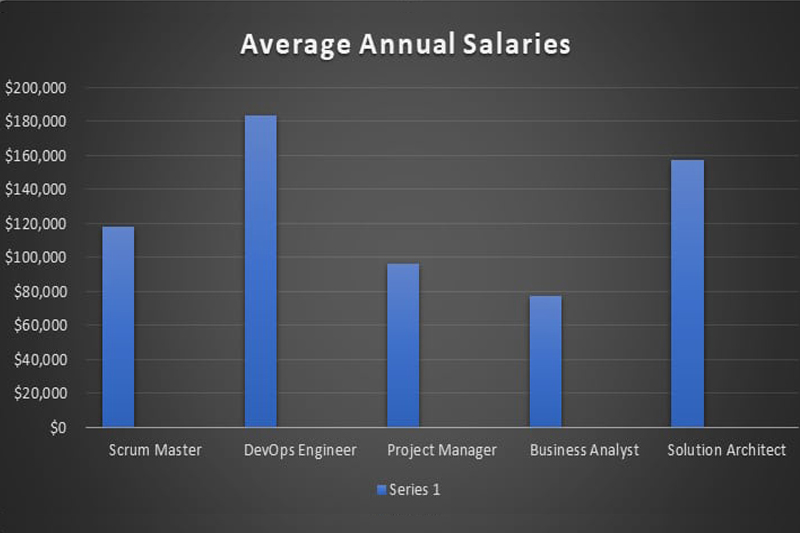
Scrum Master
DevOps Engineer
Java Project Manager
Java Programmer
Solution Architect
What “job assistance” should actually mean
A real coding Bootcamp with job assistance in Los Angeles, California shouldn’t stop at “resume tips.” SynergisticIT JOPP has job-assistance components included in the program such as:
- interview assistance and technical assessments, mock interviews, and soft skills prep
- resume optimization (including ATS-focused support)
- active marketing to a stated network of 24,000+ tech companies
- post-job support (listed as continued support after placement)
SynergisticIT JOPP exhibits the difference between training and employability: it’s not enough to learn—you must be prepared to win interviews.
Salary outcomes and employer examples SynergisticIT
SynergisticIT Java JOPP attendees achieve offers in a range (often cited around $95k–$154k/$155k) and with “top tech companies” and direct client interviews (not contract roles).
SynergisticIT candidates are hired by employers/clients such as Walgreens, AutoZone, Visa, Walmart Labs, Intel, JPMorgan Chase (JPMC), Citi, Wells Fargo, PayPal, Wayfair, and more.
SynergisticIT has a broad ecosystem of employers its candidates get hired at—across nationwide opportunities (not limited to just a single city).
SynergisticIT JOPP has 91.5% placement rate placements and salary ranges can be seen on JOPP pages
Payment structure and why SynergisticIT has Better ROI
One reason many professionals consider JOPP—even if it looks expensive upfront—is the ROI logic: they’d rather invest once in a placement-driven program than repeat multiple bootcamps and still not land interviews.
SynergisticIT has better ROI as compared to colleges and a fee structure where an initial portion is paid upfront and remaining cost is conditional on job outcomes (e.g., after securing an offer at $81,000+).
Read the ROI comparison here: SynergisticIT ROI vs Colleges.

How Is AI Changing LA Tech Hiring Over the Next 12–24 Months?
AI is reshaping Los Angeles job titles, productivity expectations, and role demand right now. Job titles are shifting toward combinations like "AI-integrated software engineer" and "platform engineer," while pure manual-coding tasks are increasingly expected to be AI-assisted — meaning engineers are measured on system-level output, not lines of code. Demand for AI-adjacent software, data engineering, and support roles keeps climbing — LA attracted $1.8B in AI venture funding in a single quarter of 2024 — but so does demand for the engineers who integrate AI capabilities into secure, scalable enterprise Java back-ends. Support and repetitive QA roles face compression, while Java + DevOps + cloud engineers who can own AI-integrated systems see rising demand. That trend favors deeply trained candidates over shallow certificate-holders.
Waiting Will Not Shorten the Journey
Here is something worth internalizing: postponing your start will not make SynergisticIT's JOPP any shorter — it will only push your job offer further away. The program takes the time it takes because it is building something real: your skills, your project portfolio, your interview readiness, and the client marketing that leads to placement. That demanding stretch — the months of live classes, projects, and interviews — is precisely what employers pay for. Begin today. The road is long, but at the end of it stands a full-time job offer.
The Bottom Line
There may be many coding bootcamps or training firms making promises about getting you hired after their Java and coding training in Los Angeles, California — but if your goal is to actually get hired after the bootcamp, there is only one choice: SynergisticIT's Top rated Java coding Bootcamp in Los Angeles, California. It is the sure-shot way for a jobseeker to convert months of effort into a real offer from a great tech company. Explore SynergisticIT's Job Placement Program and SynergisticIT's Java DevOps Full Stack Job Placement Program, read the alumni reviews, and then take the single most important step: contact SynergisticIT and start your tech career journey today.