 Important Notice— Our url is



Java Job Placement bootcamp in Seattle, Washington
A Java Job Placement bootcamp in Seattle, Washington is a hire-focused path, not a short class that ends when the slides do. SynergisticIT’s Job Placement Program treats Java, DevOps, projects, and employer outreach as one process. Seattle already runs on large software systems. Amazon, Microsoft, Expedia Group, Zillow, T-Mobile, and a deep bench of startups keep rewriting services that still sit on Java. Jobseekers who only collect certificates rarely match what those teams test in interviews.
Java began inside Sun Microsystems, not as a classroom experiment. In June 1991, James Gosling, Mike Sheridan, and Patrick Naughton started what became the Green Project. Gosling led the language design. Early names included Oak, after a tree outside his office, and the work was aimed at networked consumer devices. Sun publicly launched Java on May 23, 1995, with Netscape planning to put it in the browser. The first public JDK 1.0 followed in 1996, promising write once, run anywhere. Oracle acquired Sun and became Java’s steward in 2010. From the 1991 start to today is more than three decades. From the 1995 public release, Java has been in production use for over 30 years.
That lifespan is why Java is still worth learning in depth. Banks, insurers, retailers, telecom firms, and public agencies did not rewrite core systems every time a new language trended. Java’s virtual machine, strong typing, mature security model, and huge library ecosystem made it the default for systems that cannot fail quietly. Learning it means learning how large teams version APIs, handle concurrency, and keep services alive under load. A weekend tutorial cannot teach that judgment.
Java programmers remain in demand in Seattle because the region’s largest employers still run vast Java and JVM back ends for retail, cloud, payments, travel, telecom, and enterprise software, even though hiring has cooled. King County’s information sector has fallen about 12.4 percent since December 2022, and online postings for computer and mathematical occupations in Seattle–King County dropped roughly 44 percent between September 2022 and September 2026. The industry is still an economic anchor: statewide information-sector pay averaged about $290,455 in 2025, far above the statewide average, and every tech job in Washington is estimated to support about three additional jobs. Greater Seattle still counts Amazon, Microsoft, Boeing, the University of Washington, Meta, and T-Mobile among its largest employers. Downtown Seattle has lost jobs while Bellevue’s tech hub has added them, so full-time engineering work has shifted east as well as into cloud, platform, and AI teams rather than disappearing.
Employers that hire, and have hired, Java programmers into full-time roles in the Seattle area include Amazon, Microsoft, Google, Apple, Meta, Oracle, Salesforce, and Adobe. Further full-time employers with local engineering work that uses Java include T-Mobile, Expedia Group, Zillow, Starbucks, Nordstrom, Redfin, Alaska Airlines, Boeing, and Costco. Additional product and platform companies with Seattle-area engineering presence include Uber, Stripe, Snowflake, ServiceNow, DocuSign, F5, Smartsheet, and Zoom. These are operating companies, not staffing firms, and several of them have recently posted Java or Java-adjacent software roles in Seattle.
Published market ranges are guides, not guaranteed offers. Junior Java roles in Seattle commonly fall around $90,000 to $140,000, with reported averages near $111,000 to $122,000. Mid-level Java roles commonly fall around $130,000 to $190,000, and stronger mid-level packages can approach $210,000. Senior Java roles commonly fall around $180,000 to $260,000, with top-of-market senior packages sometimes above $250,000. Big-tech total compensation, including stock, can sit above these cash ranges.
People closely tied to Seattle’s tech story include Bill Gates and Paul Allen, who built Microsoft from the region; Satya Nadella and Brad Smith, who lead Microsoft’s cloud and public-policy era; Andy Jassy, who leads Amazon; Jeff Bezos, who founded Amazon in Seattle; Gabe Newell of Valve; Rich Barton of Expedia and Zillow; and MacKenzie Scott, whose fortune and philanthropy grew from Amazon.
Demand should persist because Java still underpins high-volume services these companies cannot rewrite quickly, while cloud, payments, logistics, and AI features are often added around existing JVM systems. Washington has no state income tax, which keeps Seattle competitive for full-time engineering pay even in a tighter market. The near-term picture is selective hiring rather than a boom, but the installed base of Java systems, plus continued investment in cloud and AI around those systems, keeps experienced Java programmers relevant across Seattle and the Eastside.
Why Seattle still hires Java
Enterprise buyers keep Java because replacement cost is enormous. Payment platforms, claims systems, logistics engines, and identity services were built to last a decade or more. Spring Boot, microservices, and cloud runtimes extended that code instead of burying it. IBM has described Java as the leading enterprise backend language and noted that it powers over 90 percent of Fortune 500 companies. Euronews and industry roundups repeat that same Fortune 500 footprint. Android’s ecosystem, Kafka-style data pipelines, and countless internal tools still depend on the JVM. That installed base is the moat.
Industries that rely on Java are the ones that also hire in Seattle. Financial services and fintech use it for ledgers, fraud checks, and customer platforms. Healthtech and insurers use it where audit trails matter. Logistics and retail use it for inventory, pricing, and order flows. Telecom and cloud operators use it for high-throughput services. Defense and aerospace suppliers around the Puget Sound use it inside controlled engineering environments. Government IT favors languages with long vendor support and clear compliance history. Python dominates notebooks and many AI prototypes. C++ remains essential for performance-critical systems. C# is strong in Microsoft-centric shops. None of those facts erase the Java estate those same employers must staff.
Future-proof here does not mean fashionable. It means a language that already sits inside revenue systems, has a six-month release train under Oracle and the Java Community Process, and has a hiring market that still asks for Spring, SQL, and cloud delivery. Java has absorbed generics, lambdas, modules, virtual threads, and modern garbage collectors without forcing companies to abandon prior investments. That is what “future proof” looks like in an enterprise city.
Seattle’s startup and capital scene
Greater Seattle is not a one-company town, even though Amazon and Microsoft dominate the skyline. Greater Seattle Partnership’s 2025 technology report put the region above 187,900 technology jobs and about $174.7 billion in gross regional product tied to the industry. From 2020 to 2025, that industry grew about 3 percent, with roughly 7 percent growth projected from 2025 to 2030. CBRE figures cited in the same report showed the Puget Sound tech workforce up 5.1 percent between 2021 and 2024, to nearly 185,000 workers. Apple, Google, Meta, Salesforce, Expedia, Zillow, T-Mobile, Valve, and Nintendo also keep product teams here.
Capital still finds the city. StartupBlink counted about 2,134 startups in Seattle and 12 unicorns, and recorded startup funding up nearly 66 percent from 2024 to 2025. The region has more than 400 AI companies and over 200 AI startups, with roughly $4 billion raised by local AI firms over the past decade and about $3.9 billion across 272 AI startups founded between 2016 and 2025. Growth names such as Chainguard, Helion Energy, Truveta, and Temporal show that funding is not limited to consumer apps. Madrona has long been the hometown venture firm. Techstars, AI House, and Creative Destruction Lab Seattle give founders a place to pressure-test products. Acquisition activity continues around cloud, security, health data, and developer tools, because strategic buyers already sit in the same metro.
Accelerators and venture rounds do not replace enterprise hiring. They add a second market. Startups want engineers who can ship. Banks, insurers, and retailers want engineers who can ship without breaking controls. Java sits in both conversations whenever the product touches money, identity, or scale.
AI will not retire Java roles
Generative tools change how code is written. They do not delete the systems that code must fit. Copilots can draft a controller or a test. They cannot own a regulated release, explain a latency spike, or defend a design in a staffing review. Seattle employers adopting AI still need people who understand services, data contracts, and deployment. Over the next 12 to 24 months, local titles are shifting toward AI-assisted software engineer, platform engineer, data engineer, and applied ML roles that sit beside—not instead of—backend teams. Productivity expectations are rising. Managers want fewer people who only follow tutorials and more people who can review AI-written code, secure it, and put it into CI/CD. Support and QA roles are being pushed toward automation, while demand for software and data roles that touch production data keeps growing. Java remains the language of many of those production paths.
Job stability in Seattle favors stacks tied to payroll systems, not stacks tied to a single model release. Python and ML skills are valuable, especially around Amazon, Microsoft, and the AI startup cluster. They are also crowded at the entry level, and many of those roles expect statistics plus production engineering. C++ hiring is narrower and often senior. C# is real at Microsoft-heavy teams and still smaller than the national Java enterprise footprint. Java openings tend to cluster in full-time product and internal-platform groups with clearer career ladders. That is why a career bet on Java, learned with cloud and DevOps, is steadier than a bet on one library that may be unfashionable in eighteen months.
Depth matters more than a logo on a slide. Learning Java for employment should be done in depth, with projects, assessments, and feedback, not as a thin module inside a general coding bootcamp. SynergisticIT, in the tech industry since 2010, has more than 15 years of client interaction and reports 24,000+ employer connections. Java training sits inside SynergisticIT’s Java DevOps Full Stack Job Placement Program, which combines instruction with staffing. That is why it is called a job placement program. Most coding bootcamps train and then leave graduates to hunt alone. JOPP schedules interviews, coaches for those interviews, and stays with candidates until an offer.
The language enterprises still run
Asked which technology supports long-term job and career success, the practical answer in large companies is still Java. It is the language most often found in Fortune 500 backends. It has outlasted framework fads because payroll, claims, trading, and retail systems cannot be rewritten for fashion. Salaries for job-ready Java and full-stack developers in SynergisticIT’s reported outcomes commonly land between $95,000 and $155,000. Career longevity comes from being able to move from feature work to services, cloud, and technical leadership inside the same ecosystem. Java has already ridden the highs of the 2010s hiring boom and the layoffs of the early 2020s because the code did not disappear when headcount did.
Python, AI, and ML are important adjacent skills, not replacements for that base. A data scientist who cannot ship a service still needs an engineer. A C# specialist may be boxed into one vendor’s shops. A C++ specialist may wait longer for the right team. Java plus SQL, Spring, and cloud gives a wider set of employer doors and a clearer promotion path from junior developer to senior backend or DevOps-minded full-stack roles. That combination has historically produced the most reliable pay and the most durable demand among the options entry-level candidates actually compare.
The number-one programming language inside most Fortune 500 enterprise companies, for core business systems, is Java. Public industry commentary, including IBM’s Java-at-30 notes, puts Java in use at over 90 percent of that group. C# and Python follow in many surveys, depending on whether the question is “what developers like” or “what runs the ledger.” Enterprise buyers care about the second question. Seattle’s mix of cloud giants and regulated employers makes that distinction sharper, not softer.
Coursera, Udemy, and university-branded online bootcamps are useful for a certificate and for a first look at syntax. They are usually recorded, lightly mentored, and disconnected from what a specific employer will ask next quarter. Getting hired takes live correction, project reviews, and practice on the stack clients are buying. SynergisticIT’s Job Placement Program is built around that gap: interactive sessions, employer-shaped projects, and outreach after the coursework. A playlist cannot market your resume to a hiring manager.
What are the perks of learning Java ?
A field guide to Seattle bootcamps
Seattle’s bootcamp market splits into several types. Immersive career bootcamps run full time for about 12 to 28 weeks. Part-time programs stretch across evenings for four to nine months. Nonprofit and diversity academies, such as Ada Developers Academy, focus on women and non-binary career changers and pair training with internships. Skills bootcamps and community programs, including Per Scholas in many U.S. cities, run shorter tracks in Java, support, cloud, or cybersecurity, often 10 to 15 weeks. University extensions and online schools such as Coding Temple sell live or blended software, data, and security tracks to people who never sit in a Seattle classroom. National brands such as General Assembly and Coding Dojo have served the city with full-stack curricula. Code Fellows is the long-standing local name, especially for JavaScript paths. Data Science Dojo focuses on data and machine learning rather than classic backend engineering.
Fees vary more than the ads suggest. Code Fellows-style advanced tracks are often discussed in the $12,000 to $16,000 range. General Assembly software engineering programs frequently sit at $16,000 or higher. Skillspire, active in the wider Washington market, has advertised software engineering near $14,000. Ada Developers Academy stands apart: tuition is not charged, and internship participants have received a stipend. Income-share agreements have largely given way to upfront tuition, loans through third-party lenders, scholarships, and installment plans. Always read whether “deferred tuition” still becomes a loan if you are not hired. Marketing support after graduation is the weak point. Some schools offer resume reviews and a Slack channel. Few keep scheduling interviews until an offer exists.
Who enrolls is equally mixed. Career changers from retail, teaching, and the military sit beside recent graduates and career-gap candidates. International graduates on OPT look for employer-facing projects, not another badge. Sessions may be fully live, fully recorded, or a blend. Success rates advertised above 80 or 90 percent often count any job, a short window, or only students who opted into career services. Public reviews, including Course Report write-ups and forum threads, praise instructors, cohort energy, and the relief of structured practice. The same forums criticize outdated modules, large class sizes, thin Java or cloud coverage, and career teams that go quiet after demo day. Alumni who already had a degree or a network tend to post the happier outcomes. Alumni who needed someone to open employer doors often describe months of silence.
Hackathons and local industry clusters
Seattle’s coding calendar is busy enough to build a portfolio between classes. DubHacks, hosted around the University of Washington, is the region’s flagship student hackathon. Seattle GiveCamp, NASA Space Apps Seattle, Hack the Dot-style meetups, SWE Hacks, and the Seattle Hackathons Meetup community recur through the year. GeekWire’s calendar regularly lists AI build nights, AI House labs, and short challenges such as the Encrypted Compute Hackathon. University of Washington has hosted IBM Quantum hackathons. Techstars Startup Weekend still appears when founders want a weekend company, not just a demo.
Joining one is worth the lost weekend if you treat it as evidence, not entertainment. You practice shipping under a deadline, you meet engineers who already work at local firms, and you leave with a repository you can defend in an interview. For a career-gap candidate, a finished hackathon project is proof that the gap did not erase the ability to collaborate. For a new graduate, it is often the first time a stranger reviews the code.
Local Java hiring clusters around a few industries, not a single campus. Cloud and consumer tech at Amazon and Microsoft still need backend and platform engineers. Fintech and payments teams support cards, banking, and checkout. Healthtech and insurance—providers, payers, and data companies such as Truveta—need compliant services. Logistics, retail, and travel platforms move inventory and reservations. Telecom, including T-Mobile, runs customer and network software. Aerospace and defense suppliers need engineers who can work inside controlled environments. Government and civic IT round out the list. A Java DevOps profile maps to more of those clusters than a single-framework front-end certificate.
Employers describe SynergisticIT candidates as value for money because the ramp-up has already happened. Candidates work on projects, prepare for certifications, and interview only after screening. Companies gain people who can contribute toward the bottom line quickly, at a lower total hiring cost than an untested open-market search that may miss. That is why enterprise teams take the introduction. They are not buying a résumé experiment. They are buying someone who has already been asked to perform.
Who JOPP is built to move
Career-gap and career-break candidates get five practical advantages from JOPP.
- A current stack replaces the outdated tools that made recruiters skip the résumé.
- Project work fills the blank stretch with artifacts a hiring manager can open.
- Mock interviews rebuild confidence after months or years away from technical screens.
- Client marketing removes the need to explain the gap alone on a job board.
- A partial-fee structure, with the balance tied to a qualifying offer, keeps the financial risk attached to the outcome rather than to hope.
Recent graduates with no experience get a different five.
- Employer-shaped Java, cloud, and DevOps skills go beyond coursework that never left the IDE.
- A project-based résumé answers the objection that the degree had no production work.
- Assessment and screening create proof before the first client call.
- Interview scheduling matters more than another online application at 1 a.m.
- Placement support is aimed at a full-time offer, which is the actual goal of how to get hired as a recent CS graduate.
Seattle’s tech jobseeker pool is broader than the stereotype of a 26-year-old from a flagship CS program. It includes University of Washington graduates, bootcamp alumni, career changers, military veterans from Joint Base Lewis-McChord’s wider region, and international graduates using OPT. Many are already in the city. Others will relocate for Amazon, Microsoft, or a funded startup. Remote and hybrid postings expanded after 2020, yet many enterprise Java roles still want periodic on-site time in Seattle, Bellevue, or Redmond.
The workforce itself skews toward bachelor’s and master’s degrees, especially in software and data. Ages cluster in the late twenties through early forties, with fewer open doors after 50 unless the stack is current. National tech employment still has women at roughly a quarter of technical roles, and Seattle has long shown a wide gender gap. White and Asian workers are over-represented relative to Black and Hispanic workers, which is why apprenticeship-style programs keep targeting those gaps. Visa holders, including F-1, OPT, STEM OPT, and H-1B professionals, are a visible share of the applicant pool because the region’s employers sponsor more often than smaller metros. Remote-capable workers compete nationally. On-site and hybrid roles still favor people who can reach South Lake Union, Bellevue, or the Eastside on short notice.
Talent supply is local and imported. The University of Washington is the main feeder, especially Paul G. Allen School computer science and related engineering majors. Seattle University, Northeastern University’s Seattle campus, Seattle Colleges, Bellevue College, and Washington State University add more graduates. DigiPen and other specialized schools contribute smaller technical cohorts. The specialization most likely to get someone hired is not a vague “computer science” label. It is applied software engineering with Java or a similarly deep backend language, SQL, cloud, and DevOps, demonstrated on projects. Pure theory, or a thin AI overview with no data engineering, loses to candidates who can ship a service.
Why placement beats another certificate
JOPP can be completed from anywhere in the United States and still functions as a Java Job Placement bootcamp in Seattle, Washington plus staffing. That combination is the reason for the name. Coding bootcamps that only teach leave graduates spending money and then competing alone. Portfolio quality and interview performance matter as much as knowing the syntax. SynergisticIT’s model pushes hands-on projects and structured preparation meant to turn study into offers. Fifteen-plus years in the industry and a reported 24,000+ employer network give enrollees context on what clients actually screen for. Candidates who need a path without a traditional degree can also read how to land an IT job without a degree.
SynergisticIT reports that about 30 percent of people who join JOPP already tried another bootcamp, Udemy, Coursera, or a university certificate and still were not hired. JOPP is slower and more expensive up front because it keeps going through projects, certifications, résumé marketing, and interviews. That extra scope is why it can save the time and money lost on programs that end at a demo day. The company publishes an ROI comparison with colleges arguing that a placement-tied fee can return faster than another year of tuition that still leaves you without projects. Reported hiring names include Visa, Apple, PayPal, Walmart Labs, AutoZone, Wells Fargo, Capital One, Walgreens, Bank of America, SAP, Cisco Systems, Verizon, T-Mobile, Intuit, Ford, Hitachi, Western Union, Deloitte, Dell, USAA, Carfax, and Humana, with offers often cited from $95,000 to $155,000.
Companies hire these candidates for reasons that are operational, not sentimental. Current stack alignment comes from training shaped by client demand, so ramp-up can be shorter. Pre-screening means a firm sees people already checked for technical and role fit. Certifications on Java, DevOps, AWS, Azure, Power BI, Snowflake, and related tools add a second layer of proof. Multi-stack skill lets one junior contribute across backend, frontend, and deployment, or lets a data-minded candidate support analytics and engineering. Structured training, projects, and interview prep reduce hiring risk. Day-one contribution is the point of practical work. Résumés are built from projects rather than inflated titles. In short, firms meet people positioned as trained, screened, project-ready, and pointed at current roles.
Recent CS graduates should treat JOPP as the bridge from a transcript to a job. The program supplies tech skills, project work, and the step schools rarely own: getting hired at technology companies. SynergisticIT states that about 90 percent of JOPP graduates who land tech roles had never held a tech job before. The other share includes career changers and people returning from a gap. Bootcamps fail this test often enough that well-known brands have closed after job promises outran results. JOPP’s stated promise is narrower and harder: candidates who finish are marketed until they are hired. Not every Java class is equal. Depth, plus a firm that has sat with employers for more than 15 years, is what separates a salary from a certificate. SynergisticIT reports a 91.5 percent success rate among candidates who complete the required work, and it attributes higher offers to that standard. The same remote model is why a Seattle-targeted program does not require a Seattle apartment on day one. Staffing is included. Interviews are scheduled. Hand-holding continues until the offer, which is also the practical answer to how to get hired in FAANG and FAANG-adjacent enterprise teams: production projects, data structures, system design, and someone who will actually put you in front of a recruiter. FAANG itself is a narrow door. Enterprise Java teams hire far more people, at strong pay, every quarter.
Skills you will learn in our Best Java Training/Bootcamp in Seattle
At SynergisticIT, we have curated a comprehensive curriculum to help you get upskilled in core and advanced Java principles. Our certified instructors acquaint you with the bits and tricks of Java programming through activity-based exercises. It helps to deepen your Java knowledge and sharpen your practical skills.
Why depth matters — choose experience over a generic bootcamp
Learning Java for employment requires in‑depth training, real projects, and hiring support. Generic bootcamps often train and leave graduates to navigate hiring alone; many students spend money without landing roles. SynergisticIT, with 15+ years in tech, positions itself differently: Our Java DevOps Full Stack JOPP combines deep Java training with DevOps, interview prep, and active job placement—so graduates are employer‑ready.
- Program highlights: Java core + Spring; REST APIs; React or Angular front end; Docker; Kubernetes; CI/CD (Jenkins/GitHub Actions); AWS/GCP basics; SQL/NoSQL; automated testing; interview prep and resume/LinkedIn coaching.
Outcomes: 91.5% success rate, many alumni placed at $95k–$155k with companies that hire SynergisticIT candidates. 30% of JOPP entrants previously tried other bootcamps without success. SynergisticIT emphasizes ROI and placement—read the ROI analysis : [SynergisticIT ROI comparison]
Introduction to Java & Oops
Servlet
JSP
JQuery
Hibernate
Spring
Microservices
JavaScript
Job Options after Java Training in Seattle
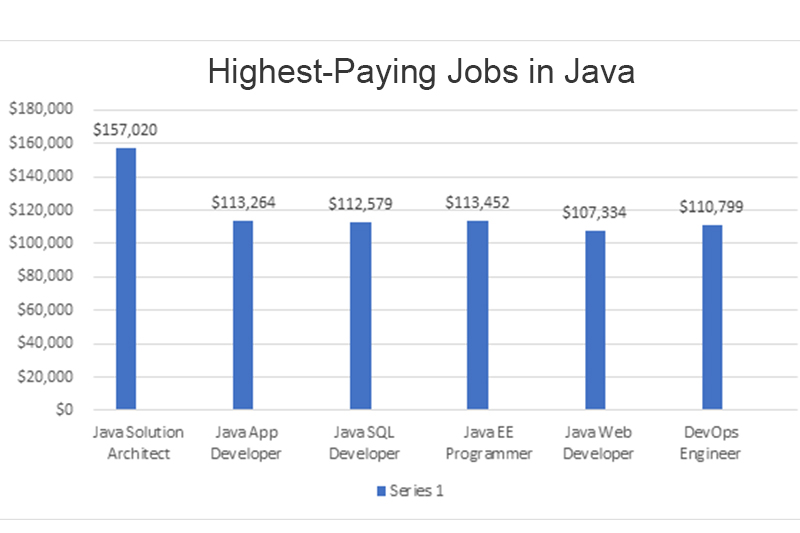
The sky is the limit for those who have a profound knowledge of Java. Below are the highest-paying job options you can explore after Java training in Austin :
DevOps Engineer ($180,799)
Java Solution Architect ($175,020)
User Interface Developer (107,250)
Java EE Programmer ($113,452)
Java App Developer ($136,264)
Java SQL Developer ($124,579)
Java Web Developer (127,334)
Scrum Master ($137,872)
Technical Project Manager ($185,052)
Why In-Depth Java Training Matters: The SynergisticIT Advantage
The Pitfalls of Superficial Bootcamps and Online Courses
Many coding bootcamps and online platforms promise rapid upskilling and job placement, but the reality often falls short:
- Shallow Curriculum: Most bootcamps focus on surface-level skills, lacking depth in core Java, system design, and real-world project experience.
- Minimal Job Support: Typical bootcamps offer resume workshops and mock interviews but rarely provide direct employer connections or ongoing job assistance.
- Unrealistic Promises: “Job guarantees” often come with fine print and conditions that are difficult to fulfill, leaving many graduates without offers or in low-paying roles.
- High Dropout and Underemployment Rates: Industry data shows that many bootcamp graduates struggle to land jobs, with some programs shutting down due to poor outcomes.
A significant 30% of SynergisticIT’s JOPP candidates previously attended other bootcamps or online courses (e.g., Udemy, Coursera) without success, highlighting the gap between superficial training and true job readiness.
Why Java Should Be Learned In-Depth from Industry Veterans
To truly succeed as a Java developer, especially in today’s competitive market, you need:
- Comprehensive Curriculum: Mastery of Core and Advanced Java, Spring Boot, Microservices, DevOps, Cloud, Data Structures & Algorithms, and modern front-end frameworks.
- Real-World Projects: Hands-on experience building and deploying enterprise-grade applications, RESTful APIs, cloud-native dashboards, and scalable microservices.
- Industry Certifications: Preparation for Oracle Certified Java Professional, AWS DevOps Professional, and other in-demand credentials at no extra cost.
- Expert Mentorship: Guidance from instructors with 10+ years of real-world experience, not just academic or theoretical backgrounds.
- Direct Employer Connections: Access to a network of 24,000+ tech clients, including Fortune 500 companies, for resume marketing and interview scheduling.
- Ongoing Job Support: Personalized interview preparation, resume optimization, and post-placement support for up to 12 months.
SynergisticIT’s JOPP delivers all of these elements, making it the gold standard for Java training with job placement in Seattle, Washington.
SynergisticIT’s JOPP is fully remote across the USA, combining training and staffing—hence “Job Placement Program” rather than a simple bootcamp. Our program schedules interviews, prepares candidates, and handholds until hire, delivering higher ROI and faster career outcomes.
Payment Model and ROI: Investing in Your Future
Flexible, Results-Oriented Payment Structure
Unlike most bootcamps that require full payment upfront or begin collecting fees at low salary thresholds, SynergisticIT’s JOPP only takes partial fees upfront ($10,000), with the balance payable after you secure a job paying $81,000 or more. This model ensures that:
- You only pay the full amount if you achieve a high-paying job outcome.
- There’s no financial pressure until you’re earning a substantial salary.
- The program is invested in your success, not just your enrollment.
Highest ROI Compared to Colleges and Other Bootcamps
- Faster Time to Employment: Most JOPP graduates land jobs within 6–12 weeks of completing the program.
- Higher Starting Salaries: Average starting salaries of $95k–$155k, compared to $55k–$90k for typical bootcamp grads and $65k–$85k for new CS degree holders.
- Lower Total Cost and Debt: With a total investment of $36k (only $10k upfront), JOPP offers a faster break-even and lower debt burden than a four-year degree or most bootcamps.
- Verifiable Outcomes: Offer letters and alumni testimonials provide proof of results, not just marketing claims.
For a detailed ROI analysis, see SynergisticIT’s ROI blog: Comparing SynergisticIT ROI to Colleges.
Industry Credibility: Events, Media, and Professional Recognition
Active Participation in Major Tech Events
SynergisticIT is a regular sponsor and participant at:
- Oracle CloudWorld (OCW)
- JavaOne
- Gartner Data & Analytics Summit
These events provide direct insights into industry trends, employer needs, and emerging technologies, which are immediately incorporated into the JOPP curriculum.
Media Recognition and Transparency
- Featured in USA Today:
- Event Videos and Photo Gallery: SynergisticIT Video and Photo Gallery.
- Transparent Outcomes Reporting: Offer letters, alumni testimonials, and verifiable placement data available for review.
- ROI blog comparing SynergisticIT ROI to colleges
Testimonials and Case Studies: Real Stories, Real Results
“I had already completed a bootcamp and several online courses but couldn’t land a job. After joining JOPP, I received multiple offers from Fortune 500 companies within three months. The hands-on projects and direct employer connections made all the difference.” — JOPP Graduate, Seattle, WA
“As a recent CS graduate, I struggled to get interviews. JOPP’s interview prep and resume marketing helped me secure a role at a top fintech company. The support didn’t stop until I was hired.” — JOPP Graduate, Bellevue, WA
“I had a career gap and was worried about re-entering tech. JOPP’s personalized mentoring and project work rebuilt my confidence and skills. I’m now working as a Java DevOps engineer at a Fortune 100 company.” — JOPP Graduate, Redmond, WA
Stack, proof, and the cost of waiting
The Java DevOps full-stack track is broad on purpose. Core and modern Java, collections, concurrency, and testing sit beside Spring Boot, Spring Security, JPA, and microservices. DevOps coverage includes Git, Maven or Gradle, Jenkins or GitHub Actions, Docker, Kubernetes, and cloud deployment on AWS, Azure, or GCP. Data structures and algorithms are practiced because Seattle interviews still use them. MERN and MEAN skills cover candidates who also face frontend rounds. SQL and PL/SQL keep the data layer from being a surprise. Certification prep may include Java, DevOps, AWS, Azure, Power BI, and Snowflake, depending on the client mix that quarter. Live sessions run several hours a day across multiple months, in small groups, with mentoring and a year of post-placement support described on the program page.
Fees are staged. SynergisticIT takes a partial payment before training and the balance after the jobseeker is hired into a role at $81,000 or higher, rather than demanding the full amount with no placement condition. Public ROI material has described an initial amount near $10,000 and a total near $36,000, with the remainder paid over time only after a qualifying offer. That structure is the opposite of a bootcamp that collects everything before you know whether anyone will interview you.
Proof is public, and it should be checked. SynergisticIT reviews include written and video accounts from people who describe projects, interview volume, and offers. A USA Today contributor article outlines the staffing-plus-upskilling model and names employers in the same tier as Apple, PayPal, Cisco, Wells Fargo, and Bank of America. Event participation at Oracle CloudWorld, JavaOne, and the Gartner Data & Analytics Summit is part of how the curriculum stays tied to buyers. Recordings and related material sit on the company presentation and event page. Fancy ads are not a substitute for offer letters. Results are.
Waiting does not compress the calendar. Delaying an application only pushes the offer further out. The program takes months because skills, projects, interview reps, and client marketing all have to exist before a company will pay. That hard stretch is the product employers are buying. Starting now means the long middle has a finish line: a full-time offer, not another unfinished playlist.
Many firms in and around Seattle will promise Java training and a job. If the goal is to get hired after the program, the choice SynergisticIT asks candidates to make is its Java Job Placement bootcamp in Seattle, Washington. That path is presented as the reliable way to leave a bootcamp experience with an offer, because training and staffing stay in the same hands. Contact SynergisticIT or call (510) 550-7200 to start the tech career journey, review fit, and see how interviews are lined up until hire. For a wider look at why new graduates stall, the career blog on why companies skip recent CS graduates is worth reading before you spend another semester collecting badges that never reach a recruiter.
