 Important Notice— Our url is



Top Rated Java Coding Bootcamp in Minneapolis, Minnesota
Minneapolis employers still hire Java developers for the systems that move claims, payments, and retail operations, and the practical route into those roles is SynergisticIT’s Job Placement Program, not a short local class that ends at a certificate.
Why Java still gets Minneapolis offers
Java was not born as a web language. In June 1991, James Gosling, Mike Sheridan, and Patrick Naughton started a Sun Microsystems project, later called the Green Project, to build software for digitally controlled devices. Gosling first named the language Oak. Sun, founded in 1982 by Andy Bechtolsheim, Vinod Khosla, and Scott McNealy, with Bill Joy joining soon after, publicly presented Java on May 23, 1995, and shipped Java 1.0 in January 1996 with the promise of write once, run anywhere. Oracle acquired Sun on January 27, 2010, and still stewards the platform.
From the 1991 project start, Java has been in development for about 35 years. From the 1995 public debut, it has been in commercial use for about 31 years. That span matters in Minneapolis because hospitals, banks, and retailers do not rewrite core systems every time a new framework trends.
Java is worth learning because it is statically typed, portable, secure enough for regulated work, and surrounded by Spring, mature testing tools, and a hiring market that already knows how to interview for it. A developer who can design a service, persist a transaction, and explain failure modes is useful on day one. A developer who only recognizes syntax is not.
Industries that still run Java include banking and payments, insurance, healthcare, retail, telecom, logistics, government IT, and enterprise SaaS. Android’s ecosystem also grew up on Java. Those sectors need audit trails, concurrency, and uptime. They are not experiments. That installed base is why Java is future-proof in a practical sense: cloud, Kafka, and AI features are being bolted onto Java services, not used as a reason to throw the services away.
AI tools will not erase Java demand in Minneapolis. Copilots can draft a controller or a unit test. They cannot own a claims workflow at UnitedHealth Group’s Optum, a checkout path at Target, or a device platform at Medtronic. Over the next two years, local employers will expect engineers to produce more with AI assistance. They will still need people who can review generated code, secure APIs, and keep Spring services reliable. Regulated industries punish silent errors. That is a human job.
Compared with other stacks in this metro, Java is the steadier employment bet.
- Python, AI, and ML roles are real, especially around Hennepin County finance, professional services, and manufacturing, but many are senior and budget-sensitive.
- C# is strong inside Microsoft-centered shops and thinner outside them.
- C++ stays essential for embedded, device, and performance work, with fewer application seats.
- Java shows up across backend, full-stack, and modernization roles at the employers that actually dominate local payroll.
Which technology is for long-term career success? For enterprise clients, Java is the language that has outlasted framework fashions. It should be chosen ahead of a career built only on Python, AI, ML, C#, or C++ when the goal is salary durability and hiring volume. Those other skills are valuable as additions. They are weaker as a substitute for the language that already runs payments, claims, and order systems. Java withstands hiring winters because enterprises cut experimental teams before they freeze billing.
What’s the #1 programming language used at most Fortune 500 enterprise companies? Industry reporting in 2026 still places Java in use at roughly 90 percent of Fortune 500 firms for core backend and transaction systems. Banks, insurers, retailers, and telecoms standardized on it for portability and a library ecosystem that has already been audited. Python leads notebooks and model work. Java leads the systems those models have to call.
Learning that language for employment means learning it in depth. A weekend syntax course will not survive a Spring Boot, SQL, and system-design loop. Java training inside SynergisticIT is not a detached class. It is part of SynergisticIT’s Java DevOps JOPP, shaped by a company that has been in the tech industry since 2010 and markets candidates against what employers actually screen for.
Java developers should stay in demand in Minneapolis because the metro’s largest employers still run claims, payments, retail, and supply-chain platforms on Java, and they are hiring full-time engineers to modernize those systems rather than replace them. Optum, the technology arm of UnitedHealth Group, posted a Minneapolis lead software engineer role in October 2026 built around Java and Spring Boot microservices. U.S. Bank, Wolters Kluwer, Huntington Bank, Morgan Stanley, and PointClickCare have also advertised full-time Java or Java-and-Spring roles in Minneapolis or the immediate suburbs.
A second group of direct employers, not staffing firms, hires full-time software engineers here and still depends on Java across banking, insurance, health, retail, and industrial systems. Those companies are Target, Best Buy, Wells Fargo, Ameriprise Financial, Thrivent, Securian Financial, Prime Therapeutics, Blue Cross and Blue Shield of Minnesota, Thomson Reuters, Cargill, Medtronic, Boston Scientific, 3M, General Mills, Ecolab, SPS Commerce, Xcel Energy, Land O’Lakes, and CHS. With the six above, that is 25 employers. Recent public postings prove Java hiring most clearly for the first group. The others are established Minneapolis-area technology employers whose core systems still need experienced Java talent. Minnesota Technology Association research found that Java becomes the most requested software skill for developers with eight or more years of experience, while software-developer unemployment in the state was only about 1.8 percent.
Pay in Minnesota is solid but below coastal total-compensation markets. Indeed’s Minnesota figures, updated in September 2025, put the average Java developer salary at $86,254, with a low near $62,659 and a high near $118,733. Junior roles average about $71,640, and a Huntington junior backend Java posting listed $52,000 to $101,000. Mid-level offers commonly land around $90,000 to $127,000, in line with a Wolters Kluwer Java posting at $91,600 to $126,800 and a U.S. Bank Java and Spring Boot band estimated at $98,175 to $115,500. Senior Java developers average about $116,839, and lead Java software engineers average about $137,886. Levels.fyi, updated in October 2026, reports a $130,000 median total package for software engineers in Minneapolis–St. Paul, a 75th percentile near $166,000, and an Amazon local median near $252,000.
Minneapolis technology has a long bench of well-known builders. Earl Bakken, born in Columbia Heights, co-founded Medtronic nearby and invented the wearable external pacemaker. William C. Norris built Control Data Corporation in the Twin Cities, and Seymour Cray designed landmark supercomputers there. Manny Villafaña came through Medtronic, later founded Cardiac Pacemakers and St. Jude Medical, and now leads Medical 21. Steve Grove, a Minnesota native and former Google and YouTube executive, now publishes the Minnesota Star Tribune. Jamie Thingelstad has served as chief technology officer at SPS Commerce, Joe Welu founded Total Expert in St. Louis Park, and Richard Schulze built Best Buy from a Richfield store into a national electronics company.
The employment picture is a large, tight, headquarters-driven market. The U.S. Bureau of Labor Statistics put preliminary September 2026 unemployment in the Minneapolis–St. Paul metro at 4.7 percent, with about 1.98 million people employed. Tech is tighter. MnTech reported tech-occupation unemployment near 1.7 percent, roughly 35,300 software-developer jobs, a software-developer median near $125,500, and about 13,500 more software developers needed by 2029. Tech contributed about $37.5 billion to Minnesota GDP in 2023. A 2026 Twin Cities review put more than 139,000 tech professionals in Minneapolis, about 7.3 percent of the regional workforce, with a local tech median near $104,820. Medical Alley, a dense Fortune 500 base, and Java modernization inside banks and health systems are why full-time Java hiring should continue even if tech employment grows only about 0.8 percent a year.
The Twin Cities market behind those roles
How large is the tech economy, and how fast has it grown? Definitions differ, so the honest picture is strong but not a boom. The Minnesota Technology Association counted 111,540 tech jobs in the state, 18,044 tech firms with payroll, and a 4.5 percent rise in tech-occupation employment from the first quarter of 2019 to the first quarter of 2024. It also logged 37,945 unique tech postings in a recent 12-month window, down 15 percent from the prior year, with about 39,000 openings expected through the late 2020s. A 2026 Twin Cities staffing report attributed about $37.5 billion of Minnesota GDP to tech in 2023 and forecast roughly 0.8 percent average annual tech-employment growth through 2028. The same report said Minneapolis alone accounts for more than 139,000 tech professionals under a broader regional count, and that the most common local postings included 7,380 software-engineer roles. An older Lightcast cut put technology at 15,364 companies, $26.5 billion of state GDP, and 129,673 workers. Payroll has held up better than headcount in some digital infrastructure: data-processing and hosting GDP in Minnesota grew about 17.8 percent a year since 2019, while employment in that slice stayed relatively flat.
The last three to five years, then, look like this: company count and GDP stayed large, postings cooled after the post-pandemic spike, and net tech job growth lagged hotter states. CompTIA figures cited by the Minnesota Chamber put Minnesota 50th in net tech job growth from 2018 to 2023. That is exactly why a generic certificate is a weak plan. Employers are selective, not absent.
How strong is the startup and investment scene? It is real, and it is not Silicon Valley. A 2026 ecosystem snapshot counted 1,500-plus startups, about $2 billion in cumulative funding, 10 accelerators, and five unicorns, with a talent base tied to the University of Minnesota. BETA, the Minneapolis nonprofit accelerator, reports 330 startups, $651 million raised by its community, and 2,334 employees, and it runs Twin Cities Startup Week plus a free, non-dilutive cohort. gener8tor’s investment accelerators have put about $100,000 into high-growth teams; gBETA is the free version. Techstars Minneapolis has offered about $120,000 for 6 percent equity. Matchstick Ventures, Rally Ventures, and Great North Labs write early checks, often $500,000 to $2 million at Matchstick, with a tilt toward enterprise software and healthcare. TinySeed and Target Takeoff add SaaS and corporate-backed paths.
Scale-up proof is local. Arctic Wolf, founded in Eden Prairie in 2012, has raised on the order of $500 million and has been valued around $4.2 billion. Jamf, the Minneapolis Apple-device security company, went public in 2020 at about a $4.6 billion valuation. Acquisition activity is steady rather than spectacular: corporate buyers in healthcare, retail, and security regularly absorb specialist tools instead of only funding net-new apps. The scene rewards founders who sell to Target, Optum, or U.S. Bank. It does not mint a new consumer app unicorn every quarter.
Which industry clusters drive local Java hiring? Five do most of the work.
- Healthtech. Mayo Clinic, UnitedHealth Group, Optum, Medtronic, and Allina run platforms where downtime is a patient-safety issue. Java and integration work sit under the AI headlines.
- Retail and logistics. Target and Best Buy, plus Cargill’s supply chain, need inventory, pricing, and order services that survive peak traffic.
- Fintech and insurance. U.S. Bank, Ameriprise, Thrivent, and Securian still hire for payments, policy, and risk systems.
- Industrial and medtech. 3M, Boston Scientific, and device makers keep Java in manufacturing and quality systems even when product firmware is C++.
- Consulting and government IT. Deloitte-style delivery teams and state systems modernization keep a baseline of Java seats that do not vanish in a startup downturn.
Defense is a smaller local cluster than in Huntsville or San Diego, but security and federal-adjacent work around Arctic Wolf and major integrators still asks for Java plus cloud.
How is AI changing titles over the next 12 to 24 months? Minnesota’s own short-term projections show computer and mathematical occupations nearly flat, about +0.3 percent from mid-2025 to mid-2027, which state analysts linked to post-pandemic saturation and early AI displacement of some technical tasks. At the same time, Minnesota ranked roughly 15th to 18th in AI job postings through 2024 and early 2025, concentrated in Hennepin County finance, professional services, information, and manufacturing. Expect titles such as AI-assisted software engineer, MLOps engineer, data engineer, and automation analyst to multiply. Expect pure “prompt” roles to stay thin. Productivity targets will rise: one mid-level developer may be asked to cover work that previously needed a larger team. Tier-1 support will shrink where chatbots can close tickets. Demand will rise for people who can put a model behind a secured Java API and explain the audit trail. That is a Java-plus-cloud job, not a replacement for Java.
Who makes up the tech workforce? A single official age-by-visa table for Minneapolis tech does not exist, so the useful picture is stitched from state sources.
- Age. Remote workers statewide skew midcareer: more than half were 35 to 54 in 2022, and fewer than 15 percent were under 30. Local tech hiring still includes a large new-grad pipeline from the University of Minnesota, so the on-site junior mix is younger than the remote average.
- Education. Tech occupations are bachelor’s-heavy. About 63 percent of Minnesota remote workers had a bachelor’s degree or higher, versus 42 percent of all workers.
- Gender. The Minnesota Technology Association’s tech-occupation dashboard showed about 26 percent gender diversity, meaning women remain a minority of the technical workforce.
- Race. The same dashboard showed about 27 percent racial diversity. Statewide, remote workers were 82 percent white, with Black, Hispanic, and Native workers underrepresented.
- Visa status. Published metro reports do not give a clean H-1B or OPT share. The visible mix is citizens, permanent residents, and international graduates using OPT and STEM extensions, especially out of the University of Minnesota. Employers here will sponsor when the skill gap is real. They will not sponsor a thin resume.
- Remote versus on-site. About 17 percent of all Minnesota workers usually worked from home in 2022. Tech is more flexible than that average, and about 34 percent of Minneapolis–St. Paul IT professionals work for a company based outside the metro. Hybrid is the default at the big headquarters. Fully remote roles exist, and they are competed for nationally.
Which colleges feed local employers, and which specialty gets people hired? University of Minnesota–Twin Cities dominates, with about 19,146 profiles in the state’s tech-occupation data, followed by Metropolitan State University, the University of St. Thomas, Minnesota State University–Mankato, the University of Minnesota–Duluth, and Normandale Community College. Carlson, Macalester, Augsburg, and St. Catherine add smaller streams into product, analytics, and business-tech roles.
The specialization most likely to produce an offer is not a pure AI title. It is enterprise Java with Spring, SQL, cloud, and DevOps, optionally paired with data skills. That matches Optum, Target, U.S. Bank, Best Buy, and the insurers. A data-science minor helps. It does not replace the ability to ship a service.
For a wider look at why language choice changes who calls back, read which programming languages jobseekers should learn.
Reasons to join Synergisticit's Top Rated Java Coding Bootcamp in Minneapolis, Minnesota
A field guide to local bootcamps and hackathons
Minneapolis has had every bootcamp type: campus-branded web programs, Java apprenticeships, UX studios, and national online courses that geotarget the city. Several famous local names are no longer enrolling.
Prime Digital Academy, once the best-known Minneapolis immersive school, ran 20-week and 28-week full-stack engineering programs and a 14-week UX program, online and on campus, at roughly $15,000 to $18,000. Course Report later listed the school as closed. While it operated, alumni on Course Report and SwitchUp often rated it near 4.8 to 4.9 out of 5. Praise centered on instructors, community, and a career team. Complaints centered on pace, unpaid intensity, parking, and gaps such as testing instruction. Some grads reported offers at Target within months. Others described the job search as a volume game, not a placement.
University of Minnesota Boot Camps, a Trilogy-style partnership rather than a computer-science degree, offered 12-week full-time and 24-week part-time web programs plus data, cybersecurity, UX, and fintech tracks. Published tuition ranges ran about $8,000 to $12,000, with alumni discounts and payment plans. Classes were live online, with recordings. Career coaching, resume help, and interview prep were part of the pitch. Course Report now lists this school as closed as well, with a historical rating near 4.5 from 37 reviews. Reddit threads in r/Minneapolis were more mixed: some grads moved from hourly work into roughly $60,000 roles, some called the curriculum behind day-to-day engineering, and several noted that the university logo was licensed, not a CS-department credential.
The Software Guild has marketed Minneapolis and online Java and .NET camps of about 12 weeks. Older published tuition was about $10,000 online and $13,750 in person, with installment splits. A CIRR check of 2020 Minneapolis graduates put median pay near $60,008 within 180 days. Coverage included Java, MySQL, Angular, HTML, CSS, JavaScript, and Git, plus resume and interview help. Alumni described the pace as two semesters compressed into one season: supportive, and easy to fall behind in.
National programs sold into the city include Nucamp at roughly $458 to $2,900 for 4 to 22 weeks of part-time web and backend work, mostly self-paced with a weekly live session and installment plans; General Assembly, cited in local roundups near $16,450 with loans, scholarships, or income-share options and a self-reported placement rate near 92 percent; and Coding Temple, a flex remote format with live help. Treat those placement percentages as marketing definitions, not audited hire rates. Roundups have advertised 79 to 95 percent placement and $70,000 to $90,000 starting pay. Independent stories in this metro more often land between $50,000 and $70,000, and only for graduates who already interview well.
Who enrolls: career changers from service work, recent graduates who could not get callbacks, parents using night formats, and a smaller set of employer-sponsored employees. Funding is usually a mix of upfront tuition, monthly installments, private loans, occasional scholarships, and, at a few schools, income-share agreements. Very few local programs truly charge nothing until a high salary is in hand.
Public-forum feedback splits cleanly. Positive: fast feedback, a cohort, a portfolio, and a reason to quit drifting. Negative: recorded lectures that feel like Udemy with a deadline, career “support” that is a resume template, and graduates who can build a class project but cannot explain a transaction under interview pressure. The closures of Prime and the university boot camps are the local proof that promises outran hiring.
Are Coursera, Udemy, or online university bootcamps enough to get hired? They are enough to earn a certificate. They are not enough to get hired at Optum or Target. Recorded courses rarely include blunt interview feedback, a project an engineering manager will respect, or someone who will schedule the conversation. SynergisticIT’s Job Placement Program is built around live instruction, client-shaped projects, and marketing until an offer, which is the gap those platforms leave open.
Coding events worth using. Hack the Gap, based in Minneapolis, returned as a one-day build on October 17, 2026, at Improving in Uptown, with demos the same afternoon and cash prizes. It grew out of an event that put women and underrepresented technologists in the room with mentors. MinneHack, run by ACM at the University of Minnesota, is a 24-hour build open beyond campus. Northland Hackathon, the state’s largest free learn-to-code event for high school and college students, ran March 21, 2026, and is set to return in 2027. Code Freeze, the University of Minnesota Software Engineering Center’s January symposium, is less a hackathon than a practitioner conference. Twin Cities Startup Week adds founder-side exposure.
Benefits of showing up: a shipped demo, names that remember you, a public artifact for a thin resume, and a clearer sense of whether you like the work. A hackathon does not replace depth in Java. It does prove you can collaborate under a clock.
Why JOPP is a placement program, not another camp
SynergisticIT’s Job Placement Program can be done from anywhere in the USA, including Minneapolis, and it is positioned as a top rated Java coding bootcamp in Minneapolis, Minnesota only in the sense jobseekers search for: training plus staffing. It is called a job placement program because most coding bootcamps train and then leave graduates to fend for themselves. That pattern is why people spend tuition and still have no offer. When you are targeting Java roles, portfolio and interview performance matter as much as knowledge. SynergisticIT pushes hands-on projects and structured preparation meant to turn study into offers. Fifteen-plus years in the industry and 24,000-plus employer connections are how enrollees hear what clients are screening for this quarter, not what a curriculum committee liked three years ago.
SynergisticIT reports that about 30 percent of people who join have already finished another bootcamp, or a Udemy, Coursera, or university certificate, and still were not hired. JOPP is slower and more expensive than those options because it keeps going through assessments, certifications, resume marketing, scheduled interviews, and hand-holding until an offer. A cheaper camp that produces no salary has an infinite cost per hire. Time is the part you cannot refund. SynergisticIT reports a 91.5 percent success rate for people who complete the program, and it publishes the ROI case against college tuition in this comparison of SynergisticIT ROI and college degrees.
The Java DevOps full-stack track covers Core and Advanced Java, including Java 21 features, collections, concurrency, and testing; Spring Boot, Spring Security, JPA, and microservices; SQL and PL/SQL; data structures and algorithms; Git, Jenkins or GitHub Actions, Docker, Kubernetes, and Terraform; AWS, Azure, or GCP deployment; and MERN or MEAN so one person can cross from API to interface. Certification prep commonly includes Java, DevOps, AWS, Azure, Power BI, and Snowflake. Skills can shift when client demand shifts.
Fees are partial up front. SynergisticIT takes about $10,000 before training and the balance only after a job of $81,000 or higher, typically 24 payments at 15 percent of monthly gross pay, capped at $26,000. Remainder payments do not start if that salary threshold is not met.
Five ways JOPP helps a career gap or break
- Project work from the gap period gives interviewers something concrete to discuss besides the empty years.
- Live instructors, not a recording, rebuild fluency in Spring, SQL, and system design before a client sees the resume.
- Certifications add a current signal that a stale job title cannot.
- Interview reps cover the rust that makes career-break candidates freeze on the first coding screen.
- Marketing continues until the offer, so the gap is not left to a solo application grind.
Five ways JOPP helps a recent graduate with no experience
- It turns coursework into client-style projects, which is the missing line on most new CS resumes.
- It teaches the stack enterprises ask for, not only the languages a degree required.
- Mock interviews and a large bank of client-sourced questions reduce the first-round failure that burns new grads.
- Resume marketing to a known employer network creates interviews a campus portal will not.
- The offer, not the certificate, is the finish line, which is the actual answer to how to get hired as a recent cs graduate.
SynergisticIT states that about 90 percent of JOPP graduates who land tech jobs had never held a tech job before. The other slice is career changers, people with gaps, and similar restarters. Bootcamps fail this group because they sell speed. Employers buy proof. That broken promise is why so many camps have shut down. JOPP’s promise is narrower and harder: people who finish the work, clear assessments, and stay interview-ready get marketed until a tech offer. Not every Java class is equal. Depth has to come from a firm that has spent 15-plus years in the industry and knows what clients reject. That is why SynergisticIT says its alumni reach the higher salary band and the 91.5 percent completion outcome, not because a city ranking said so.
The same remote program is the top rated Java coding bootcamp in Minneapolis, Minnesota plus staffing. Camps schedule a demo day. JOPP schedules interviews, prepares the candidate, and stays on the process until the offer. For how to get hired in FAANG and Fortune-scale engineering, the screen is still data structures, system design, and a service you can defend. Java plus cloud is the stack those loops reward more often than a single bootcamp framework.
SynergisticIT reports completed candidates hired at Visa, Apple, PayPal, Walmart Labs, AutoZone, Wells Fargo, Capital One, Walgreens, Bank of America, SAP, Cisco Systems, Verizon, T-Mobile, Intuit, Ford, Hitachi, Western Union, Deloitte, Dell, USAA, Carfax, Humana, and others, commonly in a $95,000 to $155,000 band. A USA Today contributor piece also named Google, Cisco, Intel, J.P. Morgan, and Wells Fargo among destination employers.
Why companies hire these candidates
- Current stack alignment. Training is pulled from client demand, so ramp-up is shorter.
- Pre-screened talent. Technical and job-fit checks happen before a resume hits a hiring manager.
- Certifications in Java, DevOps, AWS, Azure, Power BI, Snowflake, and related tools add proof on top of projects.
- Multi-stack skill. One junior who can touch backend, frontend, and deployment, or a data scientist who can also do analytics and engineering, costs less than three narrow hires.
- Lower hiring risk. Structured projects, interview prep, and screening cut the coin-flip of an open-market junior.
- Day-one contribution. The work is practical, not slide-level.
- Genuine project resumes. The point is skills the person actually built, not inflated titles.
In short, employers hire JOPP candidates because they are trained, screened, project-ready, interview-prepared, and pointed at current roles. They are value for money: project experience and certifications already in place, so a company gets someone who can contribute immediately at a fraction of the cost of hiring that same skill level off the open market. That is why enterprise teams keep coming back. It is not a hit-or-miss resume.
Unlike ads that promise a job in twelve weeks with no fine print, SynergisticIT points to results: sponsorship presence at Oracle CloudWorld, JavaOne, and the Gartner Data & Analytics Summit, collected in the tech event video gallery and the Oracle CloudWorld highlights, plus reviews on its site and the USA Today feature on how it sources talent.
The middle of this path is the program itself. SynergisticIT’s Java DevOps full stack JOPP is where the stack, the projects, and the interview calendar meet, and SynergisticIT’s Job Placement Program is the staffing engine that keeps marketing the resume after the last lecture.

Course Content of Our Top Rated Java Coding Bootcamp in Minneapolis, Minnesota
JOPP Program Structure: From Training to Job Placement
What You’ll Learn: The JOPP Tech Stack
JOPP’s curriculum is designed to make you a versatile, job-ready developer:
- Core Java, object-oriented programming, collections, exception handling, multithreading, generics, and design fundamentals.
- Advanced Java, JDBC, servlets/JSP concepts, REST APIs, SOAP APIs, JSON/XML, and backend service development.
- Spring Framework, Spring Boot, Spring MVC, Spring Security, Spring JDBC, Spring Batch, and transaction management.
- Hibernate/JPA, SQL, Oracle/MySQL/PostgreSQL-style database concepts, database integration, and performance basics.
- Frontend exposure such as HTML, CSS, JavaScript, React or Angular, and full stack application integration.
- DevOps and cloud exposure such as Git, Maven, Jenkins, Docker, Kubernetes basics, CI/CD, AWS or other cloud deployment exposure.
- Testing and collaboration tools such as JUnit, Agile, JIRA, code reviews, and project documentation.
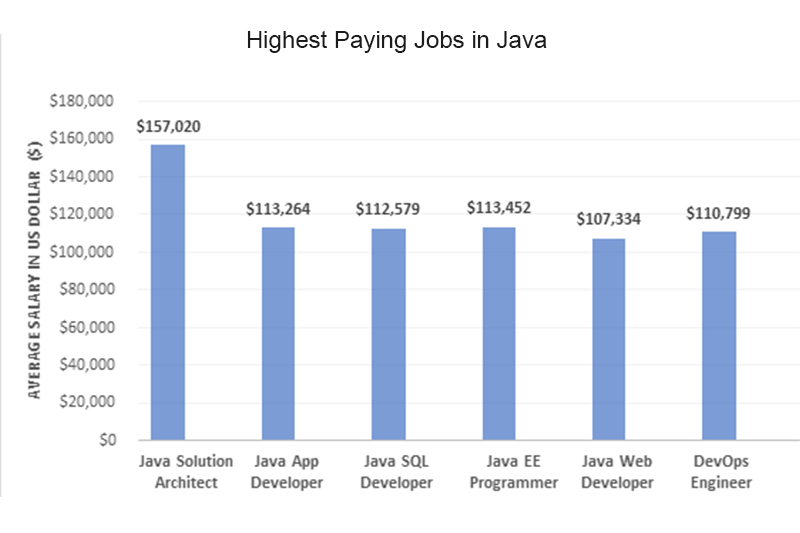
Career outlook after our Top Rated Java Coding Bootcamp in Minneapolis, Minnesota
Why choose SynergisticIT's Top Rated Java Coding Bootcamp in Minneapolis, Minnesota
Why Most Bootcamps Fail—and Why JOPP Succeeds
The Bootcamp Bubble: Industry Challenges and Closures
The coding bootcamp industry has experienced explosive growth, but also significant turbulence. Many bootcamps have closed or pivoted due to:
- Unfulfilled Promises:
Overstated job guarantees and inflated placement rates have led to lawsuits, regulatory scrutiny, and declining trust. - AI Disruption:
The rise of AI tools has automated some entry-level coding tasks, reducing demand for junior developers—the primary target of most bootcamps. - Market Saturation:
An oversupply of bootcamp graduates has made it harder for new entrants to stand out, especially without deep, employer-aligned skills. - Lack of Real-World Preparation:
Many bootcamps focus on teaching to the test, rather than preparing candidates for the complexities of enterprise development and technical interviews.
Recent closures of major bootcamps underscore the need for programs that deliver real, verifiable outcomes.
Why JOPP Delivers Where Others Don’t
SynergisticIT’s JOPP is built on a foundation of industry alignment, practical skills, and a relentless focus on job placement:
- Direct Employer Feedback:
Regular participation in Oracle CloudWorld, Gartner Data Analytics Summit, and JavaOne ensures the curriculum matches current employer needs. - Comprehensive Upskilling:
Candidates master not just coding, but also DevOps, cloud, security, and system design—skills that AI cannot easily automate. - Active Job Placement:
Unlike bootcamps that offer only “placement support,” JOPP actively markets candidates to employers, schedules interviews, and provides handholding until placement. - Verified Results:
Offer letters, alumni testimonials, and transparent placement data back up every claim. - Highest ROI:
While JOPP is more expensive upfront, its graduates earn significantly higher salaries and recoup their investment faster than those from traditional bootcamps or even many CS degree programs.


Start the placement clock, or keep waiting
Delay does not compress the work. It only pushes the offer further out. The program is long because skills, projects, interview reps, and client marketing all have to exist before a company will bet a salary on you. That hard stretch is the product employers are paying for. Begin now. The road is long. The finish is a full-time offer, not another badge.
There are many coding bootcamps and training firms in and around Minneapolis, Minnesota, and plenty of them promise a hire after Java or general coding classes. If the goal is to be hired after the program, the choice narrows to one: SynergisticIT’s top rated Java coding bootcamp in Minneapolis, Minnesota. It is the reliable way to leave a training program with interviews on the calendar and an offer as the target, rather than a certificate and a job board login.
Contact SynergisticIT and start your tech career, or call (510) 550-7200. Ask how the Java DevOps track, the partial fee, and the interview hand-off would work from Minneapolis or from anywhere else in the United States.