Important Notice— Our url is



Best Java Training Bootcamp in Fort Worth, Texas
If you are searching for the best Java training Bootcamp in Fort Worth, Texas, you are really searching for one thing: a program that ends with a signed job offer, not just a certificate. Fort Worth is one of the fastest-growing large cities in the United States, home to more than one million residents and a regional labor pool of nearly four million workers, with 2.6 million people living within a 45-minute commute of downtown. That growth has created real demand for developers who can build, maintain, and scale the enterprise systems that banks, insurers, defense contractors, logistics giants, and healthcare companies run on every single day — and the backbone of those systems is still Java.
The challenge is that most bootcamps train you and then leave you alone in one of the most competitive job markets in recent memory. SynergisticIT's Job Placement Program was built to close that gap, and its flagship track, the Java DevOps Job Placement Program, combines deep Java training with DevOps, cloud, project work, interview preparation, and active marketing to employers — which is why it is called a Job Placement Program and not a coding bootcamp. Since 2010, SynergisticIT has helped jobseekers land Java Developer, Java DevOps, Backend, and Full Stack roles at Fortune 500 companies at salaries ranging from $95k to $155k. If your goal is to be hired, keep reading, because this guide covers the Fort Worth market, why Java outlasts every trend, and why the best Java training Bootcamp with job placement in Fort Worth, Texas is SynergisticIT's JOPP.
Fort Worth is one of the strongest Java employment markets in Texas, anchored by Fortune 500 headquarters, major defense and aerospace primes, and a fast-growing digital finance sector across Tarrant County.
Companies Hiring Java Developers
Java developers seeking full-time roles in Fort Worth can target American Airlines, BNSF Railway, Lockheed Martin, Bell Textron, GM Financial, Alcon, and Charles Schwab, all of which maintain large corporate or technology campuses in the Fort Worth–Westlake corridor. Fidelity Investments, Sabre Corporation, Mercedes-Benz Financial Services, Caterpillar (Cat Digital), and Siemens also hire Java engineers here, alongside financial and healthcare employers such as Bank of America, Citi, Wells Fargo, JPMorgan Chase, NTT DATA, IBM, Cook Children's Health Care System, Texas Health Resources, and First Command Financial Services. Rounding out the local hiring pool are FirstCash, D.R. Horton, Elbit Systems of America, L3Harris, InStride, and homegrown software firm Apptricity Corporation.
Salary Ranges by Level
Compensation scales steadily with experience. Junior or entry-level Java developers in Fort Worth typically earn between $68,000 and $85,000, with Indeed reporting an average junior salary of about $85,067 and entry-level pay near $73,994. Mid-level Java developers generally command $85,000 to $105,000, with area averages reported around $84,033 on Indeed, $89,139 on Built In, and $99,984 on Salary.com. Senior Java developers earn $105,000 to $160,000 or more, with Indeed averaging about $100,891, Glassdoor showing roughly $121,827 for the DFW metro, and Citi posting senior Java roles at $107,120–$160,680.
Why Java Demand Will Persist
Java remains the backbone of the enterprise systems that dominate Fort Worth's economy — banking platforms, airline operations software, railway logistics, and defense command systems all run on Java-based architectures, and employers must continuously maintain and modernize these applications. The Dallas-Fort Worth metro recorded net tech employment of 377,013 in 2025, second only to New York, and CompTIA projects roughly 11,013 additional net tech jobs in 2026, so skilled Java engineers will stay in demand.
Famous Fort Worth Tech Figures
Notable tech leaders from Fort Worth include Brad Hunstable, founder of the live-streaming platform Ustream; Trey Bowles, managing director of the Techstars Physical Health Fort Worth Accelerator; Cameron Cushman, a driving force behind the city's startup ecosystem; Cam Sadler, the first Fort Worth entrepreneur accepted into Y Combinator; and Danyel Surrency Jones, CEO of performance-technology company POWERHANDZ.
Tech Employment Situation
Fort Worth's tech economy is thriving: since 2023 the city has added over 11,000 jobs and $9.7 billion in capital investment, and DFW ranked third nationally for tech job postings, with a median tech wage of $119,634 — 137% above the regional median for all occupations.
What Is Java, and Who Created It?
Java was created at Sun Microsystems by a team led by James Gosling, beginning in 1991 as a language originally called "Oak" and officially released to the world in 1995. Sun Microsystems, founded in 1982, was the Silicon Valley company that also built the Solaris operating system and the SPARC processors that powered early enterprise computing. In 2010, Oracle acquired Sun Microsystems and has stewarded Java ever since, continuing to release major platform updates and driving the language's modern renaissance through the twice-yearly release cadence that keeps Java competitive with far newer languages.
That means Java has now been in existence for over 30 years — a remarkable run in an industry where frameworks become obsolete in three. Java survived because its founders made three design decisions that still pay dividends today: "write once, run anywhere" portability through the Java Virtual Machine, automatic memory management that eliminated entire categories of bugs, and a strict object-oriented architecture that scales from small apps to systems serving millions of concurrent users.
Why Java Is Important to Learn
Java matters because it is the language of enterprise-scale, mission-critical software. Banks process transactions in Java. Insurance companies price policies in Java. Airlines schedule fleets, retailers manage inventory, telecoms bill customers, and government agencies deliver citizen services on Java. When a system cannot be allowed to fail, organizations overwhelmingly choose the platform with three decades of proven stability, performance, and backward compatibility.
Java's longevity translates directly into career economics. Because millions of legacy and modern Java systems are in production across virtually every industry, Java developers enjoy the widest base of potential employers of any mainstream language. A Java developer can work in fintech, healthtech, defense, insurance, logistics, retail, or government IT without changing stacks. That breadth is exactly what makes Java future-proof: new languages may win headlines, but the systems that run the global economy are not being rewritten, and the engineers who maintain and extend them will be in demand for decades.
The industries using Java read like a list of Fort Worth's own economic base:
- Financial services and fintech — payment processing, trading platforms, core banking
- Healthcare and healthtech — patient records, claims systems, hospital integrations
- Insurance — policy administration, actuarial pipelines, claims automation
- Defense and aerospace — secure enterprise applications and logistics systems
- Logistics and transportation — supply chain, fleet, and freight platforms
- Government IT — large-scale citizen-facing and internal systems
- Retail and e-commerce — order management, inventory, and backend services
How Strong Is Fort Worth's Startup and Investment Scene?
Fort Worth's tech economy is bigger and moving faster than most jobseekers realize. Since 2023, the city's coordinated public-private economic development model has produced more than 11,000 new jobs and over $9.7 billion in capital investment. The broader Dallas–Fort Worth metroplex supports roughly 377,000 tech workers, ranking behind only New York, with tech's regional economic impact estimated at nearly $90 billion and tech professionals making up about 9 percent of the regional labor force. CompTIA's tracking of job postings found roughly 11,000 tech-related postings per month in DFW, placing the metroplex third among U.S. metros behind only New York and Washington, D.C.
The startup infrastructure is equally mature. TechFW, Fort Worth's nonprofit technology incubator, runs the ThinkLab pre-accelerator, the SmartStart incubator, and the FastForward growth program, connecting founders to the Cowtown Angels investor network. Across the wider DFW ecosystem, founders can access more than 9,900 angel investors and venture capital firms and over 720 accelerators, incubators, and funding programs. Health-focused founders can join Health Wildcatters, which provides $30K cash plus $200K+ in-kind support, while regional venture firms like Fort Worth-based Sevin Rosen Funds recently closed a $340 million fund. Local reporting also counts dozens of active Fort Worth startups that have created thousands of jobs and hundreds of millions in local economic impact. Acquisition and relocation activity continues too — Fort Worth recently approved incentives for a proposed $192.7 million Harting facility expected to bring roughly 700 new jobs. For a Java jobseeker, every one of these signals means the same thing: more employers, more openings, and more competition for genuinely skilled developers.
Industry Clusters Driving Local Java Hiring
Fort Worth's Java demand is anchored by its signature clusters: defense and aerospace anchored by legacy prime contractors in the region; logistics and rail driven by one of the nation's largest freight operations headquartered downtown; insurance and financial services spread across Tarrant County; healthcare systems and healthtech growing around the city's major medical districts; and government IT at the municipal, county, and federal levels. Each of these clusters runs on the enterprise stack where Java dominates — which is precisely why a Java-trained candidate can interview across five different industries in a single job search.
Who Makes Up Fort Worth's Tech Workforce?
Fort Worth's tech workforce draws from an unusually deep and young talent base. North Texas universities produce nearly 60,000 four-year and postgraduate degrees each year, and more than 73 percent of those graduates stay to work locally. The regional tech workforce skews younger than the national average thanks to that graduate pipeline, spans a wide range of educational backgrounds — from self-taught developers and bootcamp graduates to CS, engineering, and math majors — and includes a substantial share of international professionals on OPT, H-1B, H-4 EAD, and L-2 work authorization, reflecting DFW's role as a destination for global tech talent. Gender and racial diversity in the regional tech sector continues to broaden as local employers, universities, and workforce programs actively recruit from the metroplex's large and multi-ethnic population. On the remote-versus-on-site question, the mix has settled into a hybrid equilibrium: defense and government IT roles remain largely on-site or hybrid for clearance and security reasons, while startups, fintech, and retail tech offer fully remote options — which is why SynergisticIT's JOPP is built to place candidates from anywhere in the USA, including remote-first roles accessible from Fort Worth.
How Is AI Changing Fort Worth Tech Jobs Over the Next 12–24 Months?
AI is reshaping job titles, not eliminating the need for engineers. According to LinkedIn's 2026 Jobs on the Rise rankings for Dallas–Fort Worth, AI engineers and AI consultants were the two fastest-growing job categories in the region. Cushman & Wakefield's 2026 ranking placed the Dallas area as the No. 1 primary data center market in the world, driven by AI computing, cloud, and storage demand — which in turn fuels hiring in construction, energy, engineering, cybersecurity, and professional services. Over the next 12–24 months, expect productivity expectations to rise: employers want developers who can use AI tools to ship faster, integrate AI features into enterprise applications, and secure the data pipelines those systems depend on. Demand is shifting toward software engineers who understand AI systems, data professionals who can govern data, and support roles that manage AI-driven infrastructure — all of which sit on top of existing enterprise platforms, most of which are Java.
Will AI Tools Reduce Java Demand?
No — and understanding why is essential to choosing your career path. AI coding assistants make individual developers faster, but they do not replace the systems Java runs on. A bank cannot ask a chatbot to safely modernize a payment system processing billions of dollars. Enterprise Java work is architecture, integration, security, and scale — skills AI tools assist with but cannot own. In fact, AI raises the bar for entry-level developers: employers now expect juniors who arrive with real project experience, certification, and the judgment to review what AI produces. Generic, tutorial-level knowledge is what AI commoditized; deep Java plus DevOps plus cloud is what AI made more valuable.
Which Technology Offers Long-Term Job and Career Success?
For durable, long-term career success, Java is the answer, and the reasoning is structural rather than nostalgic. Java is the most long-lasting technology used by enterprise clients — it has withstood the dot-com collapse, multiple recessions, the mobile revolution, the cloud revolution, and now the AI wave, and enterprise demand for it has never broken. Compare the alternatives:
- Python leads in AI/ML and data science, but those roles concentrate in startups and research-heavy positions exposed to funding volatility, while Python's enterprise backend share remains far smaller than Java's.
- AI and ML roles are the fastest-growing titles but also the most hype-sensitive, tied closely to VC funding cycles.
- C# is respectable but largely confined to the Microsoft ecosystem.
- C++ demand is real but narrow — game engines, embedded systems, and high-frequency trading.
- Java offers superior job stability because demand comes from the boring, permanent parts of the economy: banks, insurers, governments, and logistics firms that built core systems in Java over two decades and will run them for decades more.
Java careers also deliver the most rewarding outcomes in salary and longevity: Java developers progress from junior roles into senior, staff, and platform architect positions with strong internal mobility, and their compensation has historically survived both hiring booms and downturns better than trend-driven technologies.
What Is the #1 Programming Language at Fortune 500 Companies?
The #1 programming language used at most Fortune 500 enterprise companies — organizations with 1,000+ employees and $1 billion+ in revenue like Walmart, JPMorgan Chase, Toyota, Apple, and Microsoft — is Java, followed by C# and Python. In Dallas specifically, SynergisticIT's own analysis of Indeed and Dice postings found Java leading the local job market with roughly 49 percent of language-specific openings — nearly half the region's demand in a single language. Recruiters continue to actively prioritize Java for stable corporate roles at Fortune 500 companies. If you want to learn how to get hired in FAANG-adjacent and Fortune 500 environments, learning the language those companies actually build on is the logical first step.
Are Coursera, Udemy, or Online University Bootcamps Enough to Get Hired?
Honest answer: they are excellent for earning a certification or building foundational knowledge, but they are rarely enough to get hired. Recorded courses lack interactive learning, live feedback, and accountability. They cannot tell you what companies in your market are actually working on, and they leave you to construct a portfolio and navigate interviews entirely alone. Employers consistently reject candidates whose experience is limited to tutorial projects, because a certificate proves attendance — not capability.
Getting hired requires three things a recorded course cannot provide: interactive instruction with real-time feedback, exposure to the technologies and project types companies are actively using, and hands-on project work that translates into a credible resume. That is exactly what SynergisticIT's Job Placement Program achieves — live instruction, employer-aligned projects, rigorous screening, and interview preparation all the way through to an offer. Notably, around 30 percent of candidates who join JOPP have already completed other coding bootcamps or courses on Udemy, Coursera, or through university programs without landing a job — they came to SynergisticIT after learning the hard way that a certificate alone does not produce an offer.
Why Choose SynergisticIT's Best Java Training Bootcamp in Fort Worth, Texas ?
Why Learn Java in Depth from SynergisticIT?
Java should be learned in depth — not from any random coding bootcamp, but from a company that has operated inside the tech industry for over 15 years and knows precisely what employers screen for. SynergisticIT has been placing technologists since 2010, participates directly in industry events like Oracle CloudWorld and the Gartner Data & Analytics Summit where it gathers first-hand signal on where enterprise hiring is heading, and was featured in USA Today for its approach to sourcing certified, pre-screened, USA-based Java developers, data scientists, and AI specialists for technology companies.
Java training at SynergisticIT is part of its Java DevOps Full Stack Job Placement Program, where candidates prepare in Core and Advanced Java, Spring Boot, Microservices, REST APIs, DevOps, PL/SQL, data structures and algorithms, and cloud technologies, plus preparation for Oracle Java certification and the AWS DevOps Professional certification. The full stack includes Java, Spring Boot, Microservices, databases and PL/SQL, DevOps tooling, AWS, and enterprise application development — the exact stack that Fortune 500 job descriptions ask for.
Crucially, SynergisticIT's Job Placement Program can be completed from anywhere in the USA, which is why it functions as the Java coding training Bootcamp in Fort Worth, Texas — plus staffing — combined. That combination is why it is called a Job Placement Program rather than a coding bootcamp: most bootcamps just train and leave students to fend for themselves, leaving jobseekers thousands of dollars lighter with no offer. SynergisticIT schedules interviews, prepares candidates for them, and stays engaged until a candidate starts work. When you are targeting Java developer roles, your portfolio and interview performance matter as much as your knowledge — SynergisticIT promotes hands-on project experience and structured preparation designed to translate learning into offers, backed by 15+ years of industry experience and 24,000+ employer connections.
How JOPP Helps Jobseekers with a Career Gap or Break
- Structured re-entry path: JOPP rebuilds your technical foundation from the ground up, so a gap becomes a story of deliberate upskilling rather than an unexplained hole on your resume.
- Project-based resume: you finish with real, employer-aligned projects — not a certificate alone — giving interviewers concrete work to discuss.
- Interview coaching and mock sessions: you learn to address your gap directly and confidently, with rehearsed, honest framing.
- Active marketing to 24,000+ employer contacts: SynergisticIT markets you to its network rather than leaving you applying into the void.
- Performance-aligned payment: with partial fees upfront and the balance payable only after you secure a job offer of $81,000 or more, your financial risk during the transition is reduced.
How JOPP Helps Recent Graduates with No Experience
If you are wondering how to get hired as a recent cs graduate, JOPP answers the experience paradox: employers want experience, but you need a job to get experience. Here is how the program solves it:
- Job-ready technical skills: five months of immersive, live, instructor-led training — 4–5 hours per day, five days a week — instead of a few weekly hours of recorded content.
- Real project work: only the projects you actually build are reflected on your resume, so you graduate with a portfolio that mirrors real job descriptions.
- Certifications included at no extra cost from Microsoft, Oracle, Snowflake, Databricks, Azure, and AWS — credentials that validate your skills to skeptical recruiters.
- Interview scheduling and handholding: SynergisticIT connects and schedules interviews and supports you through every round until you are hired.
- A 91.5% success rate and proven outcomes: roughly 90 percent of JOPP graduates hired into tech jobs had never worked in tech before, with the remaining 10 percent being career changers and candidates with career gaps — proof the program is built for first-timers, not just experienced engineers.
Why Employers Hire SynergisticIT JOPP Candidates
JOPP candidates are value for money for employers — the bang for their buck. Because they have already worked on projects and hold certifications, they perform from day one, and companies gain skilled employees at a fraction of the cost of sourcing equally capable talent from the open market. That is why enterprise companies hire JOPP candidates: they are getting genuine employees with genuine skills who contribute to the bottom line immediately, rather than taking a hit-or-miss gamble on an unverified open-market applicant. Specifically:
- Current tech stack alignment and job-ready technical skills: JOPP is shaped by tech-client demand, industry interaction, and hands-on upskilling, so candidates need less ramp-up time.
- Pre-screened talent: rigorous technical screening happens before candidates are ever sent to market — companies receive candidates already checked for technical and job fit before interviews.
- Certified across the stack: JOPP candidates are certified on Java, DevOps, AWS, Azure, Power BI, Snowflake, and more, adding credibility to an already diverse skill set.
- Multi-stack versatility: one junior developer who can contribute across backend, frontend, and deployment — or a data professional who works across engineering, analytics, and ML/AI — is worth two single-skill hires.
- Reduced hiring risk and day-one contribution: structured training, projects, interview prep, and screening mean employers get job-ready contributors with no cold-start risk.
- Genuine project-based resumes: JOPP builds real skills and real projects, not embellished documents.
In short, companies hire JOPP candidates because they arrive trained, screened, project-ready, interview-prepared, and aligned with current tech roles. That is why companies like Visa, Apple, PayPal, Walmart Labs, AutoZone, Wells Fargo, Capital One, Walgreens, Bank of America, SAP, Cisco Systems, Verizon, T-Mobile, Intuit, Ford, Hitachi, Western Union, Deloitte, Dell, USAA, Carfax, and Humana hire SynergisticIT candidates at salaries of $95k to $155k.
How SynergisticIT Compares to Bootcamps and Staffing Firms
- Curriculum quality and relevance: because SynergisticIT participates in events like Oracle CloudWorld and the Gartner Data & Analytics Summit — see the event videos on the Java DevOps JOPP page — and because its candidates are actively interviewing every week, its curriculum is adjusted in real time to match live job market requirements. For a deeper comparison of language demand, read SynergisticIT's analysis of the Java vs Python vs C++ job market.
- Instructor quality: most bootcamps use graduated alumni, recorded sessions, or instructors teaching a few hours a week. SynergisticIT uses industry professionals averaging 10+ years of experience in their domains.
- Number of instructors: instead of one or two generalists covering everything, the Java JOPP uses 5–6 specialist instructors — separate experts for Java, databases, Advanced Java, and DevOps, and equivalently for the data science track.
- Cost and payment: transparent $10,000 upfront, with the $26,000 balance payable over two years only after you land a job offer of $81,000 or higher — if no job offer materializes, no payments accrue. Most bootcamps take all fees upfront and offer refund "guarantees" riddled with unredeemable fine print.
- Duration and immersion: 4–5 hours of live instruction per day, five days a week, over five months — fully live, no recorded sessions. Ask every bootcamp you evaluate to state this in writing.
- Student-to-instructor ratio: 5:1 at SynergisticIT versus roughly 20:1 at typical bootcamps — meaning personal attention instead of anonymity.
- Projects: tailored to current company requirements and tech stacks, and only the projects you personally build appear on your resume.
- Alumni success: read, view, and listen to written, video, and audio reviews from alumni describing how they landed offers — frequently multiple offers — in the $95k to $155k range.
- Certifications included at no extra cost: from Microsoft, Oracle, Snowflake, Databricks, Azure, and AWS.
- Post-graduation placement support: SynergisticIT takes over the marketing — actively promoting you to its network of 24,000+ company contacts — and handholds from enrollment through your first day on the job, including resume building, interview preparation, and interview scheduling. Most bootcamps issue a certificate and wave goodbye.
- Why trust us: photographs of successful alumni, video reviews, offer letters, and years in business are all verifiable on the JOPP page. Unlike competitors with fancy ads and too-good-to-be-true claims, SynergisticIT offers transparent costs and transparent outcomes.

Best Java Training Bootcamp in Fort Worth, Texas -Course Contnet
Tech Stack Inside the Java DevOps Full Stack JOPP
The Java DevOps Full Stack Job Placement Program covers:
- Core and Advanced Java (OOPs, collections, concurrency, Java 21+ features, testing, clean code)
- Spring Boot & Microservices (Spring MVC, Data JPA, Security, REST, service discovery, API gateways, observability)
- DevOps & CI/CD (Git, Maven/Gradle, Jenkins/GitHub Actions, Docker, Kubernetes, Terraform, monitoring)
- Data Structures & Algorithms for interview excellence
- MERN/MEAN front-end and full-stack skills
- PL/SQL and relational database mastery
- Cloud deployments on AWS, Azure, or GCP plus industry certifications
Curriculum stays aligned with live client demand.
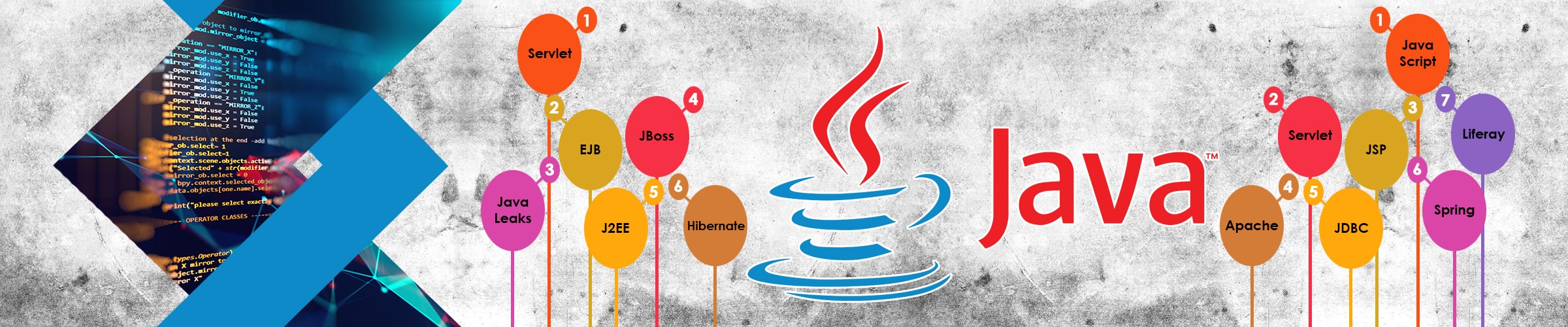
Introduction to Java & Oops
Servlet
JSP
JQuery
Hibernate
Spring
Microservices
JavaScript
Career Options After our Best Java Training Bootcamp in Fort Worth, Texas
DevOps Engineer
Solution Architect
Project Manager
Scrum Master
Java App Developer
Java Web Developer
Java Devops Developer
User Interface Developer

Why Most Bootcamp Graduates Fail — and Why JOPP Succeeds
The bootcamp industry has a dirty secret: a large number of bootcamps have shut down because they made promises they could not keep. They sell job guarantees with hidden clauses, teach dated curricula with overextended instructors, and leave graduates to fend for themselves in a market saturated with certificate-holders. That is why so many bootcamp alumni — again, roughly 30 percent of JOPP candidates — arrive at SynergisticIT having already spent money without getting hired.
JOPP is different because its promise is specific and kept: candidates who successfully complete the program get placed into tech companies, with a 91.5% success rate. Yes, JOPP is expensive compared to a $200 online course — but it delivers results, and it saves both the money and the years lost cycling through cheap programs that produce nothing. When measured against college costs of $80,000–$120,000, JOPP's graduates can earn an estimated $1.17 million over ten years and $2.76 million over twenty years, nearly double the ROI of elite tech colleges — read the full analysis in SynergisticIT's ROI comparison to colleges.
Start Now — Waiting Costs More Than Tuition
Here is the truth nobody advertises: postponing JOPP does not shorten the program; it only pushes your job offer further away. The program takes time because it builds skills, real projects, interview readiness, and client marketing all the way through to placement — and that demanding stretch is precisely what employers are willing to pay for. The months you spend waiting are months you could have spent getting closer to a full-time job offer. The journey is long, but the destination is a signed offer and a tech career that compounds for decades. For extra leverage in your search, also read SynergisticIT's guide on how to use ChatGPT to get employed.
Final Word: There Is Only One Choice in Fort Worth
There may be many coding bootcamps and training firms making hiring promises and offering Java and coding training in Fort Worth, Texas — but if your goal is to actually get hired after the program, there is only one choice: SynergisticIT's Best Java coding training Bootcamp in Fort Worth, Texas. It is the sure-shot way for a jobseeker to convert training into a full-time job offer, backed by 15+ years in the tech industry, 24,000+ employer connections, a 91.5% placement rate, and alumni working at Fortune 500 companies on salaries from $95k to $155k.
Your tech career journey starts with one decision. Explore the Java DevOps Full Stack Job Placement Program, review the Job Placement Program details, verify the outcomes on the alumni reviews page, and call SynergisticIT at (510) 550-7200 to get started today.