Important Notice— Our url is



If you are searching for the best data science Bootcamp in Denver, Colorado with job placement, your decision should come down to one question: after the training ends, who actually gets you hired? Most bootcamps teach, hand you a certificate, and wish you luck on the job boards. SynergisticIT does the opposite. Its Job Placement Program (JOPP) is a training-plus-staffing model that has helped more than 10,000 jobseekers launch technology careers since 2010, and its Data Science Job Placement Program combines an immersive multi-stack bootcamp in data science, ML/AI, data analytics, and data engineering with resume building, interview preparation, certifications, and aggressive marketing to a network of 24,000+ company contacts until you receive a job offer. That is why it is called a Job Placement Program and not a coding bootcamp.
Denver's data science job market remains one of the strongest in the American West, and the city's blend of established enterprises, fintech leaders, and fast-growing startups keeps demand high for analytics talent.
Companies Hiring Data Scientists in Denver
The Denver metro is home to a deep bench of employers actively recruiting data scientists, including Ibotta, Angi, Xometry, SoFi, Affirm, Fanatics Betting & Gaming, Worldpay, Enova International, The Carlyle Group, Auror, Jerry, Palantir, Google, Amazon, Oracle, Lockheed Martin, Charter Communications, Dish Network, Western Union, Wells Fargo, DaVita, UCHealth, Kaiser Permanente, Comcast, and Arrow Electronics.
Salary Ranges by Experience Level
Compensation in Denver is competitive with larger tech hubs. Junior data scientists typically earn between $82,000 and $135,000 per year, with postings ranging from $82,000–$127,000 to $100,000–$135,000. Mid-level professionals can expect salaries around $82,000 to $172,000, with some roles paying $110,000–$130,000. Senior data scientists command $125,000 to $228,000 or more, with listings like Fanatics at $117,000–$167,000 and staff-level roles reaching $157,500–$197,500. The average data scientist salary in Denver is approximately $126,332, with most earning between $101,400 and $140,000.
Why Data Scientists Will Stay in Demand
Denver's demand will persist because the city hosts a diversified economy spanning fintech, aerospace, defense, healthcare, and telecommunications, all sectors that depend heavily on machine learning and predictive analytics. The influx of Bay Area founders and venture capital into Denver and Boulder has accelerated startup formation, while major corporate offices continue expanding analytics teams.
Denver's Tech Economy and Notable Figures
Denver has emerged as one of America's fastest-growing tech hubs, attracting talent and investment through a lower cost of living and strong quality of life. Notable tech figures from Denver include Bryan Leach, founder of Ibotta; Lee Mayer, CEO of Havenly; Andre Durand, founder of Ping Identity; Tim Gill, who founded Quark; and Daniel Lewin, Denver-born co-founder of Akamai Technologies.
Why Data Science and Data Analytics Matter in Denver, Colorado
Denver has quietly become one of the most important technology markets between the coasts. The metro is home to major operations for aerospace, telecom, financial services, healthcare, retail, and energy companies, all of which are sitting on enormous volumes of customer, operational, and sensor data. That data is only valuable if someone can clean it, model it, and turn it into decisions, which is exactly what data scientists, data analysts, data engineers, and ML/AI engineers do.
Denver employers are not just hiring for traditional reporting roles anymore. Job postings across the metro increasingly ask for generative AI and large language model (LLM) integration, MLOps and model deployment pipelines, cloud-native data platforms on AWS, Azure, Databricks, and Snowflake, real-time streaming analytics with Kafka and Spark, and responsible AI and model governance. Companies in fintech and healthcare in particular want candidates who can do more than fit a model in a notebook; they want professionals who can productionize machine learning, build the pipelines that feed it, and explain the results to business stakeholders with dashboards and visualizations.
In short, Denver companies are paying premium salaries for people who can work across the entire data lifecycle, and that is precisely the skill set SynergisticIT's Data Science JOPP builds.
Why Data Science and ML/AI Training Alone Is Not Enough
Here is the uncomfortable truth most bootcamps will not tell you: data science and ML/AI training alone will not get you hired. Open any Denver job posting for a data scientist and read it carefully. Buried under "Python and machine learning" you will find requirements for SQL, data warehousing, ETL pipelines, cloud platforms, BI dashboards, and stakeholder communication. Employers today want multi-stack professionals who can contribute across data engineering, data analytics, and data science teams.
A single-stack graduate from a typical bootcamp competes against candidates who can do all four. That is why JOPP covers the complete stack:
- Data Science and ML/AI: Python, R, Pandas, NumPy, Scikit-learn, TensorFlow, PyTorch, Keras, deep learning, NLP, statistics, and model evaluation
- Data Engineering: Hadoop, Spark, Kafka, Airflow, Snowflake, Databricks, SQL databases, NoSQL, ETL/ELT pipeline design, and data warehousing
- Data Analytics and Business Intelligence: advanced SQL, Excel, Tableau, Power BI, dashboarding, KPI reporting, exploratory data analysis, and storytelling with data
- Cloud Platforms and MLOps: AWS, Azure, Google Cloud, Docker, Kubernetes, MLflow, CI/CD, and model deployment
Emerging skills Denver employers are actively screening for include LLM application development, prompt engineering, retrieval-augmented generation (RAG), vector databases, feature engineering at scale, A/B testing, and data governance. Each of these layers is taught inside the JOPP curriculum, and because SynergisticIT's candidates are actively interviewing every week and the team attends events like Oracle CloudWorld and the Gartner Data & Analytics Summit, the curriculum is adjusted in real time to match what the job market is actually asking for — not what a syllabus written three years ago says.
Why Most Bootcamps Fail to Get Graduates Hired
The bootcamp industry has a well-documented problem: aggressive marketing, thin instruction, and disappointing outcomes. Over the last several years, a large number of high-profile bootcamps have shut down because they made promises — job guarantees, income-share agreements, "learn data science in 12 weeks" — they simply could not keep. Students paid $15,000 to $20,000 upfront, finished a recorded-video curriculum, and were handed a certificate and a pat on the back before being released into the job market to fend for themselves.
SynergisticIT's JOPP was designed to fix exactly what is missing from a typical bootcamp graduate: verified multi-stack skills, real project experience, professional certifications, interview readiness, and — most importantly — someone actively marketing you to employers until you land the offer. It is a genuine win-win: jobseekers get a career, and employers get a candidate who is worth far more than the salary they are paying. That alignment is why JOPP works where bootcamps fail.
How SynergisticIT's JOPP Helps Jobseekers with a Career Gap or Break
Career gaps are one of the biggest psychological barriers in tech hiring. Recruiters screen resumes for continuity, and after six months or six years away, both skills and confidence go stale. If you are navigating a return to work, the strategies in SynergisticIT's guide on landing a tech job after a career gap explain the process in depth. Here is how JOPP specifically helps:
- Structured skills-gap assessment — SynergisticIT evaluates your current technical level and identifies exactly what the time away cost you, so you rebuild only what is missing instead of starting from zero.
- Hands-on, live retraining — Instead of pre-recorded lectures, you relearn current, in-demand technologies through live instruction that replaces outdated knowledge with what Denver employers are asking for today.
- Fresh, verifiable project experience — Client-style projects fill your resume with recent, demonstrable work, so your most recent "experience" is no longer the gap itself.
- A credible narrative for interviews — Coached interview preparation teaches you how to present your break honestly and pivot the conversation to your new, current, multi-stack skill set.
- Industry certifications — Fresh credentials from Microsoft, Oracle, AWS, Azure, Snowflake, and Databricks signal current competence and neutralize doubts about rusty skills.
- Active client marketing — SynergisticIT presents you directly to its 24,000+ employer contacts and schedules interviews for you, bypassing the resume-screening filters that usually punish gaps.
- Support until placement — You are not left alone after "graduation." The team walks with you from enrollment to your first day on the job.
How to Get Hired as a Recent CS Graduate
Learning how to get hired as a recent CS graduate is harder than earning the degree itself. Most CS programs teach theory — algorithms, data structures, discrete math — but never teach the production-grade tech stacks, tools, and interviewing skills employers actually test for. That is why thousands of degree-holders apply to hundreds of postings and hear nothing back. Recent CS graduates should join SynergisticIT's JOPP because it delivers the three things a degree does not:
- Employer-aligned technical skills — You learn the exact languages, frameworks, cloud platforms, and tooling that Denver and national companies use in production, not just academic Python and Java.
- Real project work for your resume — Projects are tailored to company requirements and current job market tech stacks, and only the projects you actually build appear on your resume — no embellishment, no fake experience.
- Structured interview preparation — Mock interviews, technical screening, and feedback loops that simulate real hiring processes, including behavioral and system-level questions new graduates consistently fail.
- Certifications at no extra cost — Microsoft, Oracle, AWS, Azure, Snowflake, and Databricks credentials that make a no-experience resume stand out.
- Interview scheduling — not just tips — JOPP schedules interviews with real hiring companies on your behalf, so you skip the black hole of online applications.
- Access to the hidden market — SynergisticIT's staffing relationships mean many opportunities never hit public job boards; you are presented directly to hiring managers.
- Guidance all the way to the offer and beyond — Resume building, salary conversations, negotiation support, and post-placement follow-up after you start working.
Notably, about 90% of JOPP graduates hired into tech jobs have never worked in a tech role before; the other 10% are career changers and candidates with career gaps. In other words, JOPP was built for people starting from zero.
The Denver Data Science Employment Picture
The local market fundamentals in Denver are strong. The Denver-Aurora-Centennial metro unemployment rate stood at 4.1% as of July 2026 per BLS data — a healthy labor market where skilled tech workers remain in demand. Job boards currently list roughly 400+ open data scientist positions in the Denver metro paying between $101k and $178k, with AI data scientist postings adding 1,000+ more openings. Denver data scientist salaries average around $122,000 to $126,000 depending on the source, with median total compensation near $150,000 at Levels.fyi — comfortably above the national average of about $118,000.
Time-to-hire for data science roles in competitive metros like Denver typically runs in the 4-to-8 week range for well-prepared, pre-screened candidates — but stretches to several months for uncredentialed applicants with thin resumes, because companies now run multiple technical screens, take-home projects, and panel interviews before extending offers. That is exactly the friction JOPP removes: candidates arrive pre-screened, project-ready, and interview-prepared, which compresses hiring timelines for employers and offer timelines for candidates.
How SynergisticIT Compares to Bootcamps, Staffing Companies, and Other Job-Placement Companies
Not all bootcamps and training companies are equal, and any technology should be learned in depth — not from a generic data science bootcamp but from a firm that has been in the tech industry for over 15 years. Here is where SynergisticIT genuinely differs:
- Curriculum quality and relevance: Because SynergisticIT participates in tech industry events like Oracle CloudWorld and the Gartner Data & Analytics Summit, and because its candidates are actively interviewing every week, the curriculum reflects live job market requirements and is adjusted in real time to match actual open positions.
- Instructor quality: Most bootcamps use their own graduated alumni or instructors who teach a couple of hours a week. SynergisticIT uses industry professionals with deep domain expertise, and its average instructor has more than 10 years of experience.
- Number of instructors: Most bootcamps have one or two instructors who teach every topic, which is why their instruction never reaches job-market depth. SynergisticIT's Data Science and Java Job Placement Programs each use 5–6 specialist instructors — a separate instructor for data analytics, another for data engineering, another for data science and machine learning, and in the Java track, separate specialists for Java, databases, advanced Java, and DevOps.
- Transparent cost and payment: The cost is a transparent $10,000 upfront plus a $26,000 balance payable over two years once you land a job offer. If there is no job offer, no further payments accrue. Most bootcamps take all fees upfront and advertise refund "guarantees" riddled with hidden clauses that can never be redeemed.
- Duration and depth of training: 4–5 hours of live instruction per day, five days a week, over five months — a deeply immersive program with live lectures and no recorded sessions. Every prospective enrollee should demand this detail, in writing, from any bootcamp they are considering.
- Student-to-instructor ratio of 5:1 compared to 20:1 or worse at typical bootcamps, so nobody gets lost in the back of a Zoom room.
- Projects that matter: Projects are tailored to company requirements and current tech stacks, and only the projects you personally work on appear on your resume — real work, not resume theater.
- Verified alumni success: You can read, view, and listen to audio and video reviews of alumni describing exactly how they landed offers, frequently in the $95k to $155k range, often with multiple job offers.
- Certifications included at no extra cost from Microsoft, Oracle, Snowflake, Databricks, Azure, and AWS.
- Post-graduation placement: Rather than issuing a certificate and leaving job hunting to the enrollee, SynergisticIT markets you to its network of 24,000+ company contacts, schedules interviews, and hand-holds you from enrollment through your first day on the job. Most bootcamps offer only resume and interview "tips" — ask for specifics and get them in writing.
- Why trust us: Photographs of successful alumni on the JOPP page, video reviews, offer letters, years in business, and transparent costs and outcomes. No fake promises, no guarantees with hidden clauses.
Perfect for QA Testers, Business Analysts, and Non-Coding Backgrounds
QA testers, business analysts, program managers, and people from statistics, mathematics, or other non-coding backgrounds are ideal candidates for SynergisticIT's Data Science JOPP. Here is the insight most people miss: many skills overlap across these domains, so you are not starting from zero — you are extending what you already know.
Business analysts, QA analysts, data analysts, and BI analysts share a common core: SQL querying, requirements analysis, data validation, Excel, reporting, and translating business questions into structured analysis. QA testers bring test design, attention to detail, and data quality instincts that map directly onto data validation and model evaluation. The coding required for entry into data analytics and business intelligence is minimal to almost none at the start — SQL, Excel, and tools like Tableau and Power BI are learnable by anyone, and the heavier Python and ML skills build on top progressively. Because JOPP teaches the full progression from data analytics and BI into data science, ML/AI, and data engineering, professionals from these adjacent fields can achieve a complete career in data science, data analytics, and BI analytics through SynergisticIT's Data Science JOPP rather than restarting their careers from scratch.
Why Employers Win by Hiring SynergisticIT JOPP Candidates
The JOPP model only works if employers benefit as much as candidates — and they do, substantially:
- Current tech-stack alignment and job-ready skills: JOPP is shaped by tech-client demand, live industry interaction, and hands-on upskilling, so candidates need far less ramp-up time.
- Pre-screened talent: Every candidate goes through rigorous technical screening for technical and job fit before being presented to the market — companies receive candidates already vetted before interviews even begin.
- Certified credibility: JOPP candidates hold certifications across Java, DevOps, AWS, Azure, Power BI, Snowflake, and more, adding verified depth to an already diverse tech stack.
- Multi-stack flexibility: A company can hire one junior professional who contributes across data engineering, data analytics, and ML/AI teams — or one developer who spans backend, frontend, and deployment — instead of hiring three narrow specialists.
- Reduced hiring risk: Structured training, real projects, interview preparation, and screening mean employers get candidates with dramatically lower failure risk than unscreened market applicants.
- Day-one contribution: JOPP candidates are practical and production-oriented, ready to deliver value from the first day of employment.
- Genuine, project-based resumes: Real projects and verified skills — never fake or embellished experience — mean what you see in an interview is what you get on the job.
In short, companies hire JOPP candidates because they arrive trained, screened, project-ready, interview-prepared, and precisely aligned with current tech roles — a candidate worth significantly more than the salary being paid. SynergisticIT was even featured in a USA Today article on how SynergisticIT is changing how tech companies source talent for exactly this reason.
How to Get Hired in FAANG Companies and Top Tech Employers
If you have been researching how to get hired in FAANG companies and other elite tech employers, you already know the bar: hard technical interviews, production-grade project experience, strong CS fundamentals, and multi-stack competence. SynergisticIT's Data Science Job Placement Program prepares candidates for exactly that standard — and it goes beyond FAANG to place candidates with companies like Visa, Apple, PayPal, Walmart Labs, AutoZone, Wells Fargo, Capital One, Walgreens, Bank of America, SAP, Cisco Systems, Verizon, T-Mobile, Intuit, Ford, Hitachi, Western Union, Deloitte, Dell, USAA, Carfax, and Humana, at salaries ranging from $95k to $155k.
Rather than a separate product, the Data Science JOPP is SynergisticIT's data science training Bootcamp for Denver, Colorado — with higher salaries, better placement results, and more comprehensive course coverage than any standalone bootcamp can offer. Instead of doing four or five different coding bootcamps, or choosing a cheaper training company that promises jobs and guarantees but never actually gets you hired, jobseekers can complete one program that covers data engineering, data analytics, ML/AI, data science, projects, interview preparation, and certifications — everything employers demand. And because JOPP is fully online and remote, it can be completed from anywhere in the USA while delivering Denver jobseekers direct connections to Denver employers and national tech companies alike. It is the data science Bootcamp in Denver, Colorado plus staffing combined, actively marketing candidates and scheduling interviews with top companies until they get hired. If you are weighing which programming language to build on first, this comparison of Python vs Java vs JavaScript explains the trade-offs for data careers.
Results, Not Fancy Ads
Other bootcamps run glossy advertising campaigns with claims too good to be true. SynergisticIT points to results instead: alumni photographs and offer letters on the JOPP page, hundreds of written, audio, and video reviews at SynergisticIT Reviews, participation in industry events like Oracle CloudWorld and the Gartner Data & Analytics Summit, and a track record going back to 2010. You can also compare the economics yourself in SynergisticIT's Job Placement Program ROI comparison versus colleges and read the USA Today coverage linked above. Where a typical bachelor's degree spends a decade in negative ROI territory, JOPP graduates start earning immediately and can recoup the program cost within months of placement.
Denver Data Science Salaries vs Housing, Taxes, and Cost of Living
How far does a data science salary stretch in Denver? Quite far, honestly. With average data science salaries of $122,000 to $126,000 and JOPP placement offers commonly between $95k and $155k, the numbers compare favorably against a Denver cost of living that runs about 9–10% above the national average. The median Denver home sells for roughly $619,000, average rent runs about $1,622 per month, and Colorado maintains some of the lowest property tax rates in the country — around 0.55% in Denver — which meaningfully reduces the long-term cost of ownership. Utilities and transportation actually run slightly below national averages. Practically, a single data scientist earning $120,000+ in Denver can live comfortably alone in a good neighborhood, save aggressively, and still build toward homeownership — a financial position very few careers offer entry-level professionals with no prior tech experience.

Emerging tech in Denver: what employers want now
Key “emerging” skills increasingly requested:
- GenAI/LLM fluency (prompting, evaluation, retrieval-augmented generation concepts)
- MLOps (model lifecycle, monitoring, reproducibility)
- Data governance & quality (lineage, documentation, testing)
- Cloud + modern warehouses (analytics at scale)
- Experimentation & causal thinking (A/B testing, uplift, measurement)
And importantly: employers want proof—projects, measurable outcomes, and interview-ready depth.
While exact modules vary by track and candidate readiness, SynergisticIT’s Data Science JOPP is positioned to cover what employers actually expect across roles: data analytics, BI, data engineering, and ML/AI.
Data Analytics (and Business Intelligence)
This is where many people start because it’s closest to business outcomes.
Core skills:
- SQL (joins, aggregations, window functions)
- KPI design and metric logic
- Exploratory analysis, segmentation, funnels
- Data visualization & storytelling
Common tools:
- Excel / Google Sheets (for quick analysis)
- SQL databases + warehouses
- BI tools like Power BI / Tableau (dashboards, reporting)
Data Engineering
This is the backbone of everything: pipelines, reliability, scale.
Core skills:
- ETL/ELT patterns and transformations
- Data modeling (star schema, dimensional modeling)
- Pipeline orchestration concepts
- Data quality and testing
Common tools:
- Python + SQL
- Spark/Databricks concepts for scale
- Orchestration (Airflow-style workflows)
- Warehouses (Snowflake-style patterns)
- Version control (Git) and CI basics
Data Science + ML/AI
This is the “modeling” layer—but it must connect to the pipeline.
Core skills:
- Statistics, probability, hypothesis testing
- Supervised/unsupervised learning
- Feature engineering
- Model evaluation, interpretability, and ethics
- NLP concepts and modern ML workflows
Common tools:
- Python ecosystem (pandas, NumPy)
- ML libraries (scikit-learn concepts; deep learning frameworks conceptually)
- Experiment tracking and reproducibility (MLOps mindset)
ML/AI in production (MLOps)
This is where many candidates lose offers—because interviews increasingly probe “how it runs.”
Core skills:
- Deployment patterns (batch vs real-time)
- Monitoring and drift detection
- Model governance and documentation
- Data privacy basics and responsible AI
Candidates searching data science training Bootcamp in Denver, Colorado with Job guarantee are really asking for one thing: confidence that the program doesn’t end at graduation.
Introduction to Data Science with Python
Python Introduction & Data Structures
Numerical Python (NumPy)
Pandas Data Analysis
Matplotlib & Seaborn Data Visualization
Data Manipulation: Cleansing – Munging
Data Analysis: Visualization Using Python
Introduction to Artificial Intelligence (AI) & Machine Learning (ML)
Machine Learning Techniques & Algorithms
Decision Tree and Random Forest Algorithm
Naive Bayes and KNN Algorithm
Support Vector Machine Algorithm
Model Deployment & Tableau
Introduction to Statistics
Introduction to Predictive Modelling
Data Exploration for Modelling
Data Preparation
Ensemble Learning Techniques
Web Scraping using Python Beautiful Soup
Time Series Analysis
Deep Learning
Natural Language Processing (NLP) & Text Mining
Market Basket Analysis

Who should attend our Best Data Science Bootcamp in Denver, Colorado ?
Our Data Science training in Denver is not intended for a specific group of learners. It is for anyone who wishes to make it big in Data Science. Since this training doesn’t require any prior technical knowledge or experience, you can readily sign up despite being a:
Beginner/Fresher
Undergraduate or Graduate
Software Developer
Data Science Aspirant
Economist
Working professional in BI, Data Warehousing, Reporting Tools
Statistician
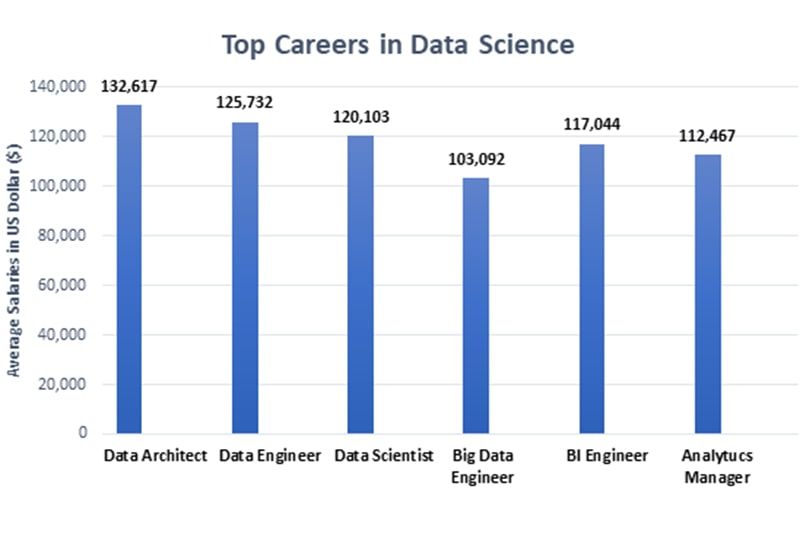
Career outlook after our Best Data Science Bootcamp in Denver, Colorado
Data Architect ($132,617)
Data Engineer ($125,732)
Data Scientist ($120,103)
Big Data Engineer ($103,092)
BI Specialist ($90,286)
Business Intelligence Engineer ($117,044)
Data Visualization Developer ($105,501)
Business Analytics Specialist ($84,601)
BI Solutions Architect ($120,539)
Statistician ($97,643)
Entry-Level vs Mid-Level and Senior Data Scientist Roles
Here is the structural reality of the market: about 86% of data science postings are individual contributor roles, and roughly 62% target mid-level or senior ICs — mid-level roles account for about 32% of postings and senior roles about 30%, while only around 15% target junior roles and management tracks are just 7%. In other words, the entry-level pipeline is thin, and the majority of openings demand proven, U.S.-based, hands-on experience. That is precisely why self-study and single-skill bootcamps fail: employers posting mid-level roles will not take a chance on unverified beginners. JOPP solves the equation from both sides — your multi-stack training, real projects, and certifications position you for the roles that exist, while SynergisticIT's staffing relationships open doors to employers willing to hire trained, pre-screened junior talent they would never find on a job board.
Stop Waiting — Start Now
Here is the honest truth about timing: waiting will not shorten JOPP — it only postpones your job offer. The program is long for a reason. Those months are spent building genuine skills, completing real projects, drilling interviews, and running client marketing until placement happens. That demanding stretch is exactly what employers pay for, and there is no shortcut around it. Every month you delay is another month between you and your first tech paycheck. The journey is long, but the destination is a full-time job offer at a great company — and it starts the day you enroll, not someday.
The Bottom Line: One Choice for Denver Jobseekers
There may be many data science Bootcamps offering data science training in Denver, Colorado. However, if your goal is to get hired after completing the bootcamp, there is only one choice: SynergisticIT's best data science training Bootcamp in Denver, Colorado. It combines the immersive multi-stack training bootcamps skip, the certifications they charge extra for, the specialist instructors they cannot afford, and the employer marketing and interview scheduling they simply do not do — backed by 15+ years in the tech industry, 10,000+ placed candidates, and alumni offers from $95k to $155k. SynergisticIT's best data science training Bootcamp in Denver, Colorado is the sure-shot way to ensure a jobseeker gets hired.
Contact SynergisticIT today or call (510) 550-7200 to speak with a program advisor, review cohort dates, and take the first step toward your data science career. Your future employer is already hiring — the only question is when you will be ready.