Important Notice— Our url is



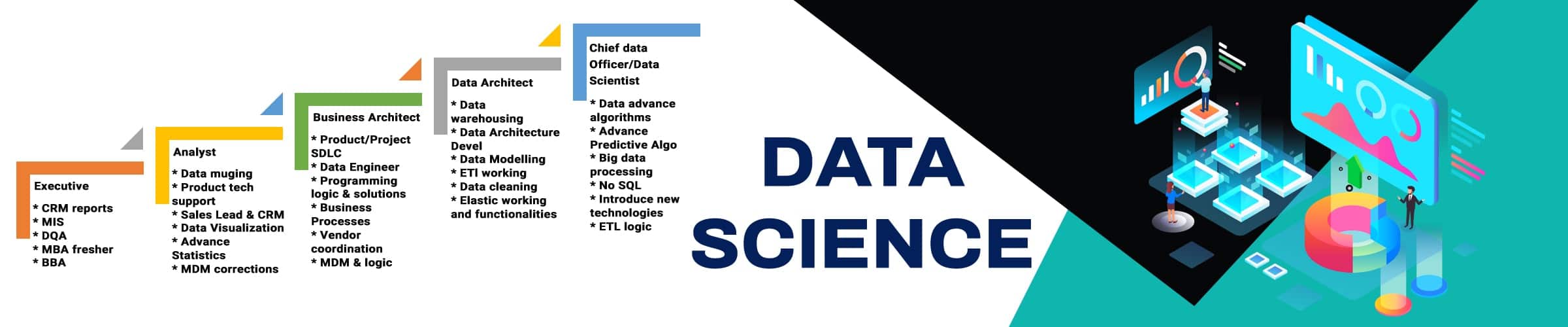
Best Data Science Training Bootcamp in Columbus, Ohio
If you are searching for the best data science Bootcamp in Columbus, Ohio with job placement, you are really searching for one thing: a full-time job offer at the end of your training. Most bootcamps stop at a certificate. SynergisticIT goes all the way to the offer letter. SynergisticIT's Job Placement Program (JOPP) is not a course that ends when the syllabus ends — it is a hiring program in which skills, projects, certifications, interview preparation, and marketing to employers are bundled into one outcome: employment. The data-focused track of that program, SynergisticIT's Data Science Job Placement Program, is the best data science training Bootcamp in Columbus, Ohio for one simple reason — it is a data science training Bootcamp in Columbus, Ohio plus staffing combined, which is why it is called a Job Placement Program and not a coding Bootcamp.
Since 2010, SynergisticIT has helped 10,000+ jobseekers launch technology careers. Candidates who successfully complete the Data Science JOPP are placed at Fortune 500 and enterprise companies at salaries ranging from $95k to $155k, with a 91.5% placement rate. The program is delivered online, so it can be completed remotely from anywhere in the USA — including Columbus, Ohio — while connecting you to employers far beyond the local market.
Columbus, Ohio remains one of the strongest data science hiring markets in the Midwest, with over 50 dedicated data scientist openings on Indeed and more than 267 on LinkedIn at any given time, spanning finance, insurance, healthcare, retail, and research.
Companies hiring data scientists include JPMorgan Chase, Nationwide, Huntington National Bank, Cardinal Health, Battelle, McKesson (CoverMyMeds), Bread Financial, American Electric Power, OhioHealth, Nationwide Children's Hospital, Safelite, OCLC, CAS, IQVentures, Root Insurance, Vertiv, The Scotts Miracle-Gro Company, Bath & Body Works, Victoria's Secret & Co., The Wendy's Company, Honda North America, Liberty Mutual, Grange Insurance, Abercrombie & Fitch, and Deloitte, all of which have posted data science roles in the Columbus metro recently.
Salaries vary sharply by seniority. Junior data scientists typically earn $74,000–$102,000, with entry analytics roles starting around $57,500. Mid-level data scientists earn roughly $108,000–$152,000, with the local average sitting at $127,250 and total compensation near $138,250. Senior data scientists command $135,000–$225,000, including $108,800–$181,300 at McKesson, $120,500–$218,300 for lead roles at Bread Financial, and $117,000–$225,000 at Liberty Mutual, with some senior postings reaching $250,000.
Data scientists will stay in demand because Columbus anchors 18 Fortune 1000 headquarters whose insurance, banking, healthcare, and retail operations depend on predictive modeling and AI adoption, including Cardinal Health's AI Center of Excellence and JPMorgan Chase's applied AI work run from its Columbus hub. The region is also one of the country's fastest-growing data center markets, with major Google, Meta, and AWS facilities plus the Intel fab, all fueling demand for data and cloud talent.
Columbus's tech employment picture is robust, with LinkedIn listing 15,000+ IT jobs in the metro and JPMorgan Chase operating as the region's second-largest private employer.
Famous tech figures from Columbus include Ratmir Timashev (Veeam co-founder), Mark Kvamme (Drive Capital co-founder), Matt Scantland (CoverMyMeds co-founder), Rehgan Bleile (AlignAI CEO and Women in Analytics founder), and Alex Lonsberry (Path Robotics CTO).
Why Data Science and Data Analytics Matter in Columbus, Ohio
Columbus is one of the most underrated data markets in the country. It is home to Nationwide, JPMorgan Chase, Huntington National Bank, Cardinal Health, OhioHealth, Battelle, Wendy's, and a fast-growing fintech and insurtech corridor, all of which run on data. Insurance underwriting, claims analytics, healthcare outcomes modeling, retail demand forecasting, logistics optimization, and banking risk models are all data problems, and Columbus employers hire aggressively for them.
Learning data science and data analytics in Columbus positions you for roles that simply cannot be offshored easily, because regulated industries like insurance, banking, and healthcare need analysts who understand their data governance and compliance environment. The metro's unemployment rate was 3.2% in July 2026 — near its lowest level in decades — which means employers compete for qualified talent rather than the other way around. A jobseeker who combines statistical thinking, SQL, Python, and business intelligence skills can walk into interviews at companies that are actively expanding their data organizations in central Ohio.
Emerging Tech Columbus Employers Are Asking For
The technologies companies in Columbus ask for have moved well beyond "Python and a notebook." Across job postings from Nationwide, JPMorgan Chase, Cardinal Health, and the region's consulting and healthcare analytics teams, the recurring asks include:
- Generative AI and Large Language Models: prompt engineering, RAG (retrieval-augmented generation), fine-tuning, and building LLM-powered applications on platforms like OpenAI, Azure OpenAI, and Databricks.
- Agentic AI: autonomous multi-step agents that plan, reason, and execute workflows — one of the fastest-growing asks in 2025-26 postings.
- Cloud data platforms: Snowflake, Databricks, BigQuery, and lakehouse architectures on AWS, Azure, and GCP.
- MLOps and production ML: MLflow, Docker, Kubernetes, CI/CD for models, model monitoring, and feature stores.
- Streaming and real-time analytics: Kafka, Spark Structured Streaming, and event-driven pipelines feeding live dashboards.
- Explainable and responsible AI: model interpretability, bias detection, and AI governance — critical for insurers and banks.
Employers in Columbus are not hiring "a data scientist" in isolation anymore. They are hiring data professionals who can move across the entire data lifecycle — ingesting, engineering, analyzing, modeling, and deploying.
Why Data Science and ML/AI Training Alone Is Not Enough
Here is the uncomfortable truth that most bootcamps will not tell you: completing a data science or ML/AI course does not get you hired. Employers post roles with multi-stack requirements, and a candidate who only knows modeling loses to a candidate who can also build the pipeline that feeds the model and the dashboard that presents the results. In order to get employed, jobseekers need multiple tech stacks — data engineering and data analytics along with data science and ML/AI.
The typical stack breakdown looks like this:
- Data Science & ML/AI: Python, R, NumPy, Pandas, Scikit-learn, TensorFlow, PyTorch, statistics, hypothesis testing, feature engineering, supervised and unsupervised learning, deep learning, NLP.
- Data Engineering: SQL, Apache Spark, Kafka, Airflow, Hadoop, Snowflake, Databricks, ETL/ELT pipelines, data warehousing, Python scripting.
- Data Analytics & BI: advanced SQL, Excel, Tableau, Power BI, data visualization, exploratory data analysis, KPI design, storytelling with data.
- Cloud & MLOps: AWS, Azure, Docker, Kubernetes, MLflow, Git, CI/CD, model deployment and monitoring.
A junior data scientist who can also write production SQL, build a Power BI dashboard, and deploy a model on AWS is worth two hires to a mid-sized Columbus enterprise — and that is precisely the profile the Data Science JOPP builds.
Emerging skills employers now screen for include LLM application development, vector databases, RAG pipelines, MLOps tooling, data governance, and the ability to translate a business question from an insurance or healthcare stakeholder into a model. The Data Science JOPP tech stack covers all of it: Python, SQL, statistics, machine learning, deep learning, NLP, data engineering with Spark and Snowflake, data analytics and BI with Tableau and Power BI, cloud platforms, and MLOps — plus interview preparation and certifications, all in one program. Instead of doing 4-5 different coding bootcamps or choosing a cheaper training company that promises a job guarantee it never honors, jobseekers can simply complete SynergisticIT's Data Science Job Placement Program, which covers data engineering, data analytics, ML/AI, and data science together.
The Local Employment Picture in Columbus
Columbus's labor market is tight and increasingly favorable for skilled data professionals. The metro unemployment rate fell to 3.2% in July 2026, down 1.3 percentage points from a year earlier, with May 2026's reading of 2.7% marking the lowest level since at least 1990. Job postings for data analysts and data engineers in the metro routinely run into the hundreds — a single employer like Nationwide has shown 60+ data analyst-related openings at one time, with data engineer postings at $110k-$132k.
Time-to-hire for well-prepared data candidates in Columbus generally runs several weeks per cycle — screening, technical rounds, and team fit interviews across 3-5 weeks is typical — but unprepared candidates can spend months. That is the difference preparation makes. SynergisticIT's graduates typically receive offers within 6-12 weeks of completing the program, because their resumes, projects, certifications, and interview readiness are aligned before marketing begins.
Entry-Level vs. Mid-Level and Senior Roles
Here is a reality check for anyone entering the field: the number of entry-level, junior, and internship data scientist roles is dramatically smaller than the number of mid-level and senior roles that require prior U.S. experience. Roughly speaking, only a fraction of data scientist postings nationally and in Columbus are truly junior; most openings ask for 2-5+ years of hands-on experience with production systems. This is why self-taught candidates and single-bootcamp graduates stall — they compete for the few junior slots with nothing to differentiate themselves. The way around this structural bottleneck is to present more than a junior skill set: multi-stack coverage, real project work, certifications, and technical screening. That is exactly what the Data Science JOPP engineers.
Why Bootcamps Fail — and How JOPP Fixes It
Let's be honest about the industry: bootcamps have delivered poor results, and that is why we have seen a large number of bootcamps shut down after making promises they could not keep. They collected tuition upfront, pointed to refund guarantees riddled with hidden clauses, and left graduates to fend for themselves in a job market that demanded far more than a 12-week certificate. SynergisticIT's Job Placement Program overcomes everything missing from a typical bootcamp graduate by combining deep multi-stack training with rigorous screening, employer marketing, and handholding until placement — providing jobseekers and employers a win-win solution in which the employer receives a candidate worth far more than the salary being paid.
SynergisticIT JOPP makes promises it keeps, and the promise is this: candidates who successfully complete JOPP get marketed and placed into tech companies. If no job offer materializes, no deferred payments accrue. Not all bootcamps are equal — any technology worth learning should be learned in depth, and not from just any data science Bootcamp or training company, but from SynergisticIT's data science training Bootcamp in Columbus, Ohio, which has been in the tech industry for over 15 years.
How JOPP Helps Jobseekers with a Career Gap
- Structured re-entry: your gap is reframed around a skills-assessment and upskilling track rather than an unexplained hole in your resume.
- Fresh, dated project work: client-style projects give you demonstrable, recent technical output you can speak about in interviews.
- Skill-gap diagnosis: we identify exactly what the market moved past during your break and rebuild only what is missing.
- Resume and narrative coaching: we help you answer the "what did you do during the gap" question with confidence.
- Certifications that re-establish credibility: current Microsoft, Oracle, Snowflake, Databricks, Azure, and AWS credentials prove your skills are current, not stale.
- Active marketing to 24,000+ client contacts: your resume does not sit in an ATS — we present you directly to hiring teams.
- Interview scheduling and preparation: mock interviews and live feedback until your rust turns back into fluency.
How JOPP Helps Recent Graduates with No Experience
- Employer-aligned curriculum: you learn exactly what current job postings ask for, not a university syllabus from five years ago.
- Real projects, not toy datasets: the only projects on your resume are ones you actually built, tailored to current job market requirements.
- Multi-stack coverage: you graduate as a data scientist who can also engineer data and build BI — rare among fresh graduates.
- Certifications included at no extra cost: credentials that separate you from thousands of applications with degrees but no proof of skill.
- We take over the marketing: bootcamps issue a certificate and let you job hunt alone; we market you to our employer network and schedule interviews.
- Interview preparation that mirrors real technical screens: you walk into interviews having already answered similar questions dozens of times.
- Handholding until you start work: from enrollment to your first day on the job, we walk with you each step and all the way.
Best Data Science Training Bootcamp in Columbus, Ohio-Reasons to Join!
How SynergisticIT Is Different from Bootcamps and Staffing Companies
- Curriculum quality and relevance: SynergisticIT participates in tech industry interactions at Oracle CloudWorld and the Gartner Data & Analytics Summit, and our candidates are actively interviewing every week — so our curriculum is adjusted in real time based on live job market feedback, not recycled slide decks.
- Instructor quality: most bootcamps use graduated alumni, recorded sessions, or instructors teaching a couple of hours a week. Our average instructor has more than 10 years of industry experience in their domain.
- Number of instructors: the Data Science JOPP runs with 5-6 specialist instructors — separate experts for data analytics, data engineering, and data science/ML — instead of one generalist teaching everything.
- Cost and payment: transparent pricing of $10k upfront and the $26k balance payable over 2 years, only after landing a job offer. If there is no job offer, no payments accrue. Most bootcamps take all fees upfront and offer refund guarantees that can never actually be redeemed.
- Duration and immersion: 4-5 hours of live instruction per day, 5 days a week, for about 5 months — deeply immersive, live lectures with instructors and no recorded sessions. Ask any bootcamp you are considering to state this in writing.
- Student-to-instructor ratio of 5:1, compared to 20:1 or worse at typical bootcamps.
- Projects tailored to real company requirements and tech stacks — only projects you actually work on appear on your resume.
- Alumni success you can verify: read, view, and listen to audio and video reviews from alumni who landed offers; graduates receive high-paying offers from $95k up to $155k, often with multiple offers.
- Certifications at no extra cost from Microsoft, Oracle, Snowflake, Databricks, Azure, and AWS.
- Post-graduation career and placement help: we market to a network of 24,000+ company contacts — bootcamps hand you a certificate and let the job hunt be your problem.
- Why trust us: photographs of successful alumni on our JOPP page, video reviews, offer letters, and over 15 years in business. We do not make fake promises or guarantees with hidden clauses — just transparent costs and real job outcomes.
QA Testers, Business Analysts, and Non-Coding Backgrounds Belong Here
QA testers, business analysts, program managers, and people from statistics, mathematics, or other non-coding backgrounds should seriously consider the SynergisticIT Data Science JOPP as their entry point into data science. The overlap between these domains is larger than most people realize: business analysts already work with requirements, stakeholders, and SQL-driven reporting; QA analysts already understand validation, edge cases, and structured test data; and statistics or mathematics graduates already have the quantitative core that most bootcamp students struggle to acquire.
The common skills shared by business analysts, QA analysts, data analysts, and BI analysts — SQL querying, requirement analysis, data validation, Excel, basic visualization, and stakeholder communication — involve minimal to almost no coding and can be learned quickly. From there, the climb into data science, data analytics, and BI analytics is a natural progression rather than a leap, and it is exactly the path the Data Science JOPP is designed to walk with you.
Why Employers Win by Hiring JOPP Candidates
Employers benefit from hiring SynergisticIT JOPP candidates just as much as jobseekers do:
- Current tech stack alignment and job-ready skills: JOPP is shaped by tech-client demand, industry events, and hands-on upskilling, so candidates need less ramp-up time.
- Pre-screened talent: rigorous technical screening happens before candidates ever reach the market — companies receive candidates already verified for technical and job fit.
- Certified candidates: JOPP candidates hold certifications across Java, DevOps, AWS, Azure, Power BI, Snowflake, and more, adding credibility to an already diverse tech stack.
- Multi-stack flexibility: hire one junior professional who can contribute across data engineering, data analytics, and ML/AI teams, instead of three narrow specialists.
- Reduced hiring risk: structured training, projects, interview prep, and screening mean dramatically lower odds of a failed hire.
- Day-one contribution: JOPP candidates are practical and prepared to deliver from their first day on the job.
- Genuine project-based resumes: real projects and verifiable skills, never embellished or fabricated experience.
In short, companies hire JOPP candidates because they are trained, screened, project-ready, interview-prepared, and aligned with current tech roles — a candidate worth more than the salary being paid.

Best Data Science Training Bootcamp in Columbus, Ohio -Course Content
Data Analytics & BI:
- Power BI, Tableau, SAS, SQL, Data Cleaning & Transformation (ETL)
Data Engineering:
- Apache Spark, Databricks, Snowflake, Hadoop Ecosystem, Kafka, AWS S3/Glue, GCP BigQuery/Dataflow, Azure Data Lake, ETL & Data Pipelines
Data Science & Statistics:
- Python Libraries (NumPy, Pandas, SciPy, Matplotlib, Seaborn), EDA, Statistical Methods, Bayesian Inference, Time Series Analysis, Regression Models, Clustering & Dimensionality Reduction
Machine Learning & AI:
- Programming (Python, R, Jupyter), Data Handling (NumPy, Pandas), Visualization (Matplotlib, Seaborn, Plotly), Supervised/Unsupervised Learning, Ensemble Methods, Deep Learning (DNNs, CNNs, RNNs, Autoencoders), Libraries (Scikit-learn, TensorFlow, PyTorch, Keras), NLP (Text Preprocessing, Sentiment Analysis, NER, Transformers), LLMs & GenAI (Hugging Face, GPT-based Models), Model Optimization, Cloud AI Tools (AWS SageMaker, Azure ML, GCP Vertex AI), AI Ethics & Responsible AI
Introduction to Data Science with Python
Python Introduction & Data Structures
Numerical Python (NumPy)
Pandas Data Analysis
Matplotlib & Seaborn Data Visualization
Data Manipulation: Cleansing – Munging
Data Analysis: Visualization Using Python
Introduction to Artificial Intelligence (AI) & Machine Learning (ML)
Machine Learning Techniques & Algorithms
Decision Tree and Random Forest Algorithm
Naive Bayes and KNN Algorithm
Support Vector Machine Algorithm
Model Deployment & Tableau
Introduction to Statistics
Introduction to Predictive Modelling
Data Exploration for Modelling
Data Preparation
Ensemble Learning Techniques
Web Scraping using Python Beautiful Soup
Time Series Analysis
Deep Learning
Natural Language Processing (NLP) & Text Mining
Market Basket Analysis

Best Data Science Training Bootcamp in Columbus, Ohio-Who Should Join ?
College Graduate/Undergraduate
Software Developer/Programmer
Data Science Aspirant
Professionals working on Business Intelligence, data warehousing, or reporting tools
Beginners wanting to build their analytical skills
Best Data Science Training Bootcamp in Columbus, Ohio-More Reasons to Consider
Program Outcomes: High Salaries, Employer Examples, and Comprehensive Course Coverage
SynergisticIT’s Data Science JOPP delivers outcomes that consistently exceed those of other bootcamps and training companies:
- Salary Range: Graduates routinely earn $95,000–$155,000, with some exceeding $150,000 in their first role.
- Employer Network: Placement with Fortune 500 companies and tech leaders, including Visa, Apple, PayPal, Walmart Labs, AutoZone, Wells Fargo, Capital One, Walgreens, Bank of America, SAP, Cisco Systems, Verizon, T-Mobile, Intuit, Ford, Hitachi, Western Union, Deloitte, Dell, USAA, Carfax, and Humana.
- Comprehensive Coverage: The program includes data engineering, analytics, ML/AI, data science, business intelligence, cloud platforms, DevOps, MLOps, hands-on projects, interview prep, and certifications.
- Online Availability: JOPP is fully remote and accessible nationwide, allowing candidates in Columbus and across the USA to participate without relocation.
- Active Placement Process: SynergisticIT markets candidates, schedules interviews, and provides support until a job offer is secured.
- Post-Job Support: Continuous support for 12 months after placement, ensuring long-term career success.
Many jobseekers waste time and money on 4–5 bootcamps or cheaper training companies that fail to deliver results. Common issues include:
- Superficial Learning: Compressed timelines and limited curriculum lead to shallow understanding and poor job readiness.
- Misleading Guarantees: Candidates are forced to pay fees even for low-paying jobs, with little support for career advancement.
- Minimal Marketing: Lack of direct client marketing leaves candidates struggling to secure interviews.
- Inconsistent Outcomes: Placement rates and salary data are often inflated or unverifiable.
SynergisticIT’s JOPP eliminates these risks by offering:
- Comprehensive, Multi-Stack Training: Covering all essential domains and technologies.
- Verified Outcomes: Transparent placement rates, salary data, and offer letters.
- Active Marketing and Placement: Direct client marketing and interview scheduling until hire.
- Flexible Payment Model: Partial fees upfront, balance payable only after securing a job of $81,000 or higher.
For jobseekers in Columbus, choosing SynergisticIT’s JOPP is the surest path to high-paying, future-proof careers in data science and analytics.
Our Data Science faculty updates the training curriculum regularly, so you get lifetime access to industry-relevant course material.
We provide career coaching and guidance on overcoming challenges in securing a Data Science job. Our team takes mock tests and cognitive interviews to ensure you are job-ready.
Our solid association with the top Fortune 500 Companies allows us to bag a position for our technically trained candidates.

Why Recent CS Graduates Should Join JOPP
If you have been researching how to get hired as a recent CS graduate, you already know the numbers are brutal: hundreds of thousands of new graduates compete for a limited pool of true entry-level roles, and most postings quietly favor candidates with demonstrated project experience. Recent CS graduates should join SynergisticIT's JOPP because it delivers the three things a degree alone cannot: current tech skills, real project work, and — most importantly — actual placement into tech roles at great tech companies. Roughly 90% of JOPP graduates who get hired have never worked in a tech job before; the other 10% are career changers and candidates with career gaps. In other words, JOPP is built for exactly the situation you are in. And if your ambition stretches toward learning how to get hired in FAANG companies, the same fundamentals apply — multi-stack depth, screened skills, and interview reps — which is why SynergisticIT candidates are hired by companies like Visa, Apple, PayPal, Walmart Labs, AutoZone, Wells Fargo, Capital One, Walgreens, Bank of America, SAP, Cisco Systems, Verizon, T-Mobile, Intuit, Ford, Hitachi, Western Union, Deloitte, Dell, USAA, Carfax, and Humana at salaries of $95k to $155k. Learn more about SynergisticIT's Job Placement Program (JOPP) or the Data Science JOPP directly.
Results, Not Ads
Other bootcamps run fancy ads with claims that are too good to be true. SynergisticIT has results. We participate in Oracle CloudWorld and the Gartner Data & Analytics Summit — watch our event videos to see us engaging directly with the companies hiring for data, ML/AI, and cloud roles. You can read candid alumni feedback in SynergisticIT's reviews, see how the model was covered in USA Today, and compare the cost of the program against first-year earnings in our ROI write-ups on the SynergisticIT blog.
Data Science Salaries vs. Cost of Living in Columbus
Here is where the math becomes compelling. JOPP data placements typically land between $95k and $155k, while the median home sale price in Columbus is roughly **$300,000 — about 26% below the national average** — and the overall cost of living runs about 7% below the national average. Ohio's state income tax is modest, and there is no local income tax in Columbus. A data professional earning $100k+ in Columbus enjoys a purchasing power that the same salary cannot touch in the Bay Area, New York, or Seattle: a mid-sized home, short commutes, and the ability to save aggressively from year one. In Columbus, a data science salary does not just pay the bills — it builds wealth.
Start Now — Waiting Only Delays the Offer
Here is a truth worth sitting with: postponing your enrollment will not compress JOPP into something shorter. The program takes the time it takes because it is building layer upon layer — skills, then projects, then interview readiness, then client marketing — until placement happens. That demanding stretch of months is exactly what employers compensate. Sitting out a cohort does not make the journey faster; it only pushes your job offer further into the future. The journey is long, yes — but the destination is a full-time job offer, and the earliest possible start date is today.
Final Word
There may be many data science Bootcamps that offer data science training in Columbus, Ohio. However, if your goal is to actually get hired after completing the program, there is only one choice: SynergisticIT's best data science training Bootcamp in Columbus, Ohio. The Data Science JOPP is not a separate add-on to the Bootcamp — it is the Bootcamp: high salaries, better placement results, and more comprehensive course coverage than any standalone course, with training and staffing under one roof. It is the sure-shot way for a jobseeker to get hired.
Ready to start? Contact us today, submit your resume, and take the first step toward your data science career. While you prepare, sharpen your fundamentals with our guide to MERN stack interview questions and read how others have navigated landing a tech job after a career gap.