 Important Notice— Our url is


You can get a job without a CS degree. Surprised? This is true that IT careers are not restricted to those who have a 4-year computer science degree. A CS degree is important for many roles and is best to have if you want to start an IT career. But even if you don’t have a degree, there is no need to lose hope. In this Blog find out How to get a Tech Job without a degree

More and more tech jobs are now open to people without college degrees. Companies like Google, IBM, and Apple prefer to hire people with skills and don’t give importance to a degree. So, if you haven’t been to college, don’t give up, as you still have a real shot at a tech career.
In fact, according to the U.S. Bureau of Labor Statistics (BLS), up to 30% of people working in tech don’t have a degree.
So, whether you are someone who missed the chance to do a degree or are willing to switch from a non-IT career, this guide will help you learn how to step into an IT career without a degree.
Examples of People Who Succeeded Without A Degree
You don’t need a college degree do well in your career. Some of the world’s most well-known business leaders and CEOs dropped out of school but had amazing careers.
- Walt Disney, the mind behind Mickey Mouse, left school at 16. He later built one of the world’s biggest entertainment empires.
- Henry Ford did not go to high school and worked as a machinist before starting Ford Motor Company.
- Bill Gates, the man behind Microsoft, left Harvard after two years to start the company that would change personal computing.
- Mark Zuckerberg launched Facebook from his college dorm and left Harvard to grow it into a global platform.
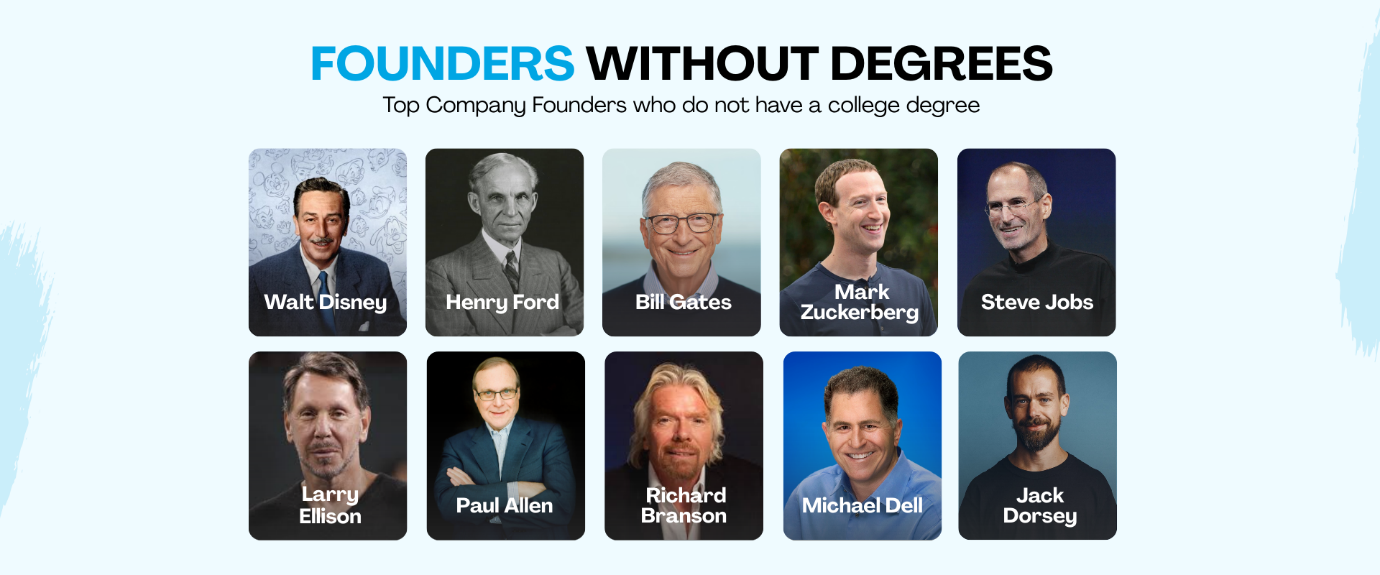
- Steve Jobs, the co-founder of Apple, dropped out of Reed College because he didn’t think college was right for him and went on to build one of the cult Apple products.
- Michael Dell started dropped out of the University of Texas to build his company, Dell Technologies.
- Jack Dorsey, who helped create Twitter, also left college early to work on tech projects.
- Larry Ellison, co-founder of Oracle, dropped out of two different colleges before launching his software business.
- Paul Allen, who teamed up with Gates to start Microsoft, also left school early to pursue programming.
- Richard Branson, founder of Virgin Group, struggled in school due to dyslexia and started his first business as a teenager.
These stories prove that success is not attributed to your qualifications but to your capabilities and skills. If you feel that the tech industry is your true calling, go ahead and work for your dreams.
Let’s start learning about jobs that don’t need a CS degree.
Although many jobs in IT require a degree, there are plenty of options for those who want to switch to IT and do not have an IT degree. Let’s look at the jobs you can do without a degree.
- Web Developer
- Software Developer
- Data Analyst
- IT Support Specialist
- QA Tester (Quality Assurance)
- Cybersecurity Analyst (Entry-Level)
- UI/UX Designer
- Cloud Support Associate
- Network Technician
What skills may you need for tech jobs?
The skills you need for a tech role depend on the role. Different jobs require different skills, tools, and specializations. Here are some common technical and soft skills to start with.
Technical skills
- HTML, CSS, JavaScript
- Programming languages like Java, Python, etc.
- AWS, Microsoft Azure, or Google Cloud
- Data management tools
- Search engine optimization (SEO)
- Data analytics
- Project management
- Troubleshooting
Soft skills
- Communication
- Problem-solving
- Creativity
- Adaptability
- Time management
How To Land a Job in IT Without a Degree?
If you’re ready to learn and work hard on acquiring the job skills, you can build a successful tech career without a degree. Below, we will share the tips to land a tech job without a degree.
Learn About IT Careers
Don’t jump into a career before knowing about it. Learn about different tech fields, what their requirements are, and the skills that they need. In addition, you must learn about their career scope, salary, and future. As there are plenty of routes you can take, you must be able to choose what’s best for you.
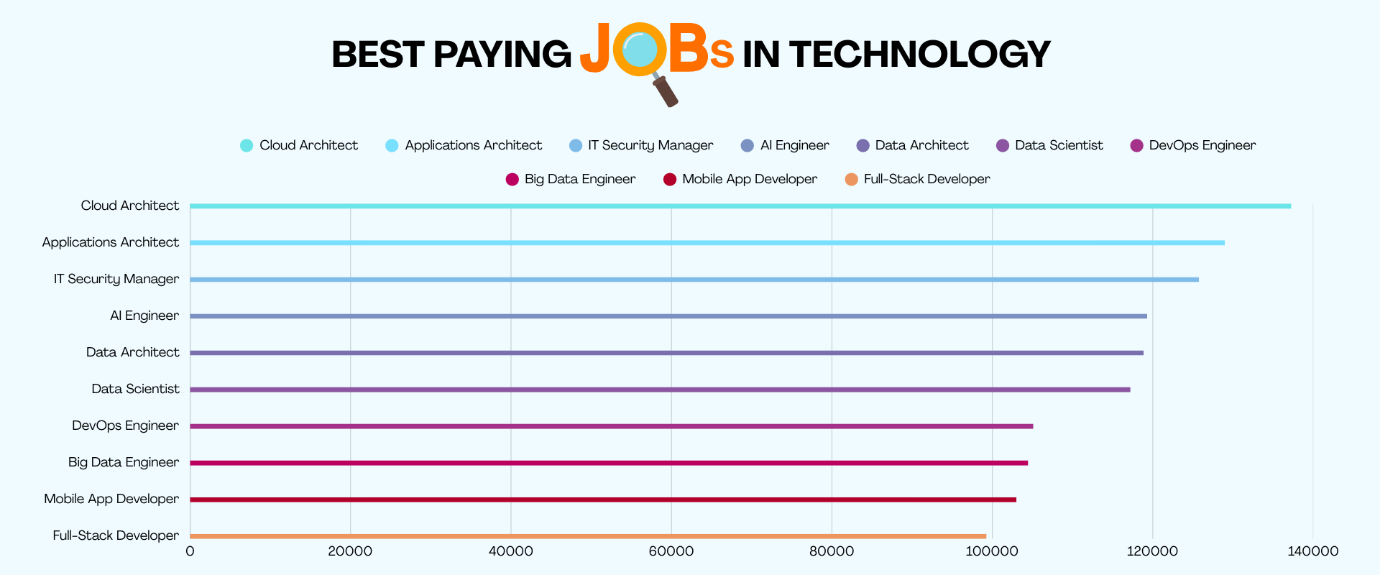
Be mindful of the decision you make, as once you step in, it will be difficult to start all over again. Software development, cybersecurity, cloud computing, data analysis, and network support are some of the areas you can pick from, as these usually don’t require a degree. But be aware that each of these area needs different skills, so analyse all the options before picking one.
Tip: Check what’s trending in the job market. Some jobs are more open to people without a degree and are easier to break into. You can also take suggestions from people already working in these fields, as they can give you an inside review. Online tech forums or communities are very helpful in this case to get information and make a decision.
Figure Out a Learning Plan
Now that you don’t have a degree, you need to find alternate routes to learn the skills required by your chosen career. There are many ways to learn today, and you can select the one that fits your schedule and budget.
Coding Bootcamps
Bootcamps are a great way to learn the tech skills you need for a job, and you can do it faster and cheaper than a degree. The focus of bootcamps is on practical, hands-on training, which is perfect if you want to enter into tech industry faster. You learn specific skills related to your career and prepare for the job you want. They are more affordable than a college degree and offer flexible options like part-time or remote classes.
Read: ROI Of Computer Science Degree Colleges Vs SynergisticIT

Self-Teaching
If you can learn on your own, you can explore the free and low-cost learning options like Coursera, Udemy, and Codecademy. These platforms have courses on coding, cybersecurity, and more, but remember one thing that they may be flexible and cheap, but the learning takes a longer time. With little to no instructor support, you may need more time to learn what you’ll otherwise learn in a full-time coding bootcamp.
Certification courses
After you have learnt a specific skill, you can supplement your knowledge with a certification course. With a certification, it is easier to convince employers of your skills. Certifications from CompTIA, Cisco, or Microsoft are great to have before applying for jobs, as they can improve your chances and help you get higher pay. Some bootcamps may help you get the certifications in their courses, so enrolling in bootcamps with certifications is a good option.
Build Real-World Projects
When trying to get a job without a college degree, employers are interested less in what you’ve done and more in what you can do and if you are suitable for the job. That’s why building real-world projects is extremely important, as it can prove that you have worked on honing your skills and are serious about making a career in tech.
Start by creating your website, app, or a simple program that tackles a real issue, like a to-do list app or management tool. As you progress, you can take on more complex projects or help out with open-source projects on GitHub. GitHub reports that job seekers who have at least 3 active repositories (project folders) are 60% more likely to get interview calls than those who don’t.
A good idea is to also make a portfolio website where you can display all your projects, training, certifications, and other information. If you don’t know how to make a website from scratch, you can use like Notion or Webflow.
Tip: Start with small projects and then build them up. Do upload it to GitHub, and then share it on LinkedIn so that the recruiter notices you. As your portfolio becomes strong, your chances of landing a job will be brighter.
Keep practicing and improving your skills
Learning the theory is possible, but in tech, what you can do practically matters more than what you know. To get closer to your dream job and stand out to employers, you must work on sharpening your skills. Here are things you can do.
Open-Source Projects:
Open-source projects are shared by developers all over the world, and anyone can help improve them. When you contribute to these projects, you work on real software used by others. You also learn how professional developers write code and solve problems. It’s a great way to improve your skills and show you can work in a team.
Freelance Jobs:
Freelancing is a good way to earn experience—and even some money—while working on real projects. You can find freelance tech work on websites like Upwork or Freelancer. Businesses and individuals often need help with things like websites, apps, or fixing tech issues. Even if you’re just starting out, there are many small jobs to help you build your confidence.

Hackathons:
Hackathons are events where people come together to solve problems with technology, usually in a short amount of time, like a weekend. These events are fun, fast-paced, and great for learning. You can meet new people, test your skills, and build cool projects. Even if you don’t win, you gain experience and can add the project to your portfolio.
Network
As a newbie, finding a job on your own can be hard. Therefore, try to find and connect with people who can help you find job opportunities and grow your career. Go to tech meetups, job fairs, or tech consultations, as these are places where you can connect with people from different fields. Talk to them, take suggestions, and show them your interest. References can be great to get a job faster.
Build a Resume and LinkedIn Profile
Before applying for jobs, make sure to highlight your skills, training, and any hands-on experience in your resume, as these will make you shine. You will get better chances if you modify your resume for each job you apply for.
Also, make sure your LinkedIn profile is up-to-date. Include your skills, certifications, and best projects. A good LinkedIn profile can help you stand out and connect with recruiters who are hiring.
Apply to companies
Once you are confident to enter the workforce, start applying to positions. Make sure you read the job description and apply to companies that don’t require a degree. You can also show your interest in companies that hire people without degrees by sending your resume to HR.
Conclusion
Getting a break in IT is possible with learning the right technical skills, and what can be a better option than SynergisticIT?
Since 2010, SynergisticIT has helped 1000’s of job seekers thrive in the tech industry. At SynergisticIT, we make candidates work on technologies and skills our clients demand.
Our unique approach goes beyond training, offering hands-on project experience. We also have a marketing team to promote your skills, so you don’t have to. Check out our candidate outcomes page to see the success stories.
We also participate in industry events like Oracle Java One and the Gartner Data and Analytics Summit, offering excellent opportunities for brand recognition during your job search. Be sure to watch our event videos for more insights.
Oracle CloudWorld Event from 18th to 21st Oct 2023 _ SynergisticIT (wistia.com)
SynergisticIT @ Oracle CloudWorld 2023, Las Vegas (wistia.com)
SynergisticIT at Gartner Data and Analytics Summit 2023 (wistia.com)
SynergisticIT at Oracle Cloud World, Las Vegas 2023 (wistia.com)
https://www.synergisticit.com/presentation/
Furthermore, we have a vast network of clients with whom we can introduce your resume. Since we have been in business since 2010, our brand name association increases your chances of being considered by potential employers. Please visit our Transform Your Future with SynergisticIT | Candidate Outcomes page to learn how we have helped Tech job seekers and how we can jumpstart your tech career!